
EP262: Christopher Filipiak: The CEO Sales Mindset Nobody Builds On Purpose
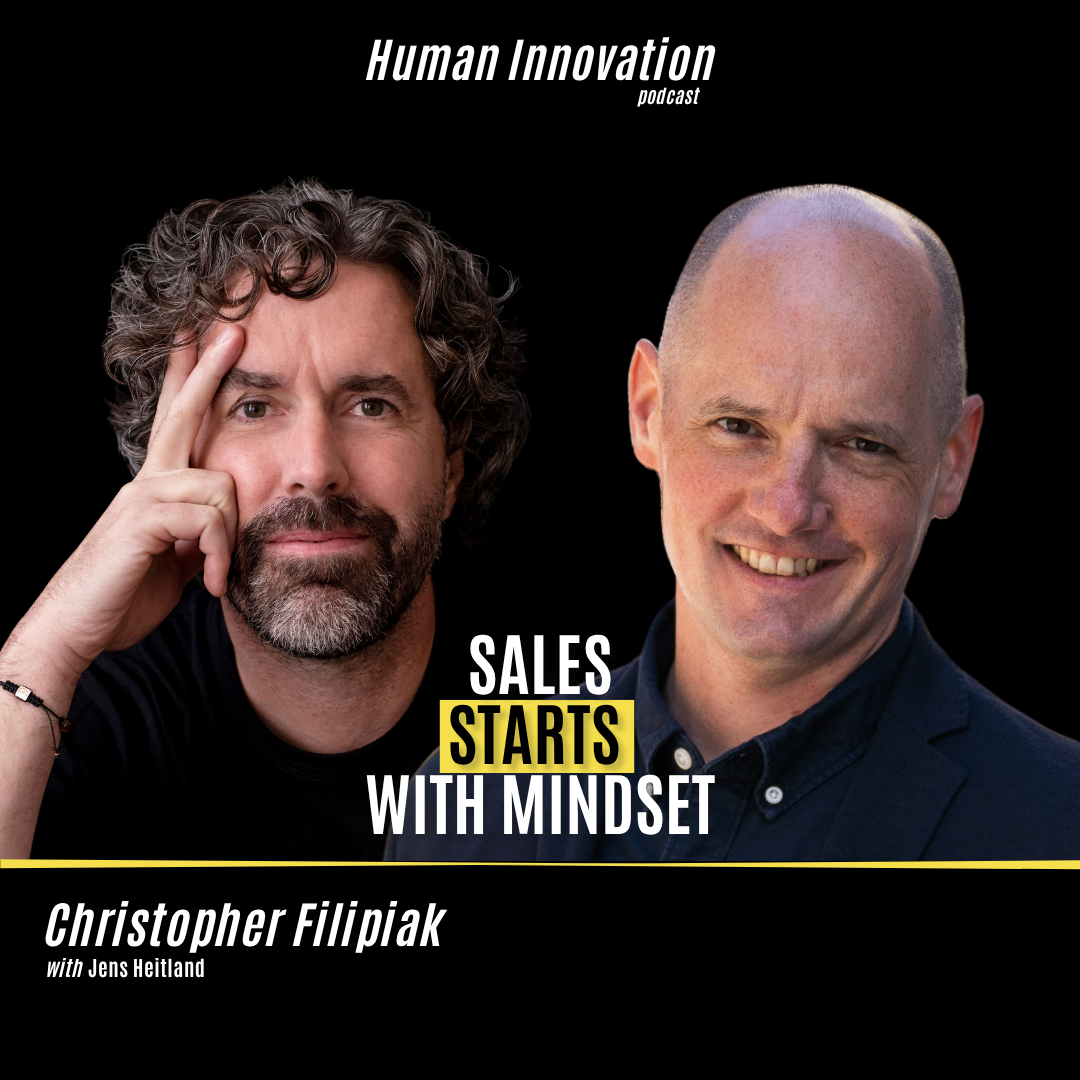
Jens Heitland and Christopher Filipiak explore why CEOs are the top salespeople in an organization, and how identifying a real best-fit client changes the sales process. They discuss how trust builds when a sales process reflects the actual value being delivered, and why misalignment between offer and client tends to surface over time.
The conversation covers the shift from persuasion-based selling to recognition-based selling, and what that shift requires from leadership. Jens and Christopher also look at how clarity about the ideal client affects conversion, retention, and the overall health of a sales system.
Youtube Podcasts
Christopher Filipiak: The CEO Sales Mindset Nobody Builds On Purpose
Christopher Filipiak has spent his career working with CEOs on sales, and our conversation opened with a question I hear in almost every organization I work with. Many CEOs are told, early in their careers, that sales sits below their level. They are taught to focus on strategy, on operations, on the mechanics of running a company, while sales gets delegated to a team downstream. This creates an environment where the CEO stands apart from the single activity that determines whether the company grows or stalls. The revenue conversation happens in a room the CEO rarely enters, and over years that distance becomes normal. Christopher started as an engineer, building vehicles on a factory floor before moving into sales, and that background gave him a useful lens. He sees sales as a system with inputs and outputs, not as a talent some people are born with and others are not.
What Christopher described is a three-layer system: Mindset comes first, shaping how a person feels about money, about asking for it, and about the exchange itself. Strategy and tactics come second, built on top of that mindset once it is settled. Activity comes third, the repeated behavior of creating conversations and having them with the right person. He calls that person a best fit client, someone identified through direct observation of a real buyer in the market rather than an avatar built in a workshop. Part of that work is what he calls a money map, tracking where capital is actually moving across industries and departments before a company decides where to aim its energy. The system only works in that order. A CEO who fixes tactics before addressing mindset ends up optimizing a process aimed at the wrong person from the start.
The consequence shows up quietly. A company without CEO involvement in sales tends to lose track of where the money is actually flowing. Effort gets spread across too many prospects, too many industries, too many conversations that were never going to close. Christopher described this as throwing spaghetti at a wall, and the image stayed useful because it captures something real. Energy without direction rarely produces revenue. Meanwhile, the CEOs who stay close to sales develop something harder to name. They carry the status, the knowledge, and the relationships that let them close the deals that matter most, the deals that eventually decide the direction of the entire company. Christopher also pointed to willingness to fail as part of the same system. Entrepreneurs learn early that mistakes are unavoidable, while many corporate leaders were trained from childhood to avoid them, and that early training quietly limits how fast a large organization can move.
Working inside large organizations taught me that the biggest deals rarely close through process alone. They close when CEOs sit across from each other and negotiate directly, drawing on years of pattern recognition that no team member further down the chain has built. Christopher's observation about self-knowledge before asking anyone for anything reflects something I have watched play out across many organizations. CEOs who have done that internal work carry a steadiness that shows up in every negotiation, and it changes how a room responds. The skill set matters, but it sits on top of something quieter. At the CEO level, sales is rarely about technique. It is about how comfortable a person has become with themselves, with money, and with being seen.
Human Innovation with Jens Heitland is produced by Heitland Media Group.*
Timecode:
00:03 Should CEOs Be Involved in Sales?
01:38 Mindset vs. Skillset
06:20 From Engineer to Sales
15:36 Why CEOs Should Sell
20:13 Strategy: Money Map & Best Fit Clients
34:58 Knowing Yourself
Guest Links
Website: christopherfilipiak.com
LinkedIn: https://www.linkedin.com/in/christopherfilipiak/
Website:https://www.jensheitland.com/
Business:https://www.heitlandmediagroup.com/
LinkedIn:https://www.linkedin.com/in/jensheitland/
Facebook:https://www.facebook.com/JensHeitlandofficial/
Instagram:https://www.instagram.com/jensheitland/
TikTok:https://www.tiktok.com/@jensheitland
X/Twitter:https://twitter.com/jensheitland
Newsletter:https://www.jensheitland.com/newsletter
YouTube:https://www.youtube.com/@jens-heitland
Subscribe and listen to Jens’ Heitland Podcast here:
YT:https://www.youtube.com/channel/UCjuSGi1feauCNSER3IKuGWg
Web:https://www.jensheitland.com/podcasthome
Apple:https://podcasts.apple.com/us/podcast/the-jens-heitland-show-human-innovation/id1545043872?uo=4
Spotify:https://open.spotify.com/show/7H0GWMGVALyXnnmstYA1NL
Transcript
[00:00:03] Jens Heitland: Christopher, welcome to the show. Great to have you
[00:00:05] Christopher Filipiak: Thanks, Jens. It's really fun to be here and I'm excited for today's conversation
[00:00:10] Jens Heitland: Yeah, I'm really looking forward to deeply dive into sales specifically for CEO roles. And the first thing I would love to dive into is one of the things we have been talking about during our preparation was that some CEOs think they should not be involved in sales. Let's start with that. What is your view on that?
[00:00:34] Christopher Filipiak: I think CEOs should absolutely be involved in sales, and I think that we're all, as humans, involved in sales at some level from the day that we're born 'cause we're always, providing service and getting stuff in exchange, right? And I think where there's confusion that comes up is, is like CEO is not gonna be cold calling eight hours of their day, right?
[00:00:59] Christopher Filipiak: They're not gonna be doing low-level sales. But primarily they're selling themselves, they're selling the vision of the company. They're building a, they're building a team, so they're selling the, the environment of the company. And then most of the CEOs that I've worked with at all sorts of levels is they're buying and selling businesses, they're buying and selling, they're working on large deals. And the primary responsibility that I think a CEO has is really around driving revenue, Grow- grow- like driving revenue, creating profit, building team.
[00:01:36] Jens Heitland: Yeah, agree.
[00:01:38] Jens Heitland: Do, do you think it's, it's, it's a skill set or it's more a mindset?
[00:01:42] Christopher Filipiak: Well, I think it's both. Well, you know, we were kinda talking about this in the green room before we jumped on the show here. Mindset is a skill in and of itself. It's not like you just wake up and you're like, "Oh, I got the best mindset ever." Developing a mindset is a skill, like driving a car, dancing, or sales.
[00:02:04] Christopher Filipiak: So, I think selling is, has components that are a mindset skill. I think there's a strategy and tactic component to it, and I think there's an activity or behavioral component to being good at sales. Now, if you, were like, "Hey, which one's the most important?" Mindset For sure. Like, we live in human bodies, so, like, what we're thinking and feeling determines our actions, so everything, in my opinion and my experience, starts with mindset
[00:02:34] Jens Heitland: So one of the things you do is working with CEOs around sales. And when you see that the mindset is maybe not there where it could be, how do you start working with the CEO and helping them to develop the right sales mindset?
[00:02:52] Christopher Filipiak: I think it's about looking at what the truth is. Okay? So sometimes I'll start with the definition of sales and money, right? So sales is the exchange of money for goods or services. That's what sales is, right? And money is simply a tool to be exchanged, So it's like we develop or are programmed with all these stories, thoughts, beliefs around what sales is and what money is, and I like to go back to like those definitions and go like, "Hey, I understand money may feel like the root of all evil to
[00:03:37] Jens Heitland: Ja.
[00:03:37] Christopher Filipiak: but
[00:03:38] Jens Heitland: Ja
[00:03:38] Christopher Filipiak: not good or bad.
[00:03:39] Christopher Filipiak: It's just a tool to be exchanged." And so you start to bring in what I would say is awareness or new thoughts that are more aligned with the result that you want than the thinking that you were raised with. 'Cause that's what happens to us as little children, right? We get programmed by our parents, by our society, by school, and then we carry those beliefs, and there can be some ignorance and some fear and some things that, you know, aren't actually helpful as adults stepping into who we really are, and we end up...
[00:04:22] Christopher Filipiak: A lot of that programming is, comes from being programmed for safety, right? How do we keep ourselves safe? g- being a, a CEO or a business owner or an entrepreneur, like, if you're making decisions trying to be safe, that's not a successful mindset. not gonna take you where you ultimately need to go, and sales is the same way.
[00:04:49] Christopher Filipiak: Sales requires having the proper thoughts, understanding how to think, how to feel, how to take action from a place of truth. So I think that's really the answer. It's going, what is the truth of this, and what is the thought or the belief that's gonna allow me to create the result? You know? I like that better than going like, "Hey, you just have to have a really great mindset." I don't
[00:05:22] Jens Heitland: Ja
[00:05:23] Christopher Filipiak: set it up like that. I'm like, "Okay, what is the mindset that is aligned with the result that I want?" Right? So we're not going on a mindset journey just for the sake of a mindset journey.
[00:05:33] Christopher Filipiak: It's like, no, that result you want requires this mindset and this awareness and these truths and bringing that all in
[00:05:43] Jens Heitland: Yeah. It's interesting because if you think, like consultants that I have worked with in the past or met, and they talk about helping organizations in sales, they talk about processes first. First thing they do is like, "Okay, what are the different processes and funnels and all of the different things?"
[00:06:06] Jens Heitland: And they miss out the mindset there. That's like the last thing they would even if they at all talk about it. It's quite interesting. Let's go to you. So you started as an engineer like I did.
[00:06:20] Jens Heitland: How did you get into sales? Because you do this now for quite a while already. How did you get into it in the first place, and how was your mindset at that time?
[00:06:31] Christopher Filipiak: I was always very good at math and like processes and like this engineering side of myself, but I really love people. I really like had this like, desire to understand thoughts and who I am and, and kind of this high, EQ kind of emotional wiring as well. So I have kind of this polarity of technical engineering, process-driven aspect with kind of this heart-centered mindset, sage kind of part of myself.
[00:07:11] Christopher Filipiak: And so I was growing up and I was looking for like a career, um, I was like, "Well, being an engineer is safe, so I'll pick that, and I'm good at math and I love cars. So let's do, let's do that," right? But I think that pull to be more involved with people and really understand money more and what actually drives business led me to, you know, moving more towards being an entrepreneur and, um, wanting to understand sales and also marketing to some level more.
[00:07:45] Christopher Filipiak: So after engineering, after I was working at Ford Motor, building F-150s and Mustangs, I started selling and working for a mid-market consulting firm doing marketing software consulting engagements, selling into like Fortune 500 companies. So I started to learn how to do high-level B2B corporate sales and large deal sizes. And that company had very little sales process and sales systems, but the owner, the founder was just brilliant at sales, right? And so when you mentioned the consultants always wanna start with the process work and not the mindset work, I think that's... I'm not saying it's right or wrong.
[00:08:39] Christopher Filipiak: It depends on the result that the company wants to create. There's
[00:08:42] Jens Heitland: Ja, ja
[00:08:42] Christopher Filipiak: different ways to approach. So I started-- So after that, I kinda started my own business, wanting to... knowing I wanted to be an entrepreneur and wanted to own my own business. And the reason I really, I mean, the reason I own a business is because I love helping people, and I love the idea of like building a business.
[00:09:06] Christopher Filipiak: Like it's a, it's like an interesting challenge, but I think there's a, there's a part of me that wants to know, like I can do it on my own. Not, not that there, you know, not this idea of like a self-made man right? Going like, "Oh, I'm just gonna solo." Like I understand you need community and people around you, but was like, I want to be I want to know myself deeply enough, and I think entrepreneurship and starting a business is a really beautiful personal growth
[00:09:37] Jens Heitland: It is.
[00:09:38] Christopher Filipiak: vehicle.
[00:09:39] Christopher Filipiak: vehicle. I don't think there's one that is any deeper. So stepped into that, stepped into that journey, and it was challenging the first couple... It was challenging the first couple years 'cause I didn't know really anything about owning a business. And I have, you know, I have four little children.
[00:10:01] Christopher Filipiak: They're bigger now than when I started, but I basically had, newborn little babies and childrens around me. So I had to, like, really start figuring it out quickly. and so I just, I just kinda made the decision, I think this is the mindset that has really helped me, that, like, that this is gonna work out, and I'm willing to do whatever it takes to, to create the result. And the... And more than that, Jens, is I'm gonna just keep moving forward, right?
[00:10:37] Jens Heitland: Ja
[00:10:38] Christopher Filipiak: not, I'm just, I'm just not gonna quit. My house burns down, I'm not quitting. Clients don't pay, I'm not quitting. All right? I don't make sales today, I'm not quitting. Like, no matter what, I'm just gonna keep going.
[00:10:49] Jens Heitland: The interesting thing with that, comparing it to a more corporate style CEO, so as an entrepreneur, that's something you, you learn while doing it. Like, you are falling so often when you start your own business, at least most of the people. I've not found an entrepreneur yet that has not failed, failed their way forward.
[00:11:10] Jens Heitland: But it's quite interesting when you talk to a CEO that has never been, like, an entrepreneur that was brought in as a, let's say, a corporate CEO. I think they can learn still a lot from that mindset because obviously it's more money involved and more responsibility because you have hundreds and hundreds of, or even thousands of people that report to you in a large organization.
[00:11:37] Jens Heitland: But I think this never quitting is, is, is so interesting to, to explore as a mindset as well for the larger CEOs because they don't have their livelihood connected to the job. In worst case, they lose the job, and then they will get a new job, but they don't have ... Like in your case or in my case as well, if you own the business, then it's everything that you have.
[00:12:01] Jens Heitland: And i- if, if, if you kind of don't succeed, then you're going to have a problem personally as well. But I think it's, it, it's interesting to explore that for a CEO that is hired as well in the same way, like you mentioned.
[00:12:14] Christopher Filipiak: There's a real mindset difference between, like, being an employee and being an entrepreneur, right? Because when you're an entrepreneur, you have to earn what you, you have to, like, earn all the time. It's like, if I don't show up and make sales today, then there's gonna be a direct cause.
[00:12:33] Christopher Filipiak: Where, uh, when you're an employee, like you're gonna get that paycheck at the end of the month matter what, Right. Now, eventually, like if you don't show up you're gonna get fired. Right. But it's just, it's like a different... It's like I'm just gonna show up and do good work, and, like, someone else is gonna take care of me.
[00:12:52] Christopher Filipiak: I think that's the, the shift. And it's like you're being taken care of by someone else essentially, and when you're an entrepreneur, it's like no, like, I'm really taking care of my- myself. Um, it's interesting, you know, what you said about, like, being willing to fail, and it's so important to learn that mistakes are okay, right?
[00:13:18] Christopher Filipiak: And I know culturally in that many people we tend to punish children for making mistakes. We scold them. We put them time out. We punish them. We discipline them for making mistakes. So from a very young age, we learn that it's not okay to make mistakes. And the truth is, this is where you bring in the idea of truth, is like you have to make mistakes. You can't learn unless you're making mistakes. And if you're sitting, you're static thinking, "How can I do this without making a mistake?" You slow down the change and growth that's required to achieve the result that you want. So it's like, no, it's like make a decision, make a mistake. And I think what can happen, and, you know, this is your area of expertise, Jens, is at a large company you're, Again, a lot of your decision-making is coming from a place of safety and trying to protect what it is that you have and preserve your status and the optics and the visibility and how you're being perceived. Instead of going, "No, I need to get over here, and I'm willing to mess that up to be able to get there, right?
[00:14:32] Christopher Filipiak: And I
[00:14:33] Jens Heitland: Yeah.
[00:14:33] Christopher Filipiak: I think that just that willingness to do that is a mindset that will take you where you wanna go, but it requires changing how you think about mistakes and how you think about failing,
[00:14:47] Jens Heitland: Yeah.
[00:14:48] Jens Heitland: And I think that's-- it's super important, especially in the time where we're in right now, where things are getting just faster, faster, faster with AI technology development, but also like the external global pressure that's happening. And you feel that everywhere in the world right now, specifically in, in businesses.
[00:15:07] Jens Heitland: So it's also the resilience that you build up as a business owner. That's what you need as a hired CEO in the same way. But let's go further into sales, which is your expertise. So we talked about the mindset and learning to develop the mindset that helps you to be successful in sales and leading an organization, obviously, as part of that.
[00:15:34] Jens Heitland: But let's drill deeper into
[00:15:36] Jens Heitland: why should a CEO be involved into sales in the first place?
[00:15:40] Christopher Filipiak: I think the reason is because they can drive a lot of money, revenue, and profit for the business faster than anybody else. I think there's a real practical reason is, is going like if they can... If practical reason is if they get good at sales, they can be the number one sales person, and they don't even have to work that hard, right?
[00:16:06] Christopher Filipiak: They just have, they have the status, they have the knowledge, they have the influence, and it's like a little bit of sales work, they can drive a lot of cash, revenue, people into, into the business. So I think that's the number one reason. I think the second, and maybe less visible and maybe even more important, is they make decisions based on their own mastery of sales instead of avoidance of sales, right?
[00:16:41] Christopher Filipiak: So they're like, "I'm not, I'm not not involved in sales because I can't do it or I haven't mastered it. It's because I've made the conscious decision that there's a better use of my time in this moment," right? "But I've totally mastered sales. I am-" Able to create the result when I want it, and I don't avoid doing my sales work. So I, I know how to talk about money, I know how to talk about strangers, I know how to influence people, I understand the impression of increase, right? And I understand how to actually solve problems, help people, and have a sales conversation. So there's that. of that is there, and they're like, "Oh, I'm totally comfortable about that."
[00:17:30] Christopher Filipiak: There's no call someone on the phone? No problem. Walk up and down the street, knock on people's doors? No problem. Ask people for money? No problem. There's, like, literally
[00:17:39] Jens Heitland: Ja
[00:17:39] Christopher Filipiak: charge there around money. And when you're at that level of awareness, skill, then you can make decisions from the truth instead of, like, the emotion or the fear that's running under the surface, right? And I think that's the benefit is you're a more capable CEO, more influential CEO when you have mastered that sales skill set, and it's a really fast way to drive money.
[00:18:16] Christopher Filipiak: You're like, "Oh, I need an extra $2 million today. I wonder how I can do that?" You're like, "Do-do-do-do. Oh, $2 million shows up today." Right? It's like you... That's, that's possible. People are doing $2 million, 5 million, $10 million deals today,
[00:18:33] Jens Heitland: Yeah, easy. Easy, yeah
[00:18:35] Christopher Filipiak: You wanna be a CEO that can do that? Of course. 'Cause then you, then whether... The other thing, the other nice thing as a human is, like, you get fired or something bad happens, like you, you always n- you understand how to be resourceful and respond to your situation, and sales gives you that skill. So it's almost like, it's almost a survival skill too.
[00:19:00] Jens Heitland: I a-a-agree.
[00:19:01] Christopher Filipiak: skill.
[00:19:02] Jens Heitland: I was mentoring students this summer as part of a European program, and they were asking me, "So Jens, what is the number one thing I should learn?" And I exactly said like, "Learn sales." Like, that's the number one skill that will always help you going forward. And it's, yeah, it's similar to-- for CEOs.
[00:19:23] Jens Heitland: Though that obviously I've worked with many CEOs, and not all of them are involved, but the ones that are, they're all successful over time because they, in the end, and that's at least for B2B business is true that I have experienced in my lifetime. In the end, the big deals is when the CEOs meet each other and they negotiate the 250 or even higher millions of deals.
[00:19:50] Jens Heitland: And that's, that's where the skill set and the mindset that you mentioned, if you develop the, the basics in, in small steps before, you can leverage that in multi-million dollar deals in the same way. And I think that's something that I think is worth it for every CEO to go deep-deeper into. Let's, let's look...
[00:20:12] Jens Heitland: So we talked about mindset.
[00:20:13] Jens Heitland: What are more strategic things that a CEO can learn when it comes to sales?
[00:20:19] Christopher Filipiak: Yeah. So I think about this idea of like, let's say you want a result, okay? You want to add $10 million in revenue or $10 million in EBITDA, right? There's, there's an economic result. This can apply to other areas of your life, um, too, but we're talking about sales, we'll, we'll focus on, you know, sales more clients, more money coming into the, the business. And so that is the effect that you want, and we live in a world of cause and effect. So if the effect is additional clients, additional revenue, the cause of that is really your mindset, your strategy, and tactics, and your activity. You can think of it like, um, mindset, how, how comfortable am I asking people for money?
[00:21:12] Christopher Filipiak: Like, what are my thoughts about money? Like, write down 50 things you believe about money, and then if there's any negatives around there, right? Money doesn't grow on trees. Money's the root of all people. Rich people are assholes. Like,
[00:21:24] Jens Heitland: Ja, ja
[00:21:27] Christopher Filipiak: that, that shows you where there's work to do on, on your mindset money.
[00:21:34] Christopher Filipiak: If there's any scarcity, lack thinking, that shows you where there's work to do. And the reason you do that work is because that, that mindset work affects your, results. Like, what you're thinking is a cause of your results. So the, the main thing, you know, and I'll go through each of the categories, but the main thing around your is, How do you feel about sales?
[00:22:02] Christopher Filipiak: How do you feel about money? How do you think about things? And how do you, how do you just feel in general when you're talking with someone? Are you coming from like, "Hey, I have to get this person to buy," and it's coming from this manipulative energy? Or are you like, "Here, I'm here to help these people, and sales is an expression of love, and I know that whether I make this deal or not, like, my needs are provided for by life, universe," right?
[00:22:29] Christopher Filipiak: "God, spirit, source. Like, I'm, gonna be okay. And my, um, my money doesn't depend on one person." So you, learn these mindset skills so that you can, um, feel good and take the action and do the strategies and tactics. So the strategies and tactics is sales is really about helping people, and sales comes from creating conversations and having conversations. That's kind of how I think of like, sales is really
[00:23:01] Jens Heitland: I love that
[00:23:01] Christopher Filipiak: I identify a person who's my best fit client or someone I can work with, what I call a best fit client. How do I create a conversation with them, right? And then when I'm talking to them, how do I have that conversation so I can help them get clear on what they want and tell them how they can do that? And if I do tho- those two things, they're gonna buy from me.
[00:23:26] Christopher Filipiak: That's it.
[00:23:26] Jens Heitland: agree
[00:23:27] Christopher Filipiak: the strategy And tactic is create conversations, have conver- have sales conversations, go, like repeat.
[00:23:35] Jens Heitland: let's go in, in, in, into what, what you said, the, the right person to talk to. Because you can, you can talk to 200 people and it's still not one sale, or you can talk to the right person and you sell. Let's dive deeper into that, because I think that's something that I've seen a, a pattern with a lot of people.
[00:23:55] Jens Heitland: They just, like, throw spaghettis on the wall and, and figure out w- which, which of those is sticking, which means they talk or they send emails to hundreds of thousands of people and then try to, to convince someone through that. But it's not really what you mean when you, you mean talk to the right person.
[00:24:14] Christopher Filipiak: Yeah. Their arms get tired throwing all that spaghetti,
[00:24:18] Jens Heitland: Exactly
[00:24:18] Christopher Filipiak: we could spend days on this, but we'll spend just a, a few minutes. I
[00:24:21] Jens Heitland: Ja
[00:24:22] Christopher Filipiak: think there's a couple things going on here, okay? When you're building a product or a service, all right, you have to start to understand where, um, are spending money, right? Like, where's the market? Where's the market moving? Like right now, there's a lot of money moving for AI data centers, There's a lot of money moving for sales and marketing. There's a lot of money moving into, um, energy and infrastructure, There's other areas too, but you, as, as a, a business owner or as a CEO, you wanna understand where there are shifts occurring, right? So you can start to aim your business towards where the money is moving, right? And so it's having something like, uh, doing some market research or having a money map and going like, "Hey, this is where the money is flowing."
[00:25:19] Christopher Filipiak: Because if you, if you to build a service where there's no money, right? You're go- you're gonna throw a lot of sp-- you could be, you could throw a lot of spaghetti at exactly the right spot, but no one's, no one's buying that anymore, right? so tha- that's the first thing. And then once you have an understanding of that, you really wanna start to understand who the, the real person is within that, that opportunity, within that industry, within that department, within that decision center, the, um- The-- within the, the event happening, like what's the, what's the trigger that's happening?
[00:26:05] Christopher Filipiak: So like, you know, we mentioned CEOs buying, you know, mergers and acquisitions. So let's say the trigger, the win is the trigger, is the merger and acquisition. Or maybe they're hiring a new team or moving to a new market or building a new data center. Those... So you start to identify the person where those things line up, and you want it to be a real person, okay? This is where you really start to understand who that person is. And this isn't some fictionalized ideal client profile or avatar, right? Because those things use too much of your imagination and not, not enough of what happening with the real human in front of you, 'cause humans are messy. Like, we have good and bad and all sorts of things going on.
[00:26:49] Christopher Filipiak: There's no ideal human. But I do think there's like best fit clients. So you start to understand that real person that's best fit for you and, just map out what's going for-- map out what's going on for them. Like what do they want? What's the, what's their problem? What's the job to be done? When do they w- need to buy?
[00:27:13] Christopher Filipiak: And g- kinda go through that so you get a real understanding of who they are. And the reason why you want that so that you can recognize them, right? Like as you look around and you look, you look around at the walls, going which wall am I gonna throw my, use my spaghetti on? As you look around at these walls, you're like, "Okay, I need to be able to recognize this person in this situation," and it needs to be a real person that you can qualify them and that you can resonate with them, so that when you're, you go to create a conversation, you're like, these are-- This is the messaging that I use.
[00:27:51] Christopher Filipiak: These are the words that I use." And when you do those, when you kinda do those three things, you understand where the money is, you understand the real person who's the decision maker for that money, and you have the ability to recognize them, qualify them, resonate with them, you're, you're you're not gonna hurt your arm.
[00:28:15] Christopher Filipiak: Like you're gonna get, you're gonna get good matches, right? And then your-- then, you know, your, your sales process becomes like just doing that repeatedly.
[00:28:27] Jens Heitland: what, what I learned with that over time as well is you provide value.
[00:28:31] Christopher Filipiak: Mhm.
[00:28:32] Jens Heitland: through having genuine, like, conversations, helping, like, like in the end what you said is like sales is about helping people. If you, if you help them, then sooner or later people will pay you money for helping them.
[00:28:49] Christopher Filipiak: That's it. it. That's all
[00:28:52] Jens Heitland: As easy as that. Ja
[00:28:53] Christopher Filipiak: I had a coach, you know, I, you know, and this is some of the, the work that I've done, but, you know, one of the coaches that I've worked with said, "Sales is just like this. It's like help, help, help, help, make a sale. Help, help, help, help, make a sale.
[00:29:05] Jens Heitland: Yeah.
[00:29:06] Christopher Filipiak: help, help, make a sale."
[00:29:08] Jens Heitland: me, it's super important to, to have this conversation with you today because I think theoretically, from a book perspective, a lot of CEOs are involved in this. Let's, let's say if we talk about corporate CEOs in, in Europe, they, they have heard about these things, but they have never done it, specifically the ones that are hired and have not built the business from the ground up.
[00:29:30] Jens Heitland: If you're an entrepreneur and you have built the business, then you have learned all of the skills and you figure it out over time with coaches or external support or internal support. But I think the tricky thing is if you're a large-scale CEO, you still need the same skill set.
[00:29:49] Jens Heitland: To your point, you're the number one salesperson of the organization. And, and like we discussed, you make the big deals. And it's, it sounds all so obvious, but it's not always the case that these things are in place, that you know exactly who is the perfect client for us and how do we talk to them, what is the language, what are the common problems they have.
[00:30:13] Jens Heitland: Theoretically, they all know this, but in, in a daily activity, I, I have seen they're communicating into like they're throwing the spaghetti onto the completely wrong wall. And you as a CEO need to recognize that and then, then look into, "Okay, how do we steer it back?" If you have no idea about the details and you're not involved into sales, then you will not recognize it, or you just see it in the numbers.
[00:30:39] Jens Heitland: The numbers go down or don't go there where you want them to go. So if we look into that money map a little bit deeper, so you mentioned where the money is flowing is a key part when it comes to sales. How do you, when you work with CEOs, how do you help them in understanding that concept?
[00:31:05] Christopher Filipiak: Well, it just becomes like part of my engagement. It's like, okay, we wanna look at where money is flowing in Europe in August 2026, right? Or we wanna look out into the future and try to predict or forecast where money is gonna be flowing. 'Cause at a larger company, you know, it takes a little bit more time to change.
[00:31:24] Christopher Filipiak: But it doesn't, it doesn't have to. This is why s- like so many... I don't know. I think this is one of the primary reasons why businesses struggle, is they're just aimed at, you know, the wrong, at the wrong wall, right? They're just r- they're, they're, they're either, they're either aimed at the wrong thing or they don't even know what the right thing is.
[00:31:48] Christopher Filipiak: Those are kinda... They're both, but they're, they're a little bit different problem solve. So, um, and, you know, a lot of these large companies, I mean, understand sales at some level. Uh, like, you know, if you're a billion-dollar company or $100 million company, you're doing s- you're s- there's something that's working there,
[00:32:12] Jens Heitland: Ja, ja
[00:32:14] Christopher Filipiak: but, but I think the, I think the level up, the massive level up is if you get the, the right mindset, the right strategy and tactics, the right activity, you just grow so much faster. Like, everything becomes so much easier for you. So the, the money map is like a good starting point for like, "Hey, this is, these are the industries, these are the departments, this is when people buy, and this is what they're actually
[00:32:43] Jens Heitland: then really drilling into that
[00:32:47] Christopher Filipiak: Yeah, and really understanding that and then finding what's a- finding again the real person who is your best fit client within, within that, right? And so there, there's kind of two what I would call, I've been-- I use this idea of a best fit client. So there's really, there's two potential best fit clients.
[00:33:05] Christopher Filipiak: There could be more, but it's like you have a best fit client for what your company does now, right? And the better you understand that person, The, the m- the easier time your sales and marketing teams will have finding more people like that, um, and serving them in, in a better way. And then you kinda have a, a exploratory best fit client where you're like, "Well, I wanna sell a different service."
[00:33:34] Christopher Filipiak: Like, I wanna sell into, uh, s-staffing into data centers, right?
[00:33:39] Jens Heitland: Ja,
[00:33:39] Christopher Filipiak: That's
[00:33:40] Jens Heitland: ja
[00:33:40] Christopher Filipiak: of the clients I want to work with. They wanna sell staffing into data centers. Well, that's a new market, so they gotta go find different people to talk to and determine what a best fit client in that opportunity is like and head over there. So that's the foundational work 'cause then once you have that in place, you can start to build messaging, develop an offer, develop a sales process specific for that person and that opportunity. And then as you layer in the mindset and the activity, that's really how revenue comes under your command, which means that money is flowing into the business in a predictable, deterministic, profitable way, in an organized way. And I think that's the goal. It's to have revenue under command
[00:34:38] Jens Heitland: Yeah. That's where the engineering comes back. Then it's only mathematics left.
[00:34:43] Christopher Filipiak: Yes, it's only mathematics lab. You're like, doo, doo, doo, doo, doo, doo,
[00:34:47] Jens Heitland: Exactly
[00:34:48] Christopher Filipiak: Build this, turn this, make this.
[00:34:50] Jens Heitland: one of the things you, you mentioned when we, when we talked before is as, as, as a selling CEO,
[00:34:58] Jens Heitland: you need to understand who you truly are. I would love to explore that in more details. So what is that for you?
[00:35:08] Christopher Filipiak: think you gotta really know yourself, means, you know, you have Depending on what you believe, but it's like you are either energy, you can believe you're energy, soul. There's something through your consciousness, right? There's something about you that's more than this, like, physical body, right?
[00:35:31] Christopher Filipiak: It's like we came from somewhere, Like, you, you, you showed up, you were, you were form, energy. Like, you came for somewhere, somewh- some- somewhere, and you landed, luckily, like, in this physical body. Like, how awesome. You have a human body. That is so cool. that, that human body was programmed with all of this stuff as, as you were like a little, a little human, right?
[00:36:00] Christopher Filipiak: Walking around, trying to figure out how to get your needs met, try- trying not to die, trying to get people to take care of you, trying to be good enough, trying to be lovable, trying to be accepted. And so you end up changing who you are. You end up, you know, going like, "Hey, can't be this," and, "This is too loud.
[00:36:21] Christopher Filipiak: This is too quiet." You know, "This gets me in trouble." And so you get kind of boxed in or, or put into a cave what, what you... You kinda take on this role or this program that people taught was, safe, it's-- or acceptable. And then your soul is, which is like your desire, you can feel it, is trying to go like, "Hey, that's not who you really are." Right? Or like, like, "We wanna go over in this dir- we wanna go in this direction." And, and that's, that's becomes your life's journey. That's your journey to like re- to learn who you really are and what your purpose really is and what it is that you really, really want. and that takes some work. And some people never go on that journey, right?
[00:37:15] Christopher Filipiak: And some people start, and they won't finish, and it'll be saved for another generation. And some people will, you know, step into that and, and move through that, and they'll grow tremendously. But I think that, I think there, there is such a gift there in, um, who you are and teaching yourself that it's safe to be who you are, and creating results from your truth, um, is really, really powerful. And when you do that, and you see the people who do that, um, you become so influential, so attractive to the people around you. And it's, it's, I think it's like the way you cha- like the change the world, right? It's like you're, you're going like, "Hey, this is who I really am, and I'm willing to share that and be that matter, no matter what." Um, and I think that's a gift to yourself and a gift to other people. And it takes work, and it doesn't happen overnight. I think, you know, the clients I like to work with are, are willing and want to go on that journey, and I think you're on that journey, and I'm on that journey. And it's, uh, it's really fun, and there's really challenging parts,
[00:38:32] Jens Heitland: my deep parts of like... And I still do, like of fear showing up, discomfort showing up, right? Crying, being uncomfortable, right? Doing the work, getting back up, keep moving forward.
[00:38:48] Jens Heitland: I think these are the things at least on company level you normally don't talk about
[00:38:54] Christopher Filipiak: Mm-mm. You can't talk about this stuff.
[00:38:57] Jens Heitland: And especially not internally to y- to your staff members. But I think that's, that's something that I've experienced is that's the biggest, uh, value you can bring to yourself, but also to your family and everyone around you.
[00:39:10] Jens Heitland: Because as more in tune you are with yourself, as, as better you show up in this world, and then you're affecting everyone around you. And specifically as a, as a leader of an organization, then it's even more so because you're affecting more people's life than someone who is not responsible for hundreds of people.
[00:39:29] Christopher Filipiak: you'll, you'll end up feeling Like, that's, that's a huge piece, is you'll end up- you'll just walk around with a, like an earned or developed confidence and an understanding of the, the truth. And so then you don't have to be afraid as much, or you know what to do when the fear shows up, right?
[00:39:53] Christopher Filipiak: You don't let, you don't get owned by, uh, the fear, and you end up taking back your own authority essentially, um, from the beliefs, the thoughts, the identity that you were raised with and you've been walking around with, and you end up taking back your authority from other people. You ta- you take back your authority from fear. And I think when you do that, it, it leads you to Achieving what it is you really want and being who you really are. And, and that's a-- I think that's an incredible gift, and I think that's, I think that's the work that we're really put here to do, As I think that's our soul's journey. Yeah. And, and then to teach that and pass that on and model that to children and, and the next generation of people, right?
[00:40:50] Christopher Filipiak: 'Cause otherwise you end up just repeating those patterns.
[00:40:53] Jens Heitland: So if there are people listening to this podcast and they say, "I would love to reach out to Christopher," what's, what's a good way to reach out to you?
[00:41:01] Christopher Filipiak: Yeah, you can email me, christopher@christopherfilipiak.com. You can check out my website, which is christopherfilipiak.com, or LinkedIn is another good way, and it's just Christopher Filipiak
[00:41:17] Jens Heitland: Yeah. I will, I will definitely put the, the links as well into the show notes so that people can directly reach out to you.
[00:41:24] Christopher Filipiak: there's an h- there's an article on, um, that I just wrote about best fit clients. So if anyone in the audience is, uh, interested in throwing less spaghetti and getting really clear on how to, uh, better recognize, qualify, and resonate with their with their market, with other humans around the service that they provide, um, that would be a good starting point
[00:41:49] Jens Heitland: Yeah, we can link that as well into the show notes, then people find it straight away wherever they, they see the podcast.
[00:41:56] Christopher Filipiak: Ja
[00:41:57] Jens Heitland: Super, Christopher. Thank you very much for your time. Was a pleasure having you on the show
[00:42:01] Christopher Filipiak: Yeah, it was a fun conversation. Thanks for inviting me. I'm sure there was a nugget of value in there for the audience somewhere
[00:42:09] Jens Heitland: 100%.