
EP254: The European Perspective: Europe's AI Boom Meets Its Layoff Wave
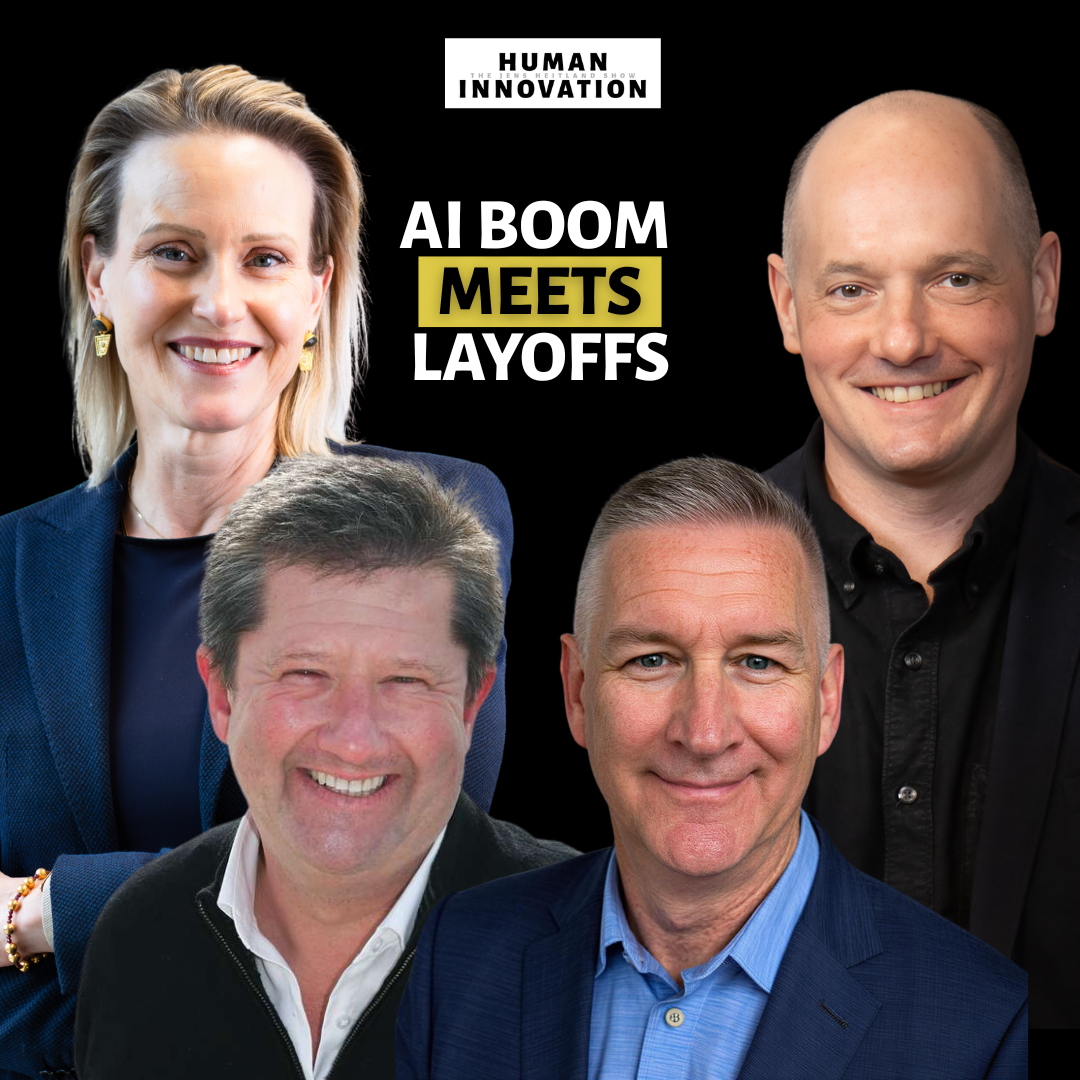
In this episode of The European Perspective, Jens Heitland sits down with Stewart Guenther, Stephen Brooks, and Annette van Berge Henegouwen to examine why Volkswagen and Stellantis, facing identical European market pressure, arrived at opposite outcomes, and what the difference between reactive and proactive board governance reveals about building innovation before a crisis forces it.
Youtube Podcasts
What Europe's Boardrooms Are Still Paying for Protecting the Old Model
Seven major restructuring announcements landed across Europe in a single week, and I spent this episode of The European Perspective working through what they actually meant with Stewart Guenther, Stephen Brooks, and Annette van Berge Henegouwen. Volkswagen is weighing up to 100,000 job cuts and four plant closures. Zalando is closing its Erfurt distribution center. Helvetia is cutting thousands of jobs. Heineken is continuing its own reductions under a plan it named years ago. Different sectors, different countries, the same underlying pressure. What separated these companies was never the pressure itself. It was what the board had already decided to do about it before the pressure arrived.
Volkswagen is operating on a margin of two percent against a target of six and a half. The board sits down in early July to discuss closures at Hannover, Zwickau, Emden, and Neckarsulm. From the outside, this looks sudden. It is not sudden. It is the visible end of a system that spent a decade protecting its current position instead of reinventing it. In the same week, Stellantis took the opposite path. Its CEO stood before the Italian parliament and laid out a 60-billion-euro plan, allocating capital to Europe and assigning each Italian plant a specific role in that future. One board reacted to a crisis. The other board had already written the plan that the crisis would eventually force everyone else to write.
I have spent close to thirty years inside organizations watching this same pattern repeat. The companies that struggle are rarely the ones facing the hardest external conditions. They are the ones whose internal system was built to protect what already exists rather than to keep testing what comes next. Volkswagen's price point has drifted beyond what the people who build its cars can afford. Chinese manufacturers like BYD are entering the market without the legacy costs that weigh down incumbents. None of this is unfair. It is simply what happens when a system optimizes for stability for long enough that stability becomes the only thing it knows how to protect.
The consequence shows up exactly where you would expect it. A hundred thousand people affected, plants without a clear next purpose, and a board now improvising in public what a competitor mapped out years in advance. Stellantis is not managing a crisis. It is executing a plan that happened to be ready when the crisis arrived. The difference between the two companies was never talent, capital, or even market conditions. Every automaker in Europe is operating under the same macro pressure right now. The difference was governance and timing, decided long before this particular week.
What I keep coming back to is a method I have used inside organizations for over a decade, most visibly at IKEA. If you want to innovate the core business, you cannot do it inside the core business. The internal immune system will resist it from day one, no matter how sound the idea is. What works instead is placing a small team at the edge, giving them a modest budget so they have to be resourceful, and then genuinely leaving them alone. Let them run. Let them fail. Every startup needs two to three years to find real market fit, and an internal team needs that same runway inside a much larger organization. The moment a board sees its first losses and panics, the experiment dies before it can compound.
Boards that build this rhythm early are not reacting when disruption reaches their sector. They are simply executing the plan they already tested at the edge, at a scale the whole company can finally use. Boards that skip this step spend the disruption improvising, in public, with a hundred thousand people watching what happens next.
Human Innovation with Jens Heitland is produced by Heitland Media Group.*
Guest Links
Stewart Guenther: https://www.linkedin.com/in/smguenther/
Annette Van Berge Henegouwen: https://www.annettevanbergehenegouwen.com/
Stephen Brooks: https://www.linkedin.com/in/stephenabrooks1/
Website:https://www.jensheitland.com/
Business: https://www.heitlandmediagroup.com/
LinkedIn:https://www.linkedin.com/in/jensheitland/
Facebook:https://www.facebook.com/JensHeitlandofficial/
Instagram:https://www.instagram.com/jensheitland/
TikTok:https://www.tiktok.com/@jensheitland
X/Twitter:https://twitter.com/jensheitland
Newsletter:https://www.jensheitland.com/newsletter
YouTube:https://www.youtube.com/@jens-heitland
Subscribe and listen to The Jens Heitland Show Podcast here:
YT:https://www.youtube.com/channel/UCjuSGi1feauCNSER3IKuGWg
Web:https://www.jensheitland.com/podcasthome
Apple:https://podcasts.apple.com/us/podcast/the-jens-heitland-show-human-innovation/id1545043872?uo=4
Spotify:https://open.spotify.com/show/7H0GWMGVALyXnnmstYA1NL
Transcript
[00:00:00] Jens Heitland: Welcome back to The European Perspective. Second episode. Around the table, Stuart, Stephen and Annette again. week we asked who pays. This week the question is what discipline looks like when the cycle catches you. Seven major corporate restructurings across five sectors landed in one week.
A European AI vendor launched Mistral for industrial engineering with Airbus, BMW, EDF, and CMA CGM as named launch customers. Germany wrote off two point three trillion euro on a warship program that never delivered a ship. And Berlin AI search company is in talks at two hundred million dollar valuation.
Let's get started with The European Perspective. Hello, everyone, and welcome. Great to have you all back
[00:00:57] Stephen Brooks: Great to be here
[00:00:58] Jens Heitland: running order today, same way as last time,
we start with technology. And in technology, we have this story, Mistral. Mistral is the European-based company.
I would not dare to compare them to global AI companies yet. I think they're on, on the path to be, a global pr-player, but right now I think they're very European-centric, which is nice, and that's why we talk about them. So with Mistral, they just launched, an industry engineering, on the 24th of June module, where they work together with Airbus, BMW and so on, enable them to use the AI model for the industry.
that will enable them to be independent from the US models. We have talked about that last week that Fable-5, was restricted, for people outside of the US, and then Anthropic needed to kind of call it and, and closed it down, and now it's back. At least I've, I've heard about it. I think it's back since yesterday.
but that, that is a risk vector European organizations might face more often, so it's good to have a European player, even if they're not yet frontier level capabilities.
So we start with Stuart. What, what are your thoughts on the European version of AI models and AI companies?
[00:02:27] Stewart Guenther: So I, I think it's interesting that you frame, and I think correctly so, that Mistral is not yet a clear near peer or peer to the large players in the frontier models. That being said, let's quickly remember when OpenAI the charge, Anthropic was a best-kept secret, and then it stormed onto the stage and now it is one of, if not the dominant player. So within AI, it is very possible and very quick for these type of what you may seem to be upstart companies to quickly become major, if not dominant players. Let me break down a few reasons why, and there's a, a really strong European element to this that is going to have some opportunities outside of the European market. First of all, you've got two spectrums within the large, frontier model hybrid space, and that is you've got like the Meta folks who are looking to be very open, and then you've got the OpenAI and Anthropic folks who are very much closed. Mistral has taken a hybrid approach. Furthermore, they've also come out with a model that allows for both on-prem as well as data center or in-cloud type of solutions. This is not simply splitting the needle. This actually provides them the opportunity and, more importantly, their customers, as we talked about last week, how they want to manage their data, how they want to be compliant, and how they want to deal, and how Europe wants to think about regulation. On top of this, this isn't just a regulation play. This is a company that started in '23 and has scaled from ideation to in billions of dollars a quarter in revenue, and they're on a pace to continue a 20X growth in their top revenues. So that's on a meta level. But let's also talk about, as you have here, why is this important in terms of industrial? Industrial has been looking, I-- as I said last week, they're looking to take these massive data lakes that they're forming on an ongoing basis, and how do they convert this into actionable intelligence? And Mistral, which started off as a large general form general LLM with their acquisition back in May, and that in turn has led them to launch this industrial solution.
It's providing targeted solutions that allow weightings by their customers that... So we've moved from a generalistic perspective into more targeted solutions. This is allowing industry to start building tool sets that, that impact their business and on top of it, do it within data form factors and do it within on-prem versus in cloud that meet their needs.
This is potentially game-changing, and especially if it's more than just a hybrid model, but actually a third way within the business
[00:05:15] Annette van Berge Henegouwen: Stuart, can I ask you for your perspective on the on-prem versus the Chinese on-prem? 'Cause so far on-prem's mainly Chinese. The American frontier models, it's all in the cloud. How do you see that play from, from a Mistral and a European perspective?
[00:05:32] Stewart Guenther: so the open-weighted models and the on-prem models are going to have a big driver. Right now, the solution is being pres-- It's a business model. I can subscribe, I'd use the tokens, I leverage your infrastructure, and then I do my compute. But then I am, as you're saying, you're, I am trading, and there's currently some backlash right now as to whether or not what's the actual benefit.
There's some accusations, I think they're unfounded, there's some accusations that the subscription model is allowing these frontier players to essentially reverse engineer the businesses of their customers. Similar accusations have been made against Amazon in the past, have been made against Meta in the past, so this is not new.
But to your specific element, for those businesses that are willing to make the investiture or feel that the sovereignty of the data, either because of their environment or their specific is the case, having this option is meaningful. And I think we're gonna see cloud providers start to create solutions that themselves are hybrid, where you're in the cloud, but you're increasingly ring-fenced.
So you will probably see for certain data that's really core to the business actually be fully on-prem, and then as you get further in the rings or you move within your supply chain, there might be more willingness to be hybrid in that scenario
[00:06:52] Annette van Berge Henegouwen: Yeah, and in that sense also from a geopolitical point of view, making it possible to do either cloud or on-prem from a European model kind of makes you independent from both the American suppliers as well as the Chinese suppliers
[00:07:09] Jens Heitland: Ya-
yani
[00:07:10] Stewart Guenther: using the Chinese model or you're using any model, you should be thinking about how am I forking, and then post-fork, how am I servicing the forked version of my open source on a go-forward basis? If you're willing to take on more of that resource burden, but you gain more control over what you want to do, if that's the right fit for you, this makes a lot of sense. Currently, the US model is one-stop shop. Let's kind of take the SaaS model, let's take the subscription model, let's build those things in here. And for a lot of, a lot of customers, that might be beneficial. But exactly as you're highlighting, there's gonna be a flavor differential. And also just respectfully, "Hey, we're a European market, we are a European supply chain, we should be finding things that are appli- applicable to us, and not just square peg, round hole these other solutions."
[00:08:03] Annette van Berge Henegouwen: That too, and of course, so far token usage has been subsidized. um, the, the, the cost argument against, you know, doing a subscription model or on-prem is actually starting to change also from a, a token usage perspective
[00:08:23] Jens Heitland: Yeah. Maybe one, one key part as well, if you look at Mistral, they're, they might not be at the top end when it comes to the global labs, but still, if you look at the industry application that need or will benefit from AI, you don't need to have the top, top, top-end models for, for most of the jobs. 'Cause if you look at automation of machine factories where you can leverage data in a completely different way, that is then using AI to restructure the data and, and help with that.
If we look in BMW, I mean, in the end, they're producing cars and, and engines and, and so on. They don't need the top end of, of the AI models for a lot of things. At-- For edge cases, for sure, but I think with that then leveraging a European model for them has, has the opportunity to one part have the r- European legislation, regulations, specifically GDPR, um, compliant automatically.
The trust factor, like we discussed last week as well, will, will help then. And then to your point, Stuart, looking at the data structure and what of intelligence you keep in-house, what are the co- what is the intelligence that you like models to, to read or not to read, and then in cloud or on, on a local model, I think is key for every organization, not just the big industry giants.
But I think it's, it's a good movement where a lot of other European companies should look at and learn from a- as much as they can to div- diversify how they work with AI and how do, do they use different models independent if it's a European model, Chinese model and/or, um, the US models. I can only speak for, for my small company, we use all of them.
[00:10:15] Stewart Guenther: If I may,
[00:10:16] Annette van Berge Henegouwen: And do you see that?
[00:10:16] Stewart Guenther: your slide actually tremendously highlights, and I'd love to get your, your take on this, Aneta, and that is this conversation right now so far, my fault, has really talked on a meta level and on a macro level, on a general purpose level, the impact this has. But this is also, I believe, a harbinger of what's to come. There will always be a need and a base case for the LLMs and the general purpose case. But really what we're talking about here is we're now starting to see specialization, specialization within the models themselves, specializations around specific use cases, and we're gonna see a, a real push, towards how we try and create real world environments, how we leverage increasingly the real world space into and then from these different models.
This is another tremendous area of opportunity. So as you highlighted, BMW just makes cars, but the more they can make these cars in different environments in a virtual space, the faster they can iterate, the more they can respond to both market needs and technology trends that give them meaningful advantages. That's wonderful. Aneta, I wonder what your thoughts are in terms of how these companies actually implement this into their base case
[01:11:29] Annette van Berge Henegouwen: when you're saying, development, I'm thinking digital twins. like one of the biggest, developments I've seen over the past years, both in real estate, environmental development as in industrial development. And indeed, Mistral has now this, industrial, module. Anthropic already has a, pharmaceutical model module.
So y- you-- those models are, um, are out there and, great opportunities. But I think also, risks for models of other companies
[00:12:10] Jens Heitland: Last one on the technology. Curious about your perspective, Stephen. So they're, they're launching this, this new model, and they directly launches-- launching it with paying customers. What does that mean from a, from a more entrepreneurial angle? I mean, I love to see that, but te- give us your take on that
[00:12:30] Stephen Brooks: But I, think if you were a, European executive, looking at this just two months ago, your procurement options were for industrial AI, were either wait for and fall behind or tether your companies to a core IP to a US foundation model that could realistically face supply chain cutoff risks. This week, that calculation completely changed. you can now buy multi-model modules capable of managing crash simulations, complex engineering design, document extraction from a local vendor. the procurement question I think is now no longer, an academic debate, for your board. It's a practical, concrete, and urgent which production process inside of your business would benefit most from a physics-grounded AI model, and who is the internal budget owner who can sign off on that in the next quarter? It's mean, it's, fascinating to watch this. As I say, two months ago it was a, it was a totally different playing field
[00:13:40] Jens Heitland: Yeah. A-agree. Let's, let's, let's get us into the next topic.
Success stories of the week. operators getting funded at a pace that we have not seen in the past, and obviously it's an AI game. So we have Berlin's Peak AI. They're talking at a 200 million pre-money valuation after doubling the ARR, to 10 million in 16 months, which is a pace that is not European level, at least from the past.
But we see there is definitely the needle is moving. They're looking into, um, like expanding and really growing. And then the same week, Seedcamp closed at 279 million for its newest pre-seed, which is not even Series A yet. So super exciting to see that. Stuart, obviously coming from Silicon Valley, um, the numbers might be smaller than you're used to, but what is your perspective on the, the impact for European entrepreneurs, but also what we can learn from that looking from your side over the pond to Europe?
[00:14:51] Stewart Guenther: Got it. S-so there's two-- They're very intertwined, but there's two really critical themes that we should talk about here, and, and I'll actually push back on, on a couple items. So let's first take a look at, at Peak AI. So in the p- the last conversation we talked about was a frontier model, and now we're looking for specialization within near frontier models and the impact it has on large industry. What is Peak doing, and how are these two very similar even though the scales are somewhat different? Peak is providing meaningful insights. Just as ind-industrial, customers are looking to try and convert their data lakes into actionable intelligence, Peak is serving marketers. Peak is serving the tip of the spear as it comes to how do we gain better understanding of markets?
How do we better-- gain better understanding of cohorts and intent? And how do we fill that into the overall, increasingly AI automatic workflow leading to conversions and therefore revenue? As we may have talked about last week, and we're implying here, the need to generate profits, the need to generate economic value out of AI is a core driver.
This is what's gonna keep this, tr-trend floating and push out the trough of disillusionment, and regardless, it's going to be what leads us out of that trough of disillusionment into pure profitability. So what is Peak doing? Exactly as you said, they have gone from a launch idea to in excess of ten million dollars in ten months.
That's meaningful. That's material. Let's get some additional data around that. That's not one or two contracts. They have over thirteen hundred clients. They're adding at-- Or apparently at this stage, they're reporting they're adding additional three hundred clients per month. These are the type of venture hyper-scaling targets that you wanna look for.
That also therefore explains how a ten million dollar company... And when we say ten million dollars, that's not past revenue. They've achieved a run rate of ten million dollars, and they're in the process of fundraising twenty X on top of it. This is indicating significant demand. It's indicating they've not found the boundaries of their market.
It's indicating, that there's significant adoption and opportunity for follow-on growth. That type of, of, of proof point says to the entire market, the investment market, "This is-- The water's warm. You wanna lean into this." And I'm gonna hold off, and let's just talk about Peak for a second because this is the c- this is the driver into what Seed Camp is doing.
This is a driver into the larger venture play, but that's a different conversation. So to that end, Steven, I made some-- they're making some bold statements here. Onboarding and driving value in sixteen months, idea to meaningful customer value that's leading to significant revenue traction, and based on their own sales forecast, they're looking to maintain this significant triple-digit month-over-month growth. How, as someone who builds and leverages these type, what, what do you expect and what should customers expect in terms of proving value from these type of companies?
[00:17:59] Stephen Brooks: they've, they've got to remain consistent in what they're delivering. I i think that's the first thing. it's okay to put out great numbers of, growth that you're looking to achieve, but if your infrastructure isn't right, if you, if your systems and processes aren't robust enough to support that growth, will end up losing clients, letting clients slide, and eventually the, business will just be imploded. I, I, I think it's, it's interesting that, I think, is it 279 million from the Euro Fund, Stuart? I mean, it's a tremendous amount of money. I think it's probably the largest this year. And, and I think that speaks to, yes, they've got confidence in what they're doing, but also I think it's like, you know, Euro Funds are ready, are, are ready and willing to, to weigh in on, on what they see as, as the next, um, what, what can we call it?
The next evolution of, of funding
[00:18:58] Stewart Guenther: So, u-using that as a segue into Seed Camp. So first, what Peak is showing, Peak is showing small teams leveraging and delivering value through AI-related tools, that meaning value to the customer. So these are, these are marketing firms. Marketing firms are under significant distress right now because they have to add value.
They need to be more than simply finding new and interesting ways to, to fill Google with orders to try and push marketing. They need to try and help understand their audience and make meaningful conversions for their customers. Peak is providing tools to them as well as tools to their downstream clients to facilitate that, to increase their conversions at an accelerated rate. This is material. That's why they're driving this type of revenue growth. And the reason I bring that up again is what's gonna create the appetite for a $279 million fund that is going to play in this space is getting proof points that if there is one Peak, one Peak, then there's gonna be significantly more other companies who can map this, so I can deploy, deploy my funds So that's the one thing. I, I, I... Do we wanna h- talk more about the fund itself, or do we want to expose some more around Peak? 'Cause I, I...
[00:20:18] Jens Heitland: It's
[00:20:18] Stewart Guenther: of the key things here, when I first looked at this and first heard about this, wow, that's, that... It feels like your traditional anything AI gets a large ticket deal. But when you scratch the surface and actually see the growth, see the revenue, see the retention of customers, see the reported impact to the customer's customers, a 20X multiple on growth m- is actually in line with historical venture norms. And that also in turn signals to the Seed Camps, to the a16zs, to the founders cap funds that you wanna deploy more aggressively into this space at this time
[00:20:59] Jens Heitland: Nette
[00:21:00] Annette van Berge Henegouwen: I think Stuart, thank you for that. I think there's another angle here because if you look at AI, there is in, the adoption, there is the, efficiency trap, so just adopting it in your company, making, you know, small improvements, not really moving, the needle. and then there's the opportunity either to, in a vertical integration or a horizontal integration, make new plays. And, of course, Peak is a startup. It's not an existing company that changed their, value creation model. But still it is a new play in a vertical manner that they are creating here
[00:21:45] Jens Heitland: Yeah
[00:21:46] Annette van Berge Henegouwen: Steven, your thoughts?
[00:21:48] Stephen Brooks: this, the, the next generation of B2B AI isn't just being built in Silicon Valley anymore. You know, it's being built within walking distance. And, um, when, when a board sits down now to look at, build versus buy decisions on enterprise software, buy side is now local and expanding at an unprecedented pace.
I, I just think we're, we're gonna come back to this, I think in these, conversations time and time again. And, um, I know Jens, you, you had something you wanted to, to bring up about this as well
[00:22:22] Jens Heitland: Yeah, if, if we look at Peak AI, maybe s-stepping it back, a step back, and we will put some links to all of the companies that we mention, but obviously a lot of people might not have heard about them. But if we just look at what they do, so at the, at the good old days when we started with the internet, there was SEO, which is search engine optimization, and everyone was interested.
If you put something that is adjacent to what we do as a company into search, let's say Google as an example, I want to make sure that our company, our business, our products show up. The new version of that is AI-driven, as we all know, is If I put something into any of the AI models, doesn't matter which one, I want to make sure that my company, my products, our, our, our offering comes up and it's, it, it's a different play when we look at AI than it is at SEO, which is search engine optimization.
And what or Pack AI is doing, they literally observe the AI models from an external perspective. Think of it, you sit in front of an AI model, let's say ChatGPT or Claude, and you're asking questions that are going into the direction of your potential product. They are recording what the AI model is showing to the users that are, are using that AI model, and then they're comparing what this AI model is using or, or giving you as feedback what the others are giving as feedback.
And then they're building the intelligence on top so that they can leverage that to give you as a brand or a business the answers of what do you need to change so that you show up, I think is brilliant. The interesting part of that, for me, it's a super crowded marketplace already, and they're still getting a lot of investment.
Reason for that is that it's right now, a one billion market, which is fairly big. But the forecast, for the next couple of years, it's, it's more towards seventeen, eighteen billion, dollar markets. So there is still some room for a lot of companies to, to jump into that. Moving to Seedcamp. Seedcamp, for those that have not heard about Seedcamp, Seedcamp is basically an investment company.
Um, they're just raising the, the seventh fund, and they're focusing on early investment, which I think is super needed for-- from a European perspective. Because if we look across Europe, what I have seen working with startups, know, Stuart, when did we meet? Two thousand and fourteen, roughly. Um, I've worked with a lot of startups and a lot of, programs.
So a lot of startup founders go through different accelerators and try to validate their ideas with customers. Most of the time in Europe, you're not getting funding in pre-seed because you don't have revenue. Comparing this to the US, it m-might have changed, but you're only getting an investment when you have an idea, and this is not the risk appetite in Europe.
And I think Seedcamp, companies like Seedcamp are raising funds so that you get earlier access to capital, capital so you can validate faster. And with that, you don't need to have always automatically revenue, which helps, I think, a lot of entrepreneurs in Europe. So just, just, sending that message out there as well.
Any reactions to that before we move to, to transformation?
[00:25:58] Stewart Guenther: so if I may, let, let's break... Th- this is important 'cause it deals with exactly as you're highlighting, Jens, the ecosystem, within Europe, and we've been talking heavily about AI. But Seedcamp and Seedcamp's two funds that make up this 280 million, that's not an AI fund. So there's... this actually is reporting on two different funds, a $179 million seed fund of which AI is an important part. Let's break down what they're expecting and how bullish they believe the European market to be. So they're looking to write one to $1.3 million checks. They're looking to lead 70% of the rounds they participate in, and they're looking to invest in 30 to 35 companies per year over the next three years, totaling between 100 to 120 companies. That is anticipating. They're saying clearly they believe that there is a very vibrant, very active, investment e- environment in which they can deploy meaningful capital, and it's not just a one-and-done check. When you are a seed and, and late seed stage investor, you are going to need to invest into the A to both protect your position and really back those players to then move into the revenue phase to become attractive on the global market and to attract later stage investment. Hence, why they've also started a second fund within this, a $100 million Series B fund, and that Series B fund there is to back their winners, deploy into their winners, which are moving cross-channel, cross-ocean, and into the global market. So they're gonna-- they're looking to deploy in the next three years into up to 120 companies. Small checks. They're not the only check. They're gonna look to lead 70% of it. That is indicating... They're indicating very clearly that they believe their deal flow and they believe that the ecosystem in Europe right now can support these very aggressive numbers. This is actually taking their current funds under management and adding an additional 27% on top of it.
This is extremely bullish. And as they pull and as th- And keep an eye on this, and keep an eye on their partner firms that they tend to invest with because if they maintain this pace over the coming year, over the coming two years, it really is a positive canary into the type of growth that's happening within Europe. As an example of this, and I, I promise I'm done The w- the launch of Mistral's endeavor into the, industrial space is because they acquired ME AI, which is a Linz-based company. a Parisian-located firm is buying a company in Linz to then launch their new offering, their solution into their customer base, which is helping them go from sev- $400 million run rate to a billion dollar run rate they believe by the end of this year. This type of consolidation, this looking into the European market to find other players that can meaningfully drive your revenue and your customer traction, firms like Seedcamp are saying, "We see this ad infinitum and now's the time to get in
[00:29:23] Jens Heitland: 100%. Let's get us to the next topic. But before we do that, if you are a startup inside of Europe, if you're a fund that is investing in Europe and you would love to jump with us onto a, a podcast together, we would love to support you. We'd love to highlight you. Reach out to any one of us and we will get you on, on one of the future episodes.
So let's,
let's get to the next topic, which is transformation. Now we move to big corporate. as you say in German. Supervisory board sits down on 9th of July, that is in a couple of days from the recording date at least, discuss up to 100,000 cuts of employees for the German plant closures.
So the potential closures are Hannover, Zwickau, Emden and Audi's Neckarsulm. So the, the total Volkswagen brand is operating on a margin of 2% against 6%, 6.5 target. So there is for sure some heat on the table that they're going to discuss, um, this and next week in the supervisory board. does it mean for Europe?
What, what does it mean for Volkswagen? What does it mean for people and as well the other organizations in the ecosystem of Volkswagen? Annette, what are your thoughts?
[00:30:52] Annette van Berge Henegouwen: Well, my first, first thoughts are actually about what happened in that boardroom. Is it, um, 'cause going from a cut of fifty thousand jobs to likely a cut of a hundred thousand jobs, closure of four, locations, not one, not two, but four, you wonder, is it, you know, a lack of con-constructive dissent in that boardroom, or were they just, you know, driving with their eyes closed? Is it, a lack of scenario thinking, or is it actually a strategic play? it, um, countering the s-destructive forces of labor union powers, labor unions who have been very hesitant to, engage in, the, the threats for existing jobs? 'cause that's one of the, the important things that currently in Europe labor unions are looking out for.
It's the existing jobs. It's not creation of new jobs. It's the protection of existing jobs. Um, so it might actually just be a strategic play. you know, it's, um, um, in, in Dutch we would say, "Dood of de, de gladiolen." Um, it's about, you know, there's no turning back now, and you have to eat this, and there's, it's, it's, it's a type of-- it could be a type of power play
[00:32:21] Jens Heitland: Yeah, definitely might be sure. Especially me growing up in Germany, I know how sometimes difficult the relationship between the unions, workers council, um, big organizations are, and you're just not as flexible comparing it to the US. Thijmen, what are your thoughts?
[00:32:41] Stephen Brooks: I, I don't think this is, um, isolated regional anomaly. I think it's, ultimately a leading factor of what happens when the incumbent absorbs intense Chinese cost competition. Just look at BYD and, and, and, and Chery. And if you're sitting inside the automotive ecosystem, the transmission belts, start moving the exact moment the finish- board at Volkswagen finishes voting on the 9th of July.
You e- either effectively have between a week and the end of the third quarter to reposition your business. Um, the urgent question for every other industrial board in Europe right now, I think, is pretty straightforward. Are you already trapped inside the exact same cycle without knowing it?
[00:33:34] Jens Heitland: Yeah, 100%. I mean, if, if we look, obviously I, I'm biased because I'm driving a Volkswagen. But I, I think if, if I look back into, in, into the golden '80s and '90s where I grew up inside of Germany, Volkswagen, Volkswagen was the car that everyone that grew up with me wanted to drive. That has turned around. I know a lot of people, I mean, especially young people, are less and less driving.
But I also see that, I mean, they're, they're building still good cars and electrical cars now as well. But if, if you just look at the price point of a normal Volkswagen, it's, it's just too expensive to be able to, be afford- afforded by, like, a normal person that is working that's a blue collar job. sure the normal employees at Volkswagen are not able to buy a new Volkswagen.
And, and there is something for me i- is wrong. Then comparing it with the, the Chinese models that come into the European market fairly quickly, BYD as, as one of them. They are good cars. They're not crap cars we-- which, which as a German you might think.
[00:34:47] Annette van Berge Henegouwen: Reasonable. You
[00:34:49] Jens Heitland: They're, they're-
[00:34:50] Annette van Berge Henegouwen: know, if you go straight, they're pretty good. You know, curves less
[00:34:54] Jens Heitland: No, I, I, f-for me it's just the, the thing is, for the price that you pay, you, you cannot expect to have a, a, a Mercedes as an example. But it still is a good car and, and it will take you from A to B and, and you can do that at least right now cheaper on electrical than, than on gasoline. So I think there's, there's quite a push from, from the external markets into the European Union where organizations like Volkswagen, BMW, and the others, they need to figure out how they counter that.
And I think the protection of the old way is the whole innovation cycle. Stuart, we have been working with these topics, like 10 years ago. If you don't innovate today for the future, then you're going to have a problem, and I think that's the car industry in, in Germany and, and in Europe right now
[00:35:47] Stewart Guenther: I, I would say the, the VW board and all auto manufacturing across Europe, are facing Hobson's choice. there's two things they've gotta manage if this is anything like what the US experienced. It'd be interesting to see how much of every Volkswagen price is there to support the legacy costs and the promises that have been made to labor appropriately and to the workers. How much additional input costs are in there compared to brand new companies who do not face or carry those carrying costs in China and elsewhere. So there's a need to try and drive efficiency to lower that price, and the way you do that, unfortunately, is through technology, which in turn reduces the number of people in, in an optimized way.
So either you add that innovation and then you find ways to repurpose those people, that's the most ideal, or you try and maintain the current system as long as possible before you're forced to change. This is what the US, auto manufacturers did. The few that actually made some degree of innovation, Ford weathered it the most, but the majority of them actually needed to face plant very, very hard and ended up requiring government support to, in that point of extremis, start to evolve
[00:37:07] Jens Heitland: But what I'm, super curious and, most probably we'll learn that in the next couple of weeks and months. what is their plan with the people? What is their plan with the plants? How can you repurpose plants that are building high quality cars right now to look maybe into the future as an example?
I mean, Elon Musk is building robots in the same factories, or at least adjacent factories where he's building cars. With the German engineering power, that should be possible. It just requires a, different way of thinking. So what are the robot-- robotic companies that can jump in and take over these plants and maybe even the people so that things move forward for a country like Germany, engineering powered, like I said.
Annette, you have some thoughts on that?
[00:37:56] Annette van Berge Henegouwen: Yeah, definitely. in the previous episode, Stuart we talked about features, how tanks, if you look at the features, are actually just drones on wheels. I think the feature thinking is a very interesting one. However, the change part within the organization is a very big challenge 'cause yes, you have these workers, yes, you have these, these plans, changing from the identity of making Volkswagen cars to making something else which you might have, you know, perfectly good, excellent quality in making those features, is going to prove a, a very big challenge
[00:38:39] Stephen Brooks: the other thing about, that is you're talking about 100,000 redundancies, And, and even with the best will in the world, repurposing those plants to make new products or, or, or, or streamlined into other, other areas isn't gonna mop up that 100,000 redundancy. and so those people are gonna need to, you know, retrain and look at other, areas of, of, of growth that perhaps they can, they can find employment in. I think that's a real
[00:39:11] Annette van Berge Henegouwen: Yeah.
[00:39:12] Jens Heitland: I, I agree 100%. But I think that because Volkswagen is very close to the government as well, I think it's a, it's a, it's a German, if not even a European play, which, which leads us to, to the next topic where we go deeper into one sector. And which sector do, do-- to go into after this? Let's stay in the automotive sector in Europe.
the interesting thing about that, there, there are two di-direction right now. Um, a Volkswagen reactive approach, at least that's how it looks from the external side. Annette, you mentioned maybe it's not, maybe it's a strategic move, might be. then the CEO of Stellantis in Italy stepping up and saying, "That's our direction. That's where we're going." Completely different approach That's more, an innovator approach, a, forward-thinking approach, talking about mainly about the Europe-- the Italian part, where he said, "Every single Italian plant has a specific purpose as part of what we are going to do," which gives people a perspective. And I think just this ba-- it, seems basic communication, but it gives people hope. It gives people perspective. So, what he was sharing is that certain plants will do certain models, like it often is, and some are doing smaller models, some, are doing bigger models. But it's very, very clear that every, plant has their target.
So it feels like in the end, it's the same market. Volkswagen and Stellantis, they're all automotive inside of Europe, and obviously they are shipping to global as well. But two different reactions on the same pressure. What, what are your thoughts on that, Stephen?
[00:40:59] Stephen Brooks: Look, on the one hand, you've got Volkswagen executing a, a, a reactive strategy, right? Um, you know, they waited until their brand margins eroded started panicking and now they're announcing, um, plant closures and, and, and layoffs. the other hand, you've got, um, Stellantis CEO, Antonio Filosa, I hope I got that right, Antonio, um, who, who stood before Italy's parliament to map out a 60 billion euro fast lane 2023 plan, and is proactively allocating, I think it's 40% of the capital to Europe.
I, I, I mean, that's forward-thinking. That's getting a grip. That's thinking ahead. That's not being y- y, you know, reacting and panicking like, like some of the other motor manufacturers are
[00:41:48] Jens Heitland: Stuart, thoughts, thoughts on the, the European ecosystem of cars
[00:41:54] Stewart Guenther: A driver of the European success of the last 50 years has been to take obvious quality, obvious engineering excellence, and creating high-quality, high-demand products into the global market. of the things that's interesting in this conversation up to this point is about how do we defend and recapture the European market. So Stellantis and Volkswagen and all the companies both, it's not going to be enough that they defend the European market. They need to be looking into products which allow them to go back into an export framework. 'Cause if they don't, the BYDs, as I mentioned earlier, the Cherys, as was mentioned earlier.
Because they do not have these legacy costs, because they do not have these legacy pulls on the way they operate as a business. Because if you have 100,000 voters, that is regardless of what you do, that's gonna have an impact on some of the strategy you make. So they are-- Again, I don't envy both Stellaris and Stellantis and, and Volkswagen.
They need to find export-ready that really highlight the quality of what Europe brings to find net new revenues in. So st- to your point, Steven, leveraging government funds with the purpose of recapturing that market is smart. Leveraging government funds as an extension of runway from a venture perspective, this is just extending your pain and, and pr- pr- making it harder to innovate, but with more success that you get these injections. So my hope is that there's someone who even when they win with the government funds, they're putting on that startup mindset, that new market penetration mindset, and reorienting the business.
[00:43:34] Jens Heitland: Yeah, that's
[00:43:34] Stephen Brooks: ruud. The c- their results are up, I think, um, it, it, second half revenues were about 10% up, I think, on 2025. their first quarter operating income for 2026 is already back in the black. I mean, that's, that's the proof of the pudding is in the eating, right?
[00:43:55] Jens Heitland: Yeah, it's i-in, in the end, it's innovating your way forward. And what I, what I hope that all of those and what we can learn as well at o- other organizations in Europe, innovate day. The, the, the thing that I have seen in corporate Europe over the last, let's say, ten years is how can we save? So it's a, it's, it's a construction-- contraction model where it says, how can we save the position that we have rather than how can we innovate at the edge of the business and really look into to reinvent ourselves.
And that's not a, a European mindset in most organization. And I think the external world forces us, and AI is one of the big drivers in the future that will force us towards that. that means you need to reshift your thinking, you need to reshift your culture in an organization, and you need to learn to communicate openly and early on so that the, that the shift in society and the shift in the organization goes into that direction.
Let's move towards entrepreneurial thinking, so we have a lot of restructuring going on in Europe, I think we can, we can look into. Let's, let's first look at the story. So we have the same week, Europe absorbed seven major restructuring announcements across five sectors.
We had Volkswagen, which we talked about, hundred thousand. Zalando closing its Erfurt distribution center, affecting roughly two thousand seven hundred. Swiss insurer Helvetia, however you pronounce that properly, cutting up to two thousand six hundred, um, jobs. Heineken Evergreen 2030 strategy continuing to land with around four hundred at the Amsterdam global HQ.
So there are a lot of layoffs going on right now, more than that I mentioned even. But the interesting thing is there are two direction. One is Stellantis example and Heineken, which use a twenty thirty perspective, which to be honest, I mean, twenty thirty is around the corner, but they looking ahead, they're taking an forward-looking, innovative approach, and then the others, they're kind of contracting.
does that mean for thinking in large organizations? What do we need to learn? What do we need to go forward? Stephen, you as the entrepreneur here, us what, what, what are your thoughts on, on closing and, and, and things going forward in Europe on this?
[00:46:25] Stephen Brooks: Listen, I think it's easy, for us to spiral into a doom loop about these closures. I mean, it really is. And, and it is terribly sad, and is... it's the result of people not thinking ahead, right? Um, the critical variable here is market conditions. Every single one of these companies is operating under the exact same European macro pressures and interest rates, and the only true variable is their governance and cadence. The boards that, built and sequenced proactive playbooks years ago, like you said, Heineken executing Evergreen 2030, and, and Stellantis, who we've just been talking about, are, are managing this transition in an orderly, structured way. The boards that hesitate are the ones that will be forced into what I see an abrupt and reactive panic.
Volkswagen, typical example. And this is, for me, this is ultimate proof that the, the established organizations don't just need to entrepreneurship. They've really gotta deal with it. They've real- We talked in, in our last episode about, you know, um, being willing to take the risk and being willing to be willing And, and, and if the board is sitting back, and, and just thinking, "Listen, we'll ride the storm, you know. We've, we've got through it in the past," you know, as, as we say in, in the UK, you can get your P45 at the door on the way out because y- that, that will be what happens with these businesses. I, I, I'm, I'm interested, Anetta, I know, you know, from, from your European perspective, do you see businesses really taking that approach that, that they are trying to look at structuring a d- in a different way to, to take on the challenges of the future?
[00:48:31] Annette van Berge Henegouwen: What I see is that, at least in, in what I see so far, is that some are, and some are just, you know, struggling through the day-to-day challenges. I mean, if you are in retail and just trying to fight off the online ch-- still tr-trying to manage the online challenge, where do you, where do... What are you busy with?
That's not the, the far future, it's actually the current future. And I think there, in that direction, it's, it's a cha-- it's the obligation for a supervisory board, at least in a two-tier system, or a board in a one-tier system, system, to actually also sit back and think, you know, do the pre-mortem. What if in two or t-three or one, one year or five year we failed?
How, how did that happen? And how are we capable to address that now? and then indeed, to have the entrepreneurial thinking, to have something separate from your day-to-day operations to do the innovation and bring you into that future. Start small, bring you into the future. But it needs to start at the board, 'cause if it doesn't start at the board, who else is going to do that?
If you're s- you know, just struggling through your day-to-day cashflow challenges, visitor challenges, your supply chain challenges. There's, there's, there's a lot going on actually in managing a day-to-day business which keeps you from looking further ahead.
[00:50:00] Stephen Brooks: Agreed. Agreed. it, it, it's interesting in the UK, WHSmiths, which, you know, goes back over 100 years here, is closing, o- 150 stores, um, purely for that. You know, the, the, the, they can't compete, a- and their market is being squeezed and squeezed and squeezed. even in the US, you know, when Best Buy looked at turning stores into s- small distribution centers at the back of large stores, you know, it, it wasn't a great success because they weren't committed to it and, and didn't build in the infrastructure.
So I, I think we're gonna see some more of this, but as, as a very optimistic entrepreneur, I think what that does, it opens up gaps for other entrepreneurs willing to take the
[00:50:48] Annette van Berge Henegouwen: Okay
[00:50:48] Stephen Brooks: maybe we'll see smaller businesses with a much bigger reach, that, that use all of the available technologies that we have, to us and the ones that will come along in the future.
And I think that's probably where the, um, the foundations of businesses are, are probably gonna be built
[00:51:08] Jens Heitland: You had, you had something to do,
[01:10:10] Stewart Guenther: If I
[00:51:10] Jens Heitland: Chad
[00:51:11] Stewart Guenther: may, so this slide, and, and I know we're hesitant, we don't-- this is not a doom loop. But let's take a look at the macro, what this slide is communicating. Europe and the globe is facing three main shifts. We are seeing demographic shifts, we're seeing market dynamic shifts, and we're seeing technology shifts.
Any one of these is disruptive. The combination of the three are materially disruptive, and a large aspect of what you see on this slide are different weightings of those three impacting these different industries that are then forcing or enabling these selections. And so what does that mean for everyone else? Well, first of all, what t- what historically happens when these things come about? We either enter into a consolidation phase, or we enter into a renewal phase because of that disruption. The American model, the Silicon Valley model, is very much to focus on the disruption and new creation out of that, and the European and the East Coast US model is to very much focus on the consolidation and efficiency through consolidation. Both of them are very meaningful. As you listen to this and you look at the fo- the forecast for your own business, you wanna work with the people in this call, with Aneta, with Jens and Steven, because you should decide, "Am I on the acquisition path? Am I on the acquiring path? Or am I in the process of reinnovating and creating something net new, either to reinvigorate my business or to go into that acquisition strategy?" Which either, which-- whatever direction you choose to believe your industry is driving, you're still gonna wanna leverage entrepreneurial thinking, you're still gonna wanna leverage innovation as ways to make your business maximally attractive, first to your customers, and then look to your left and right to see which other businesses you might partner with, acquire, or be acquired by to then leverage that market penetration. This is, this is not just happy talk. Those few companies, whether it is Microsoft in the '80s, whether it is Meta during the dot com bust and Google during the dot com bust, whether it's Revolut during the financial crisis, there are consistent examples of unicorns that have formed in the depths of these transition painful periods where everyone's focusing on keeping their head above water as opposed to innovating into the market that's coming. Those who do, they capture the lion's share, and they then lead the charge. This is actually, as crazy as it sounds, a tremendous opportunity
[00:53:49] Stephen Brooks: Agreed.
[00:53:50] Jens Heitland: Yeah, agree Let, let's close it out and, and then move to the last topic with something very practical. So I, I have been working with innovation quite some time now, more than a decade, and what every organization can do these days, number one is focus on business fundamentals. I give you the examples of IKEA, where I've been working for 10 years plus If you focus on the f-foundational elements of running an IKEA store, if we look at these blue boxes, this is a money-making machine.
If you do the foundational elements wrong, it's not printing money. And as an organization as big as IKEA, what you need to look into is how do you build an incentive structure that gets innovation and experimentation flowing, which then creates learning loops. And there are two things to that. One thing is doesn't work you do the normal core business.
If you want to innovate the core business, you need to do that on the edge of the business because the internal immune system of the organization is fighting against you from day one. Believe me, I've done it in several organizations, it's always going to happen, no matter how good you think you are. So you need to put a team that are true intrapreneurs, people that are risk seekers, that want to figure out new ways of thinking, new ways of working in the organization.
And these are the people that you have in-house. You don't need to have an external consultant who is telling you for millions of euros what you, what you need to do. You have all of these people in-house. These are the people that are asking the difficult questions today. Put them at the site of the business, give them a small budget so that they cannot live from it, and they need to invent new things and, new ways of working. And then give them freedom. Don't put a manager that is delegating everything on, top of them. Put them into a group that is the same level and let them run. Let them fail with the number one goal, earn money, going to figure out what the future is. Let them run on the side and as, faster they run, as more you can bring back into the larger organization.
It always works. It's a proven model and has worked in a lot of organization. it's so big that you take over the, the core business, which in size of IKEA with, I don't know, 50 billion might be a little bit difficult right now. But, but just for, for organizations in Europe, it's not that difficult.
There are amazing books out there. If anyone is interested, I'm happy to share, um, more on that. It's possible. It's, it's just you need to take the risk and put, let's say, 5% of, of, the total at the side and, and use that for, for innovation. But radical innovation, where you look into how can we disrupt our business, not how can we save a couple of euros here and there.
And, and, really trust the team to, to, to do that and don't kill it Because the, the worst thing that's always going to happen, the board is giving the freedom, they're allocating the budget, and then they see, oh, they have burnt the first two millions. And they say, "No, you haven't, you haven't created revenue yet."
Because you haven't had enough learning loops. Every startup takes about two to three years to get to a proper market fit depending on what startup it is. you need to have that time inside of an organization as well to drive this learning cycle. One of the very, very practical examples, let get us into Fuck-up of the Week.
So,
[00:57:33] Annette van Berge Henegouwen: Oh, Steven, Steven wants
[00:57:34] Jens Heitland: okay, Stephen, sorry
[00:57:36] Stephen Brooks: just say, just going back to what Aneta said, and thank you, Aneta, um, about earlier on about it's got to come from the board, right? There has got to be an appetite for the board to innovate the business, and you do need to give people time. You're exactly right, Jens. I- if it's not broke, don't fix it. If it's making money, that's great. Let it do that. But let's take it to one side and, and bring those people that are for the challenge, looking for the risk, might be a bit crazy, who knows, right? And let them work on that, and then integrate that into the business. And, and, and actually, if, if you, you know, listen to all of the, this, this, episode so far, what Jens just said about innovation is a key point that you should take away and listen to again and again and again, because it's immensely important.
[00:58:33] Jens Heitland: yeah, and there are a lot of good, good, good examples about that, that you can learn from.
[00:58:37] Stephen Brooks: 100%.
[00:58:38] Jens Heitland: Let's get us into the fuckup of the week. Somehow these fuckups are s- connected, at least in the last two episodes, with, with war. I don't know why this is the case. Maybe there is a bias on this. So cancels the frigate program after prime contractor failure.
So the, the German defense budget was allocated to one, um, frigate, which is a shipbuilding company, to, to, to build several vessels. Let's call them... Is it vessels? I don't know. It's...
[00:59:11] Stephen Brooks: source is good
[00:59:12] Jens Heitland: Vessels. Let's see, I learn English these days. Um, so, so what, what they were, were looking at is us these ships in a certain amount of time, and then the, the company wasn't able to do that, so they, they needed to figure out, and then they canceled it, or they pivoted to smaller ships in the end.
So what is interesting on that one, it's, I think it's, it's a proper fuckup because it's public money if you, if you take the defense budget. It would never happen in, in a, in a, let's say, private business. If I'm procuring something as a business owner, I make sure that the company that is getting the money can deliver it, and I give them enough money, and I validate that, that it's working because there's, like, no politics involved.
I know I'm biased because I'm German, but what, what are, what are your thoughts? Who wants to go first?
[01:00:06] Stephen Brooks: I'm gonna dive in, can
[01:00:07] Jens Heitland: Well
[01:00:08] Stephen Brooks: 'Cause we- we're not German-bashing. let's make that clear to
[01:00:11] Jens Heitland: No, agree, agree
[01:00:12] Stephen Brooks: we are, we're not doing that. Listen, it, like you said, if, if a business wasted 2.3 billion euros in, in a project, you, you'd probably get rid of the board, And bring in a whole new team.
This is even worse. This is taxpayers' money, they have nothing to show for it. I think it's absolutely appalling. And, and whoever structured that contract and didn't have some kind of clawback or, or, or, you know, KPIs that, that they could stop it because it was going off track. HS, HS1, HS2 here in the, in the UK is, is a prime example of that.
I mean, it's just ludicrous. Costs have spiraled out of control. I, I, I, I Listen, we, we talked about Eurofighters, didn't we, last week? We're talking about ships this week. Maybe next week we'll be talking about submarines, who knows
[01:01:07] Jens Heitland: O-other thoughts, Annette?
[01:01:08] Annette van Berge Henegouwen: yeah, there's little to add other than, um, I'm actually thinking if... The, the, the, the question that comes to my mind is how much knowledge of what they are actually procuring is available on the government side to actually come to the right decisions, and not just the contracts where all the risk is at the, at the supplier. Because then, I mean, we've had those disasters here in the Netherlands that nobody wanted to submit an offer anymore because they were like, "We're not going to take on these risks." Um, and actually having the proper the knowledge, the deep understanding of what you need. You know, do we need big frigates? know. Apparently, in the end, they, they figured out that they didn't. Why did they-- Why they did-- Why did they only figure that out at the end and not sooner? Really makes you wonder. At least makes me
[01:02:06] Jens Heitland: Yeah. Stuart
[01:02:08] Stewart Guenther: So, um, there's three types of markets. There's your classic B2C, business to consumer, B2B, and then this sits firmly within the B2G The advantage of being a supplier into the B2G space is when your customer has a license to print money, there's a high degree of likelihood you're going to get paid. The difficulty with working with that type of a customer is you do not have true market dynamics that are actually gonna determine what the product market fit is, what the demand set is. You don't have any of the normal market drivers in terms of speed and efficiency. You need speed to meet the needs of that individual customer or small group of customers. And one of the things that the Germans and the Italians have tried to do is create a product which is going to be applicable to additional not just the one. But that doesn't change the fact that when you have only one customer, if, as you said, Aneta, the customer doesn't know what they want, or the specs are changing based on the current geopolitical needs, or the build cycle is going to have an impact outside of your range to forecast what those future geopolitical needs are, it's gonna end up increasingly such that at some point either the G is supporting the program because, as we talked earlier, there's a significant number of voter involvement in this project, or there's gonna be a decision to move away from it as the needs of the sovereign change. So th- one of the things that's interesting is you notice how they're moving, and increasingly within these projects that are falling apart, they're repeating and replacing them with near-term stopgap solutions, and that's an- indicating another element to it. Not meaning to be political or turn this into a geopolitical scenario, but the technology innovations which are forcing all of us to reconsider our own markets are equally having impacts on sovereigns. The... Again, as we s- see what's happening in the Middle East, what's happening in, in, in Ukraine, the fundamentals of how you project power and how you defend against power projection are in flux. And so there needs to be... I would say there's a tremendous opportunity. Companies like Anduril are actually leading potential new ways forward. Put in classic market product thinking. Try and find solutions to specific points. Take that on yourself in terms of the initial build cycle and the initial product development cycle. This is not gonna be the case for frigates. There aren't enough companies out there that are building frigates. But there are other solutions which you can use market dynamics and then offer the market into the-- offer your product into the market, and we're seeing right now very consistent success for those type of businesses. That thought process, if you are in a B2G-- B2B space with a small number of customers, apply that same thought process. If you are in a B2C space and your dynamics of your market are shifting, apply these same thought processes. What do I invest in now that meet the needs of some subset of that market and then grow- go it laterally
[01:05:20] Jens Heitland: Yeah, I think it's
[01:05:21] Stephen Brooks: can I just say from a business perspective as well that, you know, if your board hasn't already asked the question of, of what your contractor, you know, failure rollback plan looks like, and if you don't have a specific executive who owns that risk, running on hope, not on governance. And, and, and, you know, I, I think B2G is a classic example of that.
No one, no one is actually taking that, that, and owning that risk
[01:05:49] Jens Heitland: That, that's I think the biggest challenge. We-- I, I can only speak for Germany in, in this case because that's, that's the country I still lived most of my life and at least 25 something years. Um, all the big failures were government projects because they don't happen. I mean, you, you look at how fast Elon is building a, a car manufacturing plant in, in, in, in Germany.
Nobody else can do it, um, like he, he does, and positive or negative doesn't, doesn't really matter. But it is possible if it is a personal private investment, structure. And I think that's something the government structures need, need to figure out. How do you take out politics out of these deals?
Because I, I, I don't blame the company at all. I think it's not their fault without me knowing details. think it's the government and the politicians that are jumping in and out just to, um, to gain the next votes. That's, that's breaking these deals instead of making it financial. Stuart?
[01:06:56] Stephen Brooks: but as, as a buyer of the product, it's the government's responsibility, isn't it, to make sure it's on track? The, the, the, the, the, the builders, the manufacturers know they can do, do their job. They know. But if, if the field is, as, as Stuart mentioned, is constantly changing and, and nobody at the government end is driving that and owning that risk, it's always gonna fall apart
[01:07:21] Stewart Guenther: So, so the sovereigns are by nature gonna be driving fixed price contracts, and they're creating the environment in which these, suppliers are operating in. But I would blame, the supplier sight unseen because this is a pretty common behavior across the industry. And that is when you live on change orders, when your business model is I win the bid, but I generate the profits off of the guaranteed attachments to the change orders, that changes how you bid, that changes how you build your supply chain, that encourages delay, that encourages, whether you mean to or not, inefficiencies.
Because since the other side just prints more money, you live off the change order as opposed to the delivered end product. This needs to fundamentally change. The speed of the world is no longer a change order world
[01:08:11] Stephen Brooks: Agreed
[01:08:13] Annette van Berge Henegouwen: Good point
[01:08:13] Jens Heitland: So we ha- we have talked about a lot of topics.
What, what are, what are our key takeaways from, from this episode?
[01:08:21] Stephen Brooks: don't be gloomy about what's going on with redundancies in Europe. Um, be positive. listen, I come at it, as everybody knows, from an entrepreneurial background. Um, there's opportunities out there, as, as Stuart and I and Aneta have all talked about. but I think y- y- listen, stay focused in your boardroom. Keep, keep an eye not on what's happening next week, next month, next year. What's gonna be happening in 10 years' time, and what are the things that you need to be innovating now will see the success of your business in the future? And, and one of the things I always say to people is, "If you're not enjoying it, stop doing it.
Go and do something else as well." 'Cause I think that plays a big part in what happens
[01:09:07] Annette van Berge Henegouwen: Hear, hear
[01:09:08] Stewart Guenther: Ja, schön I, I, I would say a key takeaway here is while disruption is constant and opportunities for, entrepreneurship are a constant and a need, there are specific time periods in which that disruption really is a forcing function and an opportunity opener, and AI is this, is the catalyst.
The three demographic, the market, and the technology innovation changes are actually force multipliers on top of that. As much as this is a time to be concerned and, fear and stay away from doom porn, the, flip side to this is this is a limited time period. I would say we have three to five years in which the ease of this transition, the ease of integrating these, because of the dynamism of the world is so fluid, this is the opportunity to strike. And therefore, you should lean in now because those companies who actually stick to it, as Jens is encouraging, who have the temerity the way Steve is encouraging, and have the foresight and the board level as Annette is bringing, you're going to come out ahead
[01:10:16] Jens Heitland: Annette
[01:10:17] Annette van Berge Henegouwen: Yeah. Fully agree. And in that sense, in, in your res-roles and responsibilities, looking forward, yes, but also making sure that you have the current fundamentals running smoothly, 'cause if you get distracted by those, you don't have any time for looking further ahead
[01:10:34] Stephen Brooks: Yeah, great point
[01:10:37] Jens Heitland: Mine is accelerate your learning loop. I think it starts with, leadership. Leadership needs to be courageous and, and visionary, looking into the future. Then build an incentive structure that allows internal team members to innovate on a daily base, and then build a culture. And with that culture, the success will come.
With that, thank you very much everyone for the episode today. Was a lot of fun. Looking forward to the next one