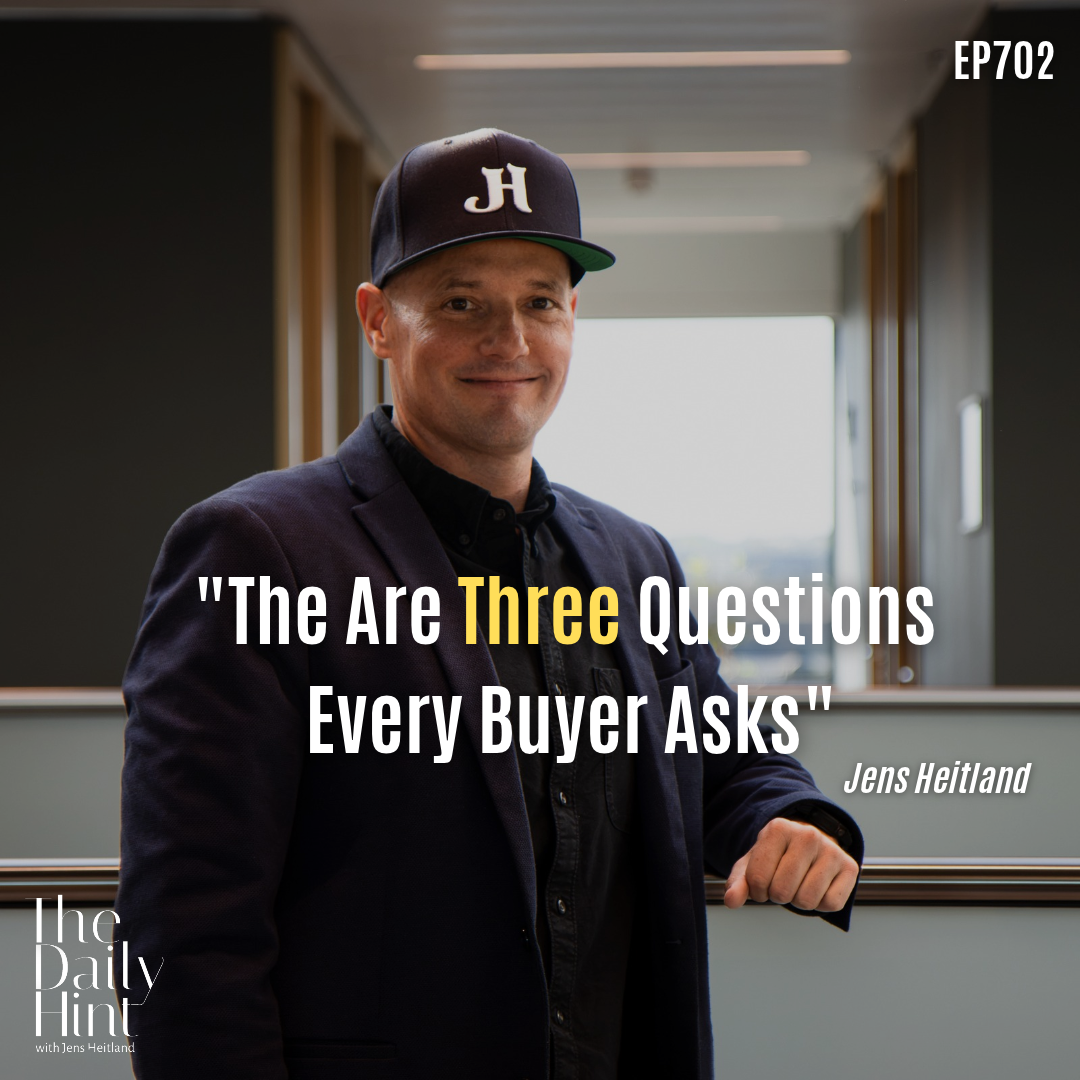
When I look at a company like a potential buyer, three questions shape my view. Can the company deliver what it promises, who else trusts it, and how do its leaders behave when something goes wrong? All three are answered in public, usually before anyone picks up the phone.
Want to build your Thought Leadership
What a Buyer Sees Before the First Conversation
Buying decisions in large organizations rarely begin with a meeting anymore. Long before a call is scheduled, someone on the buying side has opened the company website, scrolled through its social channels and searched for whatever else is publicly available. The impression formed in those quiet hours tends to shape everything that follows, including whether a conversation happens at all.
Over nearly thirty years inside large European organizations, I have watched this pattern become more pronounced. When I now look at a company from a buyer’s perspective, three questions organize what I see.
The first question is whether the company itself can be trusted to deliver what it promises. A buyer reads the website, the social media presence, and any independent coverage, and looks for consistency between them. When the promises are large and the evidence is thin, doubt enters early and quietly.
The second question concerns who else trusts the company. Client names, case references, and partnerships carry weight only when you can verify them. A logo on a homepage invites a buyer to check, and what they find, or fail to find, becomes part of the judgment.
The third question moves from the organization to the people. In a smaller firm that usually means the leadership team. In a large company, it means the people most likely to deliver what is being bought. Buyers want to understand how those people behave when things go wrong, because every serious engagement eventually meets a difficult moment. Much of that behavior is already visible in how leaders write, respond, and conduct themselves in public over time.
These three questions work together as a trust system. Each draws on public information, and each can strengthen or weaken the others. A credible company loses ground when client claims are unverifiable. Verified clients alongside an invisible or inconsistent leadership team leave a buyer uncertain about what happens under pressure. Trust builds when the signals align, and it erodes when they contradict one another.
Over time, the gap between what a company knows about itself and what a buyer can verify grows wider. Internally, the track record is obvious, the client relationships are real, and the leaders are respected. Externally, a buyer sees only what's public and fills the gaps with interpretation. That interpretation is rarely generous, and the gap behind it is rarely intentional. The company simply has not made its credibility legible to someone who doesn’t already know it.
Looking at a company through a buyer’s eyes requires no special access, since everything a buyer relies on is already public. What changes is the willingness to read it like a stranger, without the context insiders take for granted. When leaders do that honestly, the three questions tend to answer themselves, and the distance between how a company is known inside and how it is seen outside becomes easier to recognize.
Highlights:
00:00 Three Trust Checks
00:02 Trust the Company
00:26 Who Else Trusts Them
00:43 Trust the Leadership
01:12 Public-Facing Audit
01:36 Fixing the Gaps
01:52 Do It Yourself
Links:
===========================
Equipment and Software I Use for My Videos and Podcasts
Jens Equipment and Software overview:https://www.jensheitland.com/equipment
===========================
Books that I read and recommend.
My Book Recommendations: https://www.jensheitland.com/books
===========================
Here are the ways to work with me:
Speaking:https://www.jensheitland.com/speaking
Leadership Skills Assessment:https://www.wearesucceed.com/
===========================
Connect with me!
LinkedIn:https://www.linkedin.com/in/jensheitland/
Facebook:https://www.facebook.com/JensHeitlandofficial/
Instagram:https://www.instagram.com/jensheitland/
TikTok:https://www.tiktok.com/@jensheitland
X/Twitter:https://twitter.com/jensheitland
Newsletter:https://www.jensheitland.com/newsletter
===========================
Subscribe and Listen to The Jens Heitland Show Podcast HERE:
YT:https://www.youtube.com/channel/UCjuSGi1feauCNSER3IKuGWg
Web:https://www.jensheitland.com/podcasthome
Apple:https://podcasts.apple.com/us/podcast/the-jens-heitland-show-human-innovation/id1545043872?uo=4
Spotify:https://open.spotify.com/show/7H0GWMGVALyXnnmstYA1NL
===========================
Subscribe and Listen to The Daily Hint with Jens Heitland Podcast HERE:
YT:https://www.youtube.com/channel/UC2tLdutVh6b6nCBgWQ817eQ
Web:https://www.jensheitland.com/the-daily-hint
Apple:https://podcasts.apple.com/us/podcast/the-daily-hint-with-jens-heitland/id1722930497
Spotify:https://open.spotify.com/show/4T02uYPvcOrajPC6FgH64r?si=8aab1e7683204160&nd=1&dlsi=0f69c72af017454a
Transcript :
I'm always looking into three points. number one is, do I trust that company? And it's not literally me trusting that company, but if I would be a potential buyer, do I trust that company? That's number one thing. Which means if we look at their website, if we look at their social media, if we look what we can find about that company, do I trust them to be able to deliver what they promise? That's number one thing. Number two is, who else trusts that company? And that is, who else do they work with? Can I verify that they have worked with the companies that they ta-talk about and that they share about in, let's say, their website? That's number two. Number three is, do I trust the company leadership team and/or if it's a huge company, the people that are in-involved in most probably the, the thing that I'm buying to deliver what they promise. and it's different than the company because for me as a buyer, I want to critically understand how do they behave if things go wrong? And you can search these things in the internet already. So when we do the, the audit, we only take what is public, and then we go in depth. How do we see this as a potential buyer? And we really drive into that so that we can give the best possible recommendation, and it's just an outward facing possibility or an outward facing, like audit that showcases all of the gaps. And then we go into this are the ways how you can solve these gaps going forward, and we give them all opportunities to do that, and we give all the details what they can do. And it's critical to really dive into that for every company. I mean, you don't need to do our audit, but you can do that yourself and look into it from a buyer's perspective.