
690 - The Podcast That Outlives Its Host
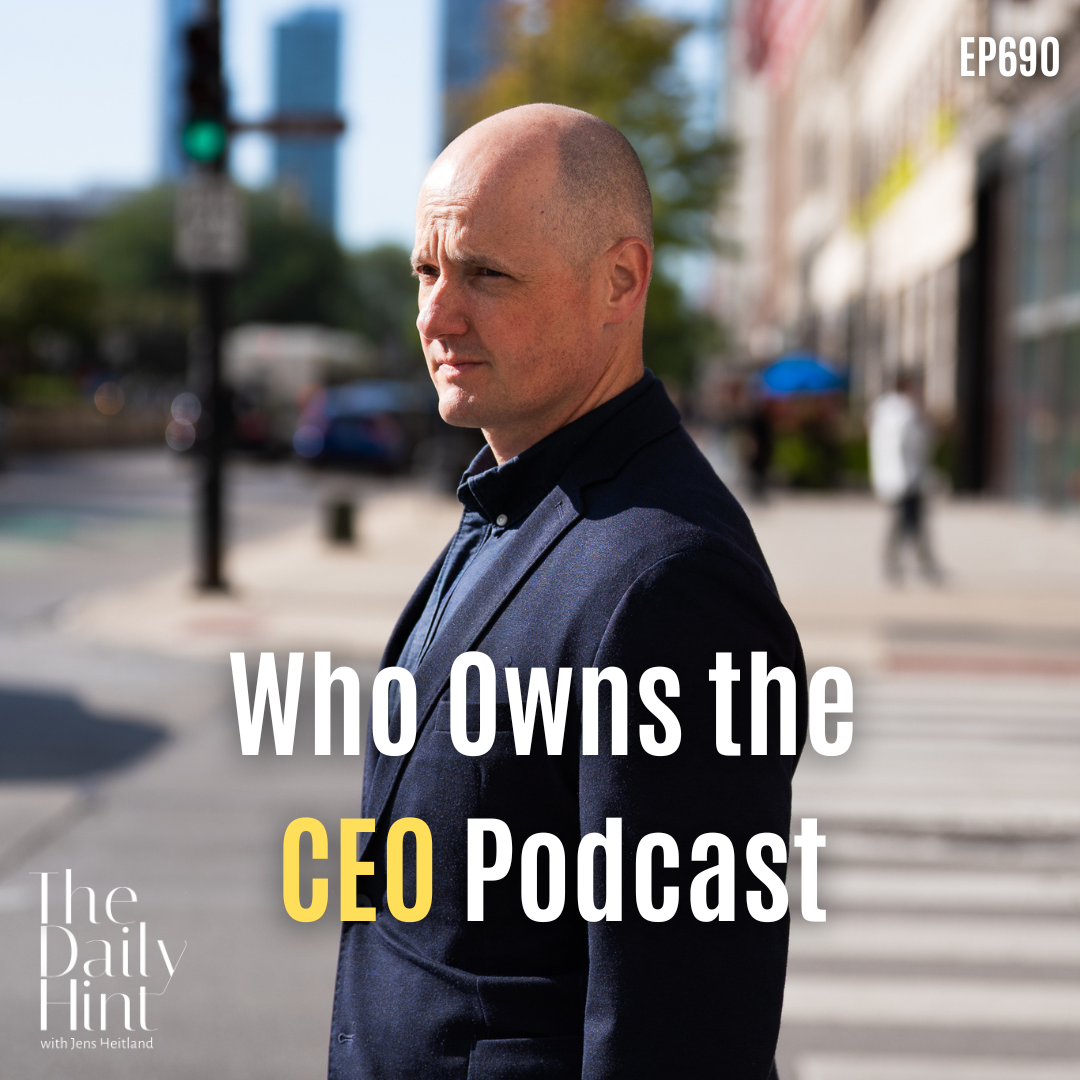
Jens Heitland reflects on a question marketing teams often raise when launching a CEO podcast: who owns the content? He weighs hosting the podcast on a personal website versus the company website, what happens when the host leaves the organization, and why podcasts designed with a second host or a shared format from the first episode keep their audience through leadership transitions.
Want to build your Personal Brand?
Join the free Rising Stars Community
The Podcast That Outlives Its Host
In large organizations, a familiar conversation surfaces whenever a company decides to give its CEO a voice through a podcast. Marketing teams raise it early, sometimes before the first episode is recorded. At its core, the conversation concerns ownership. A podcast built around one leader carries that leader’s name, face, and way of thinking, while the company funds, produces, and distributes it. Both sides hold a reasonable claim, and the decision about where the content lives is usually made quickly, with far less attention than it deserves.
In these discussions, two directions tend to emerge. The first places the podcast in a personal environment, such as the leader’s own website, where the content is mirrored and kept close to the individual. The second builds it directly on the company website, where it can be fully leveraged to boost the organization’s visibility. The personal route gives the leader continuity, while the company route secures the investment for the organization. Less considered is how either version behaves when circumstances change.
Over time, people move, and the podcast is rarely prepared for it. CEOs take new roles, hosts join other companies, and the person whose voice defined the show is no longer part of the story the company wants to tell. When the podcast lives on the company website and depends on a single host, that departure leaves a gap. The audience built around one person has little reason to stay. The archive remains, yet the momentum stops. A new host has to start from scratch, and listeners feel the shift. The dip is rarely planned for, since departure was never part of the original design.
The original decision feels small at the time. Nobody in the room is thinking about departure while planning a launch. Choosing one host seems obvious when the podcast exists to elevate one leader, and the structure appears complete. The cost of that choice becomes visible years later, often when the organization is already managing a leadership transition and has little capacity left to rebuild an audience.
In my experience, some organizations approach this differently from the start. They design the podcast as an environment with handovers built in. They onboard a second host well before any change is announced, someone listeners already know and who's already part of the conversation. Other podcasts start with two or three hosts in the first episode, so the show's voice is shared across several people. When one of them moves on, the others continue, and the audience experiences no break at all.
Inside the company, the content is then understood as an asset that belongs to a system. The leader still brings credibility and presence, and the organization still benefits from that visibility. The structure underneath allows the podcast to outlast any single role. Hosts can change without asking the audience to start over, and the archive keeps its value because the show it belongs to is still alive.
The discussions about who owns the content are rarely settled through policy. They are settled by how the environment is built in the first place. A decision that takes a few minutes at launch can shape whether the podcast continues or starts over when the people behind it change.
Highlights:
00:00 Content Ownership Debate
00:10 Personal vs Company Hosting
00:24 Planning for Host Changes
00:40 Long Term Podcast Commitment
00:55 Built In Handover Strategy
01:25 Key Takeaway
Links:
===========================
Equipment and Software I Use for My Videos and Podcasts
Jens Equipment and Software overview:https://www.jensheitland.com/equipment
===========================
Books that I read and recommend.
My Book Recommendations: https://www.jensheitland.com/books
===========================
Here are the ways to work with me:
Speaking:https://www.jensheitland.com/speaking
Leadership Skills Assessment:https://www.wearesucceed.com/
===========================
Connect with me!
LinkedIn:https://www.linkedin.com/in/jensheitland/
Facebook:https://www.facebook.com/JensHeitlandofficial/
Instagram:https://www.instagram.com/jensheitland/
TikTok:https://www.tiktok.com/@jensheitland
X/Twitter:https://twitter.com/jensheitland
Newsletter:https://www.jensheitland.com/newsletter
===========================
Subscribe and Listen to The Jens Heitland Show Podcast HERE:
YT:https://www.youtube.com/channel/UCjuSGi1feauCNSER3IKuGWg
Web:https://www.jensheitland.com/podcasthome
Apple:https://podcasts.apple.com/us/podcast/the-jens-heitland-show-human-innovation/id1545043872?uo=4
Spotify:https://open.spotify.com/show/7H0GWMGVALyXnnmstYA1NL
===========================
Subscribe and Listen to The Daily Hint with Jens Heitland Podcast HERE:
YT:https://www.youtube.com/channel/UC2tLdutVh6b6nCBgWQ817eQ
Web:https://www.jensheitland.com/the-daily-hint
Apple:https://podcasts.apple.com/us/podcast/the-daily-hint-with-jens-heitland/id1722930497
Spotify:https://open.spotify.com/show/4T02uYPvcOrajPC6FgH64r?si=8aab1e7683204160&nd=1&dlsi=0f69c72af017454a
Transcript :
Especially with the marketing team, there's always this discussion. Who owns the content that is produced? Like if you think about it like a podcast for a CEO. I think there are two ways. One is you can mirror a podcast in a personal environment, like a personal website. That's one way. Or you build it on the company website and then really leverage that. The thing with that is, let's say, if the host is changing the company, which sometimes happens, then you need to position another like, podcast host that is taking over Or you build directly from the beginning that you have two, three hosts and drive that.
You need to build an environment where you have handovers that are just built into that environment. That means if you decide that the CEO is moving to another company or the person that is doing the podcast is moving to another company, you need to have a second host that is already kind of onboarded before Or you directly start with the double strategy where you have two hosts and they can mutually then basically move on and you never have a dip in the podcast. But it's just something which is a tiny thing to decide, but it's crucial for the long run