
689 - When a Company Podcast Makes Sense
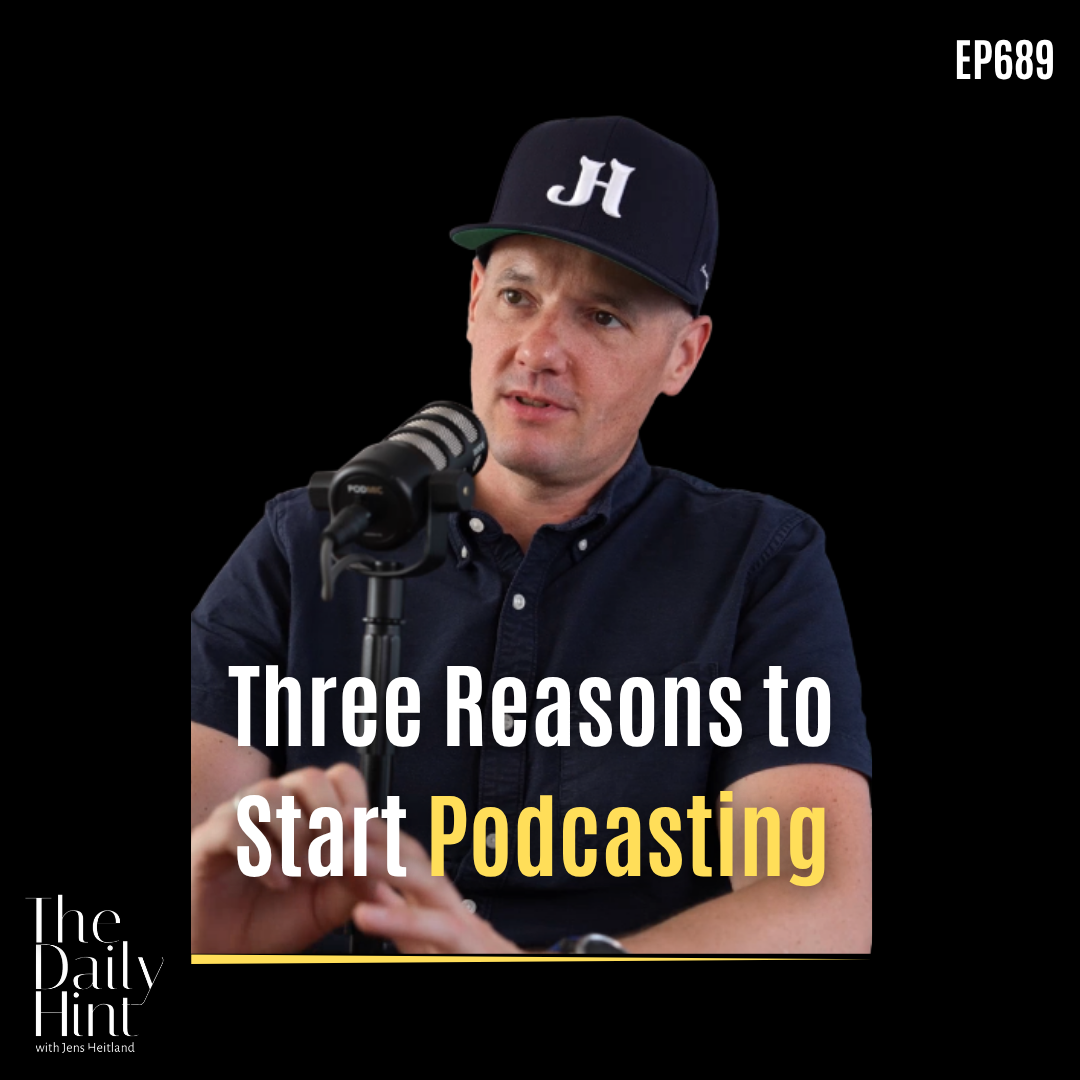
Jens Heitland describes three situations where a company podcast makes sense. B2B companies can use it to build long-term relationships with potential clients, consumer brands can tell their customers' stories, and large organizations can connect leadership with people across countries. He explains why a long conversation lands better than an email and what companies can learn from independent podcasters.
Want to build your Personal Brand?
Join the free Rising Stars Community
When a Company Podcast Makes Sense
Communication teams in large organizations are increasingly asked whether the company should have a podcast. The question usually comes up as a channel decision, alongside newsletters, social media, and the intranet. In my experience, the more useful starting point is the relationship the company is trying to build, and with whom.
Three situations come up repeatedly. The first is commercial. A business that sells to other businesses depends on relationships that take years to form. A podcast gives it a legitimate reason to invite potential clients into a long conversation about their work, their thinking, and the problems they are trying to solve. The guest receives space and attention, which is rare in commercial contact. Over time, those conversations build a familiarity that a sales call struggles to match.
The second situation belongs to consumer brands. A company selling directly to people can tell its customers' stories and go deeper into what they care about. A shoe company does not need to talk about shoes for the content to belong to it. What matters is the territory of interest it shares with its customers, such as movement, travel, craft or the city they live in. When customers hear people like them speak at length, recognition does the work persuasion usually tries to do.
The third situation sits inside the organization. Leadership teams often work from one country while their people are spread across many locations. The main channel between them is written text, which carries information well and very little of the person behind it. Gradually, employees interpret leadership through fragments, and those interpretations harden into a story nobody intended to tell. A twenty- or thirty-minute conversation with a member of the leadership team changes that simply. People hear the reasoning, the humor, and the doubt. Some will go further and look into who the people behind the decisions really are.
Independent podcasters have shown this for years. Many of them started with no budget, no corporate strategy, and no ambition beyond curiosity. They sit down with interesting people, let the conversation run, and audiences find them. Large organizations often overlook this because the format looks informal, but trust often begins there.
When a company treats the podcast as just one more channel, the result is often polished and forgettable, with episodes that sound like press releases read aloud. When the relationship is clear, the format asks for surprisingly little. A good conversation, recorded with care and shared where people already spend their time, can carry more understanding than a year of polished updates.
Highlights:
00:00 Why Podcasts Matter
00:08 B2B Client Outreach
00:31 B2C Customer Stories
00:54 In House Leadership Podcast
01:12 Long Form Beats Email
01:34 Wrap Up and Takeaways
Links:
===========================
Equipment and Software I Use for My Videos and Podcasts
Jens Equipment and Software overview:https://www.jensheitland.com/equipment
===========================
Books that I read and recommend.
My Book Recommendations: https://www.jensheitland.com/books
===========================
Here are the ways to work with me:
Speaking:https://www.jensheitland.com/speaking
Leadership Skills Assessment:https://www.wearesucceed.com/
===========================
Connect with me!
LinkedIn:https://www.linkedin.com/in/jensheitland/
Facebook:https://www.facebook.com/JensHeitlandofficial/
Instagram:https://www.instagram.com/jensheitland/
TikTok:https://www.tiktok.com/@jensheitland
X/Twitter:https://twitter.com/jensheitland
Newsletter:https://www.jensheitland.com/newsletter
===========================
Subscribe and Listen to The Jens Heitland Show Podcast HERE:
YT:https://www.youtube.com/channel/UCjuSGi1feauCNSER3IKuGWg
Web:https://www.jensheitland.com/podcasthome
Apple:https://podcasts.apple.com/us/podcast/the-jens-heitland-show-human-innovation/id1545043872?uo=4
Spotify:https://open.spotify.com/show/7H0GWMGVALyXnnmstYA1NL
===========================
Subscribe and Listen to The Daily Hint with Jens Heitland Podcast HERE:
YT:https://www.youtube.com/channel/UC2tLdutVh6b6nCBgWQ817eQ
Web:https://www.jensheitland.com/the-daily-hint
Apple:https://podcasts.apple.com/us/podcast/the-daily-hint-with-jens-heitland/id1722930497
Spotify:https://open.spotify.com/show/4T02uYPvcOrajPC6FgH64r?si=8aab1e7683204160&nd=1&dlsi=0f69c72af017454a
Transcript :
When the communication teams ask me about the podcast and why would it make sense to build a podcast, for me, there are critical things. Number one is, do you have a commercial reason to connect to other companies? If yes, let's say you have a B2B company and you're selling something to other companies, it's worth it to do a podcast because the podcast is an opportunity to reach out to potential clients, interviewing them on the podcast, podcast, and it always works long term. The other part is if you have a B2C company that is willing to tell the stories of the customers. In the same way it works always if you interview the customers, their stories, and go deeper into what their interests are. That doesn't mean always, let's say, if you're a shoe company that you talk about shoes, but you are talking about the interests of that company. And the third version is if you look into an in-house podcast, something that is distributed inside of specifically larger organization, where you bring the leadership team closer to the people that are working across, most of the time, different locations and/or different countries. It always works because a long-form conversation, even if it's just half an hour or 20 minutes, is always better received than an email because people can listen to it if it's done well and/or watch it and then go deeper into who are the people behind it and really connect to the people that are in the podcast. And it always works. So that's something that a lot of organizations can copy from the podcast-casters out there that are just doing that for fun, and they're super successful with that -