
EP247: Thought Leadership at Scale: Why Systems, Not Content, Define Authority
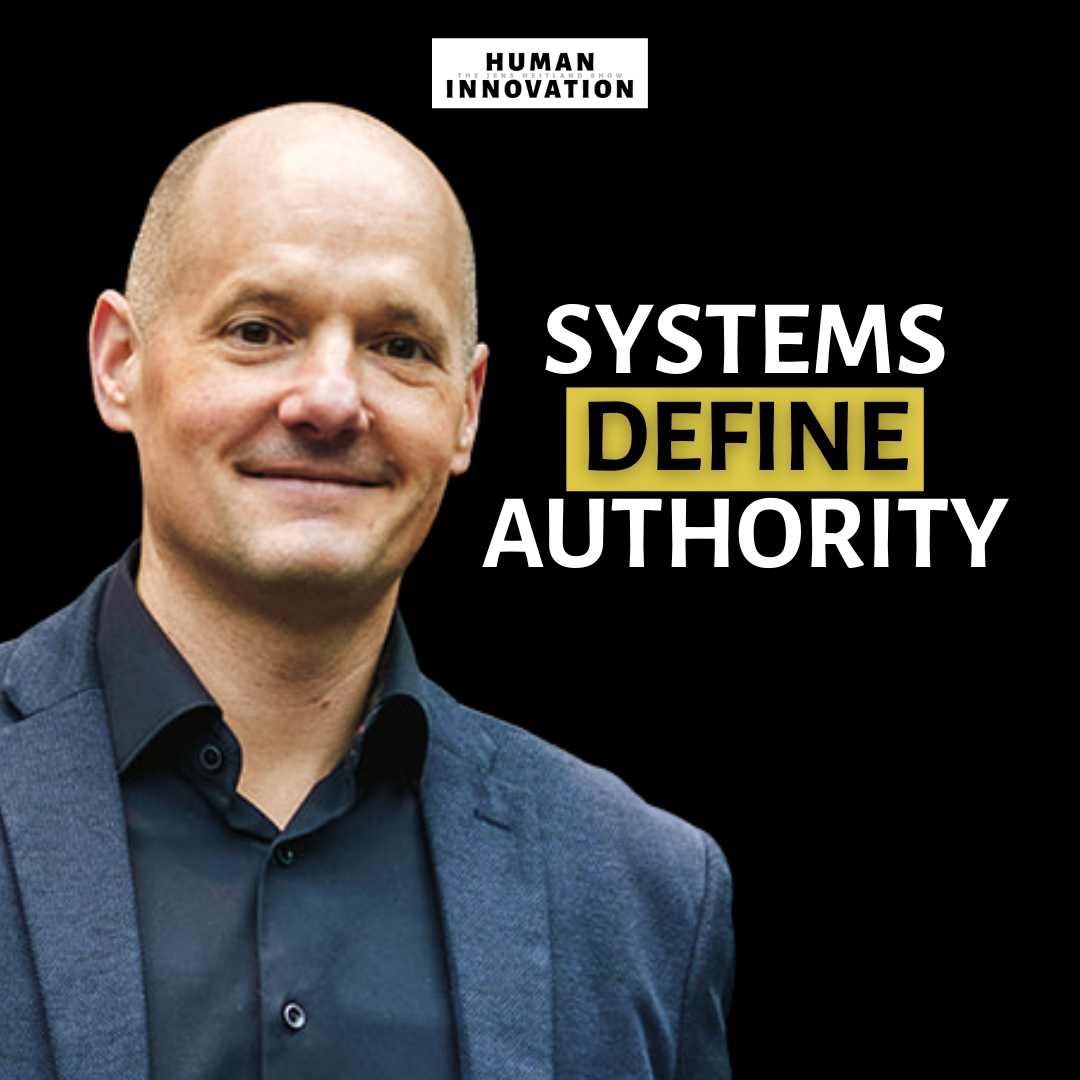
Corporate thought leadership becomes effective when structured as a system that aligns visibility, credibility, and consistent asset creation.
This article explores how organizations build authority over time through program management, system design, and compounding content.
Youtube Podcasts
Thought Leadership at Scale: Why Systems, Not Content, Define Authority
In large organizations, thought leadership is often approached as a content exercise. Posts are published. Videos are recorded. Articles are distributed.
On the surface, activity is visible.
Over time, something else becomes visible as well.
The absence of coherence.
What appears as momentum often lacks structure. And without structure, visibility and credibility begin to separate.
This separation is rarely intentional. It is a byproduct of how organizations operate at scale.
The Environment: Where Thought Leadership Starts to Fragment
In complex environments, credibility is usually already present.
It sits in experience. In decision-making. In years of operating inside systems that most people never see.
But credibility alone does not travel.
Visibility, on the other hand, moves quickly. It is easier to produce. Easier to distribute. Easier to amplify.
What tends to happen is a drift.
Some leaders remain credible but unseen.
Others become visible without the depth that sustains trust.
The issue is not a lack of effort. It is a lack of alignment.
Thought leadership, in this context, is not missing. It is fragmented.
The System: How Authority Is Formed
In complex environments, authority is not created by individual moments. It is formed through the interaction of visibility and credibility over time.
When both are present and consistent, trust begins to stabilize.
When one outpaces the other, interpretation fills the gap.
People begin to question.
The issue is not something wrong. It is the signal's inconsistency.
This is where systems begin to matter.
Organizations that sustain thought leadership do not rely on isolated efforts. They create structures that connect three elements.
Program. System. Asset.
Each plays a distinct role.
Program: Creating Rhythm and Predictability
A program introduces rhythm.
It defines how thought leadership exists inside the organization.
Without it, activity becomes sporadic. Dependent on individuals. Difficult to sustain.
With it, participation becomes predictable.
People understand their role. Expectations become visible. Momentum builds through repetition.
In large organizations, this is often the difference between intention and execution.
The issue is not unwillingness. There is a lack of clarity in the system.
System: Connecting Business and People
A system connects thought leadership to the business itself.
It maps areas of strategic importance to individuals who represent them.
This creates alignment.
Instead of content being produced in isolation, it reflects what the organization is actually moving toward.
Over time, this alignment reduces noise.
It becomes clear why certain voices are visible and what they represent.
Trust grows not through volume, but through consistency.
At the same time, systems define measurement.
Not only outcomes, but signals.
Signals show whether the direction is correct.
Outcomes show whether value is created.
Without both, interpretation becomes subjective.
And subjective systems rarely scale.
Assets: Where Thought Leadership Becomes Visible
Assets are the visible layer and what the outside world interacts with.
A post. A video. A keynote. An article.
Individually, appear small.
Over time, they accumulate.
What matters is not the single asset.
It is the pattern they create.
Consistent assets build recognition.
Recognition builds familiarity.
Familiarity builds trust.
This is where compounding begins.
Content does not need to go viral. It needs to remain.
Accessible. Searchable. Interpretable.
Each asset reinforces the last.
Each one reduces the distance between the organization and its audience.
The Consequence: What Happens Without Alignment
When programs, systems, and assets are not aligned, fragmentation increases.
Content exists, but it lacks direction.
Leaders speak, but their voices are disconnected.
Visibility grows, but trust does not follow.
Internally, this creates hesitation.
People begin to question the purpose. Externally, it creates ambiguity.
Also, people are unsure what the organization stands for.
Over time, this ambiguity becomes the dominant signal.
It is shaped as much by what is missing as by what is said.
Reflection: Thought Leadership as a Living System
Thought leadership, at scale, is not an initiative.
It is a living system.
It requires rhythm to sustain it.
Structure to guide it and consistency to reinforce it.
What I have seen repeatedly is that organizations do not struggle with content, but with coherence. And that cannot be created through isolated effort.
It emerges from alignment.
When visibility and credibility move together, authority forms naturally.
If they do not, even the most active organizations remain unseen in the ways that matter.
Over time, the difference becomes clear.
Not in what is published.
But in what is trusted.
Jens Heitland Links:
Website: https://www.jensheitland.com/
Business: https://www.heitlandmediagroup.com/
LinkedIn:https://www.linkedin.com/in/jensheitland/
Facebook:https://www.facebook.com/JensHeitlandofficial/
Instagram:https://www.instagram.com/jensheitland/
TikTok:https://www.tiktok.com/@jensheitland
X/Twitter:https://twitter.com/jensheitland
Newsletter:https://www.jensheitland.com/newsletter
YouTube:https://www.youtube.com/@jens-heitland
Subscribe and listen to The Jens Heitland Show Podcast here:
YT:https://www.youtube.com/channel/UCjuSGi1feauCNSER3IKuGWg
Web:https://www.jensheitland.com/podcasthome
Apple:https://podcasts.apple.com/us/podcast/the-jens-heitland-show-human-innovation/id1545043872?uo=4
Spotify:https://open.spotify.com/show/7H0GWMGVALyXnnmstYA1NL
Transcript
In this video, I will break down three strategic parts that you need to pay attention to when building a corporate thought leadership program.
I am Ian Hyland and CEO of Hyland Media Group, and we have helped dozens of CEOs from Singapore to San Francisco to become recognized thought leaders in their industry Corporate thought leadership only works when you manage it like a program, build it like a system, and produce assets that compound over time
But before we dive into them, let me talk about what I define as thought leadership
Number one is visibility times credibility equals authority If you are credible, but you're not visible, you have a problem as a CEO and as a leader of a large organization, and thats a key part that I see in a lot of. Corporate leaders right now that they are credible, but their visibility is not there where it should be
And the opposite is you have a lot of visibility, but you have zero credibility Thats obviously what a lot of people see when they look at influencers Theres a person that is very visible, but they dont have the credibility like a corporate leader So what we look at is how do we combine this personality that has credibility
And then link it to business so that we make the business trustful through the individual leaders in the organization And when we talk about corporate thought leadership, we look at how do we combine the business with a lot of personalities inside of the ecosystem of the company to drive trust and business results
let's drive into the first part, program management I start with program management because when I was working in some of the largest organizations of the world myself, I know if you dont have a proper program management, its not going to happen So you need to set out. A program structure throughout the business that helps you to implement that
And obviously you can do that with pilots upfront, but the key part is you build that in a way that it's going to happen So I always recommend building up a sprint system that you do small sprints and iterate very fast so that you build things while you do them Instead of building a theory engine, like often done in large corporate
And you talk about it for half a year, or even worst case for a whole year, and you haven't done anything So sprint system is a key part that I recommend Obviously Then you look into time planning and the resource planning, Who are the people that should be thought leaders? Who are the people that need to be involved and so on?
Then you do a whole analyzers of the different stakeholders So you look into what are the different audiences that you want to reach as a corporation and then you look into what are the different stakeholders internally that. One can be seen as a thought leader, should be positioned as a thought leader, but also who need to be involved to make the whole ecosystem work
And then a critical part not to neglect, is the change management You need to get the organization on board and what you are doing as a program Because if you dont, then people will be anxious and see something is going to happen because its a public visible engine in the end and it will fall apart
Worst case, and people work against you So critical part, and Im not going more deeper into the program management, because for me it's obvious, but Im just mentioning the critical parts, just to help you to succeed with the corporate thought leadership program
The system development. I always start with the corporate thought leadership strategy So you have a business strategy as an umbrella The business strategy is, lets say you have it on a quarter, obviously you have a yearly, you have a five year plan, and some companies even have a 10 year plan So you take this and then you map out
What are the different areas that you want to drive forward in your business like you always have? And what you do with that is you look into what are the different areas inside of the business that would benefit by someone being positioned as a thought leader, a well-known personality inside of the business will often drive more trust than any corporate marketing campaign
So if you have chosen these different areas inside of your business, lets call them domain, like you often call them inside of bigger programs, inside of organizations, then you put. Inside of each of domain, you have a thought leader. You look into what are the different KPIs that you want to reach And when we look into the KPIs, I always divide that into two main things
Signals and conversion signals are the indicators that give you an understanding. Are we on the right track? And when it comes to conversion, it's a real return of invest situation where you get a new client, you sold a big project, whatever it is that brings money to the business and that you do commercially
So these are the key things that you need to set out for every single domain and as well across all domains so that you can measure if your thought leadership approach is working or not So when you have. Put this into, into a framework and you understand how to do that Then you look into what are the different capabilities that the thought leaders need to have internally
And that can be presentation skills that can be talking on camera giving interviews because this people will be way more exposed than what you ever have done in the past, most properly at least And then as well, you look into what are the different capabilities that we need internally. To support all of this movement
It can be, do you need a videographer? Do you need someone who is good in social media and so on? A lot of capabilities you will have internally already but what we always need to look at is How do you make that personal switch So you link that marketing, corporate understanding to an individual understanding
So be aware of that. 'cause sometimes it's different skillset and capabilities needed to be able to do that on a top level outside of the organization. So be aware of that So now that we. The base understanding of the system, then you build the
operating model. So how do you go from positioning the thought leader as the thought leader authority in the industry, and how do you build that internally with all the different processes and everything that needs to happen?
To be able to create content that is posted on social media that is embedded into different website that the people are speaking on stage and so on So its a deep dive into an operating model that you need to create to go from idea to execution and things are going to happen So that's a critical part of the whole system development
Then additionally to this, you are looking into an educational program. Over time you, you will understand what are the different skill sets, what are the different things that we need to educate all our thought leaders, but also the individuals that are internally in the organization
And last part of the system development is understanding the tech stack
What are the technologies, the programs that you need as an organization to be able to do that efficiently? This rounds out the whole system development If youre interested to know more about any of these topics of the system development, let me know in the comments or reach out to me. Im happy to explain it more detailed
The last part of this three is the asset production Asset production is the nitty gritty detail that will be seen by other people outside the organization. That can be a social media post that can be a photo that can be a video that can be a blog post That can be an article in one of the leading industry magazines
All of this are different assets that youre creating, and if you look at that from a compounding effect you can create. A blog post that is visible to many millions of people if done well. And with this, you're investing into a digital asset that is growing over time The key part of that is that you need to have the expertise either in-house or you buy it from external that creates this assets to the top level of what your organization is at
So if we look at multi-billion dollar organization, you should not build cheap content that is more influencer style content and is not building the corporate identity on an individual level If we look at the thought leaders that you want to represent your organization with, so critical part of all of this is building assets that are helping you to compound because then your return of invest will be bigger than what you would create if it doesntgain, short overview of these three parts. I can go deeper into any of that If youre interested in this, let me know. Reach out to me on LinkedIn or wherever you see this video, and Imhappy to go deeper into any of them, either in a future video or in a one-on-one conversation