
667 - Why CEOs Sound Credible in the Room and Flat Online
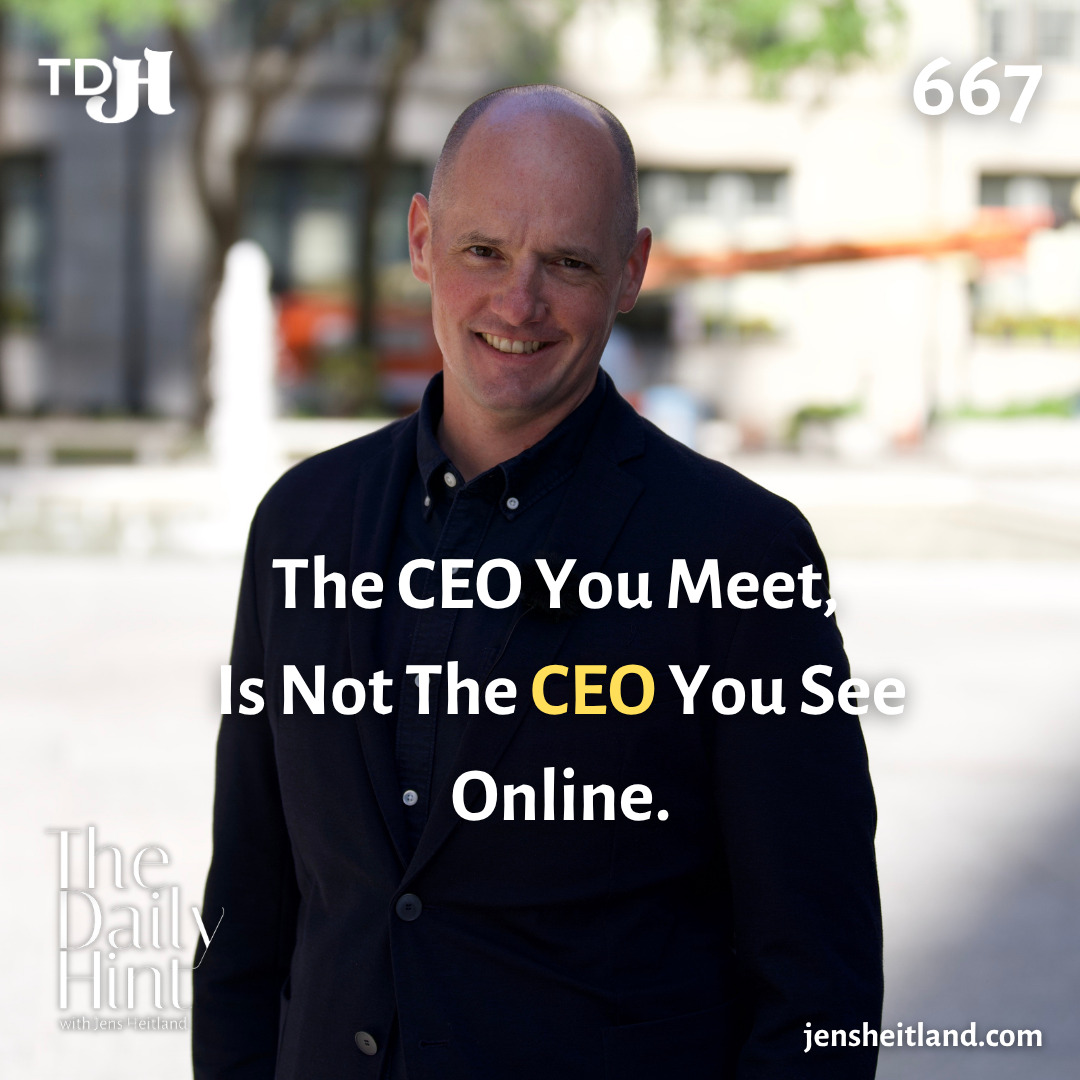
Jens Heitland reflects on the CEO Authority Index research and the gap between offline credibility and digital presence among senior executives.
Want to build your Personal Brand?
Join the free Rising Stars Community
Why CEOs Sound Credible in the Room and Flat Online
For a period of time, we worked on something we called the CEO Authority Index. The goal was straightforward on paper. Measure authority as a whole, not as a collection of separate signals, and understand what actually builds it in a person over time. In practice, the research surfaced something we had not expected.
We audited around eighty CEOs during that period, most of them leading large, established organizations. What we found offline was rarely surprising. These were people who had spent decades inside their industries, and it showed. Their authority was earned through repetition, through consistent behavior across long stretches of time, and through the kind of credibility that only accumulates when people have watched you operate under pressure more than once.
The system that emerged from this research was less about individual failure and more about structural neglect. Digital presence, for most of these leaders, had never been treated as an extension of who they already were. It had been treated as a separate obligation, something delegated, templated, or avoided altogether. The result was a version of the person online that bore little resemblance to the version people encountered in a boardroom or on a stage. Not because anyone had set out to misrepresent themselves. It happened by omission, one skipped post and one templated bio at a time, until the gap became structural rather than accidental.
The consequence of this gap is easy to underestimate. In organizations built on trust and long relationships, a mismatch between the offline and online self creates quiet friction. People who meet a CEO in person often describe them one way. People who only encounter that same CEO through a corporate LinkedIn feed describe someone else entirely, more distant, more generic, harder to place. Over time, this erodes something that took years to build. The digital self starts to compete with the offline self instead of extending it.
The people who had already closed this gap were not always the ones with the most resources. Younger founders and smaller companies, the ones with fewer resources and less institutional weight behind them, had built alignment between their offline and online presence almost by necessity. They had no legacy reputation to fall back on, so they had to build the whole thing in public, consistently, from day one. Larger organizations, ironically, had the opposite problem. They had so much offline credibility that the digital gap felt low stakes, until it wasn't.
I do not think this is a marketing problem. It is closer to a structural blind spot, one that most large organizations have not yet named. The leaders who close it are not doing anything dramatic. They are simply making sure the version of them online is built with the same care as the version everyone already trusts in the room.
Highlights:
00:00 Measuring CEO Authority
00:27 Offline vs Online Presence
00:33 Translating Credibility Digitally
00:57 The Missing Link for Big CEOs
01:11 Why Startups Win Online
Links:
===========================
Equipment and Software I Use for My Videos and Podcasts
Jens Equipment and Software overview:https://www.jensheitland.com/equipment
===========================
Books that I read and recommend.
My Book Recommendations: https://www.jensheitland.com/books
===========================
Here are the ways to work with me:
Speaking:https://www.jensheitland.com/speaking
Leadership Skills Assessment:https://www.wearesucceed.com/
===========================
Connect with me!
LinkedIn:https://www.linkedin.com/in/jensheitland/
Facebook:https://www.facebook.com/JensHeitlandofficial/
Instagram:https://www.instagram.com/jensheitland/
TikTok:https://www.tiktok.com/@jensheitland
X/Twitter:https://twitter.com/jensheitland
Newsletter:https://www.jensheitland.com/newsletter
===========================
Subscribe and Listen to The Jens Heitland Show Podcast HERE:
YT:https://www.youtube.com/channel/UCjuSGi1feauCNSER3IKuGWg
Web:https://www.jensheitland.com/podcasthome
Apple:https://podcasts.apple.com/us/podcast/the-jens-heitland-show-human-innovation/id1545043872?uo=4
Spotify:https://open.spotify.com/show/7H0GWMGVALyXnnmstYA1NL
===========================
Subscribe and Listen to The Daily Hint with Jens Heitland Podcast HERE:
YT:https://www.youtube.com/channel/UC2tLdutVh6b6nCBgWQ817eQ
Web:https://www.jensheitland.com/the-daily-hint
Apple:https://podcasts.apple.com/us/podcast/the-daily-hint-with-jens-heitland/id1722930497
Spotify:https://open.spotify.com/show/4T02uYPvcOrajPC6FgH64r?si=8aab1e7683204160&nd=1&dlsi=0f69c72af017454a
Transcript :
One of the things we have measured when we looked into the CEO Authority Index was how do we build authority, and then how do we measure authority as a total of an individual? And what was interesting when we looked into the different examples that we audited was that a lot of people have the personal authority, but they're not leveraging it in a digital ecosystem. So it's almost like there's an offline version of the person and there's an online version of that person. And what we then try to look into is how do we translate the offline version, which most of the time, specifically for the big CEOs, is super credible, super crafted, super built in a way that it's authentically them. But that's not translated into the digital world. So in the digital world, it was almost looking like a fake person. And when we understood that and then had conversations with all the 80 CEOs that we measured at that time, there's a missing link, and that's something that a lot of big companies and CEOs are not into. I don't know why, but it's a leverage point, which a lot of startups and younger companies and founders and so on, they're really into that, but the big ones are all missing that place right now.