
617 - Why CEO Thought Leadership Is Not the Same as Personal Branding
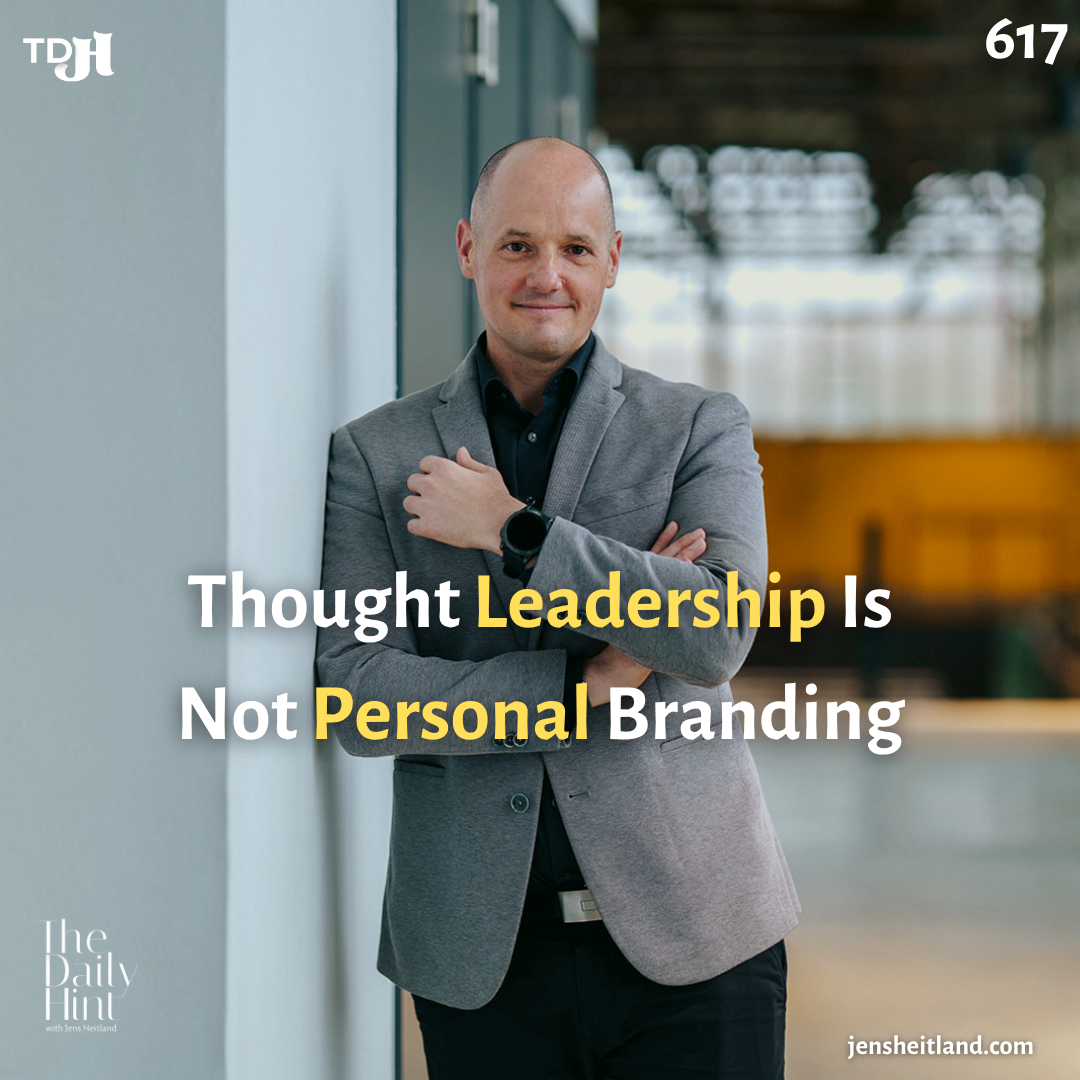
This episode explores why CEO thought leadership is often misunderstood as personal branding, and why real impact occurs when the CEO’s personality aligns with company strategy, trust, and commercial goals.
Want to build your Personal Brand?
Join the free Rising Stars Community
Why CEO Thought Leadership Is Not the Same as Personal Branding
One of the biggest misconceptions around thought leadership is that it is often reduced to personal branding. At first glance, the confusion is understandable. Both involve visibility. Both involve public presence. Both shape how a leader is perceived. But the difference between them is substantial, and for CEOs leading large organizations, that difference matters.
Personal branding focuses on the individual. Thought leadership, when done well, connects the individual to something larger. It connects the CEO to the company’s direction, the market’s expectations, and the commercial outcomes the business aims to achieve.
That is why treating thought leadership as a branding exercise often leads to weak results. It creates attention around the person, but not necessarily traction for the business.
The Misunderstanding at the Center
Many CEOs are encouraged to be more visible. They are told to post more, speak more, and show more personality. None of that is inherently wrong. In fact, personality matters a great deal.
People trust people.
That remains one of the most important realities in leadership communication. Audiences do not connect with abstract institutions in the same way they connect with human beings. The presence of a leader can make a company more relatable, more credible, and more memorable.
But visibility on its own is not thought leadership.
The real work starts when a CEO’s personality is brought into meaningful alignment with the business itself. That means looking carefully at two separate dimensions. What is the company about? And what is the person about? Only when those two elements are understood clearly can a strategy begin to take shape.
Why Alignment Matters More Than Exposure
A visible CEO without alignment creates noise. A visible CEO with alignment creates clarity.
That distinction is often what separates activity from impact. When the CEO's personality is disconnected from the company’s direction, visibility may still increase, but the signal remains weak. Audiences might notice the leader, but they do not come away with a stronger understanding of the business.
When the two are aligned, something else happens. The CEO becomes a trusted carrier of the company’s narrative. Their perspective reinforces what the organization stands for. Their communication shapes business priorities. Their visibility begins to support outcomes that matter commercially.
This is where thought leadership becomes strategic.
It is no longer about building a profile for exposure. It becomes a deliberate way to strengthen trust, support positioning, and move the business closer to its goals.
Thought Leadership Must Serve a Business Outcome
For CEOs, thought leadership should never exist in isolation from business objectives.
A credible strategy must be tied to a result the organization actually wants to achieve. That could mean generating more income for the company. It could mean opening up new revenue streams. It could mean reaching more customers, attracting better opportunities, or strengthening market confidence in a period of change.
Without that connection, thought leadership becomes performance without direction.
This is one reason superficial advice tends to fall short. It encourages leaders to publish content before clarifying the purpose. It emphasizes format before substance. It focuses on presence before positioning.
The stronger approach works in the opposite order.
First, define what the company needs to achieve. Then, understand what the CEO credibly represents. Then build the communication strategy where those two realities meet.
That is what makes thought leadership useful, not just visible.
The Role of the CEO’s Personality
None of this removes the CEO's personality. In fact, it makes personality more valuable.
The CEO's personality is often the element that makes the strategy believable. It adds texture, conviction, and trust. It helps people understand not only what the company does, but how the leader sees the world, what they prioritize, and why their perspective matters.
That human layer is powerful. But it works best when it serves something larger than the individual.
The CEO should not appear as a separate brand floating beside the organization. The CEO should function as a clear extension of the company’s ambition, direction, and credibility.
That is a very different posture from personal branding.
A Better Way to Think About CEO Thought Leadership
The most effective thought leadership is built at the intersection of personality and strategy.
It respects the human trust factor that makes leadership communication work. At the same time, it remains anchored in the company’s purpose, priorities, and commercial direction.
That is why the question is not whether a CEO should have a public presence. The question is whether that presence is structured to create business value.
When it is, thought leadership becomes far more than visibility. It becomes a strategic asset.
And that is the point many organizations miss.
It is not about personal branding. It is about leveraging the CEO's personality to strengthen the business, build trust with the market, and support the goals that matter most.
Highlights:
00:00 AI Content Everywhere
00:13 Copy-Paste Problem
00:31 Keep Human Origin
00:35 CEO Voice Matters
00:47 Video First Authenticity
00:51 Closing Edge With Video
Links:
===========================
Equipment and Software I Use for My Videos and Podcasts
Jens Equipment and Software overview:https://www.jensheitland.com/equipment
===========================
Books that I read and recommend.
My Book Recommendations: https://www.jensheitland.com/books
===========================
Here are the ways to work with me:
Speaking:https://www.jensheitland.com/speaking
Leadership Skills Assessment:https://www.wearesucceed.com/
===========================
Connect with me!
LinkedIn:https://www.linkedin.com/in/jensheitland/
Facebook:https://www.facebook.com/JensHeitlandofficial/
Instagram:https://www.instagram.com/jensheitland/
TikTok:https://www.tiktok.com/@jensheitland
X/Twitter:https://twitter.com/jensheitland
Newsletter:https://www.jensheitland.com/newsletter
===========================
Subscribe and Listen to The Jens Heitland Show Podcast HERE:
YT:https://www.youtube.com/channel/UCjuSGi1feauCNSER3IKuGWg
Web:https://www.jensheitland.com/podcasthome
Apple:https://podcasts.apple.com/us/podcast/the-jens-heitland-show-human-innovation/id1545043872?uo=4
Spotify:https://open.spotify.com/show/7H0GWMGVALyXnnmstYA1NL
===========================
Subscribe and Listen to The Daily Hint with Jens Heitland Podcast HERE:
YT:https://www.youtube.com/channel/UC2tLdutVh6b6nCBgWQ817eQ
Web:https://www.jensheitland.com/the-daily-hint
Apple:https://podcasts.apple.com/us/podcast/the-daily-hint-with-jens-heitland/id1722930497
Spotify:https://open.spotify.com/show/4T02uYPvcOrajPC6FgH64r?si=8aab1e7683204160&nd=1&dlsi=0f69c72af017454a
Transcript:
The biggest misconception of, uh, thought leadership is that some CEOs think it's personal branding, but it's not about the personal branding aspect of it at all. Obviously, there is the personality of the CEO. If you combine that with the organization, it will make huge difference because people trust people.
In the end, thought leadership is way deeper where you look into what is the company about, what is the person about, and then you line these two topics and then you build a strategy around it that you fulfilled to get to your goals. That can be you want to generate more income for the company, you look for new revenue streams, you look to reach more customers or clients, and then it's all about how do you do this With the personality of the CEO.
It's not about personal branding.