
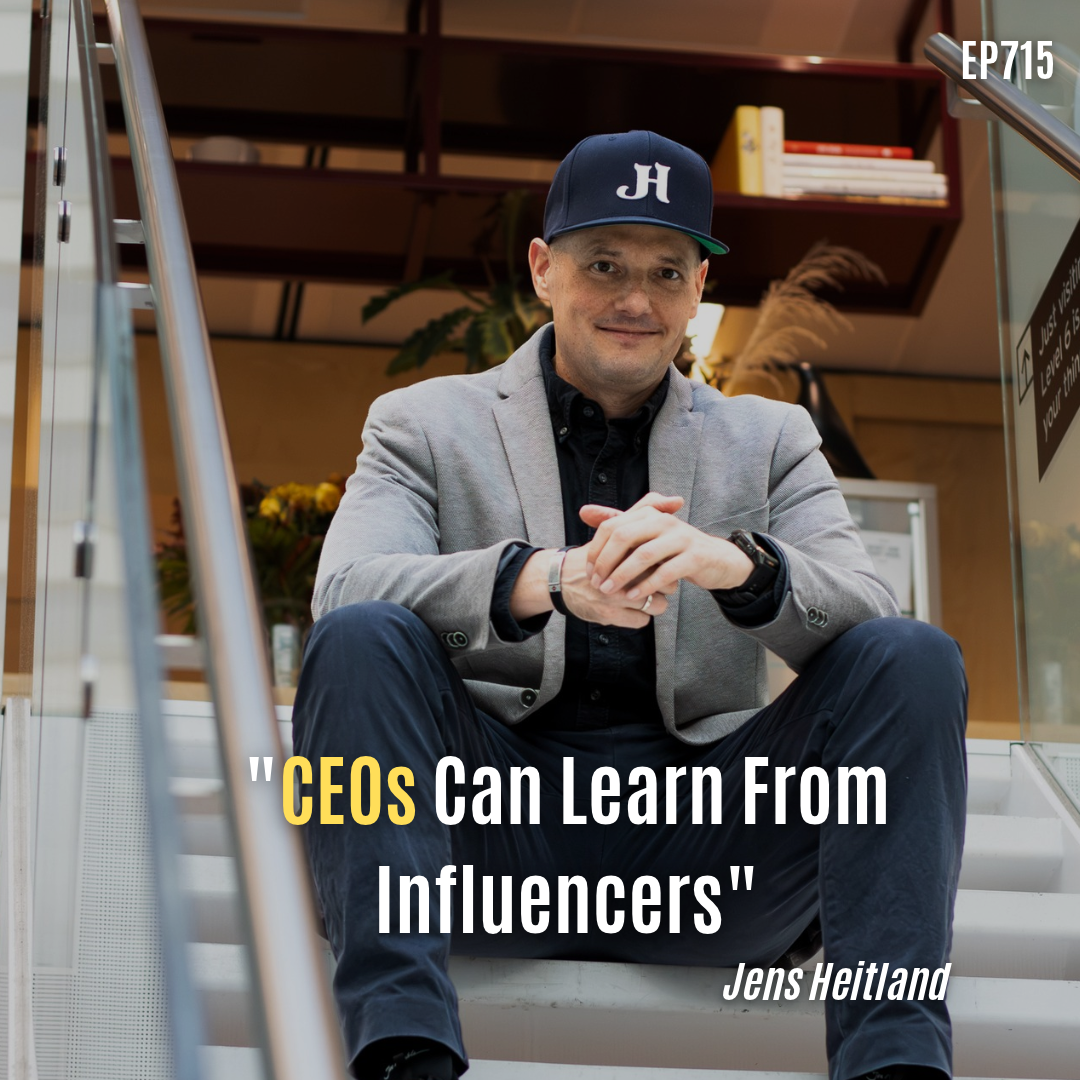
In this episode of The Daily Hint, Jens Heitland examines the gap between how the world's leading social media influencers work with media and how executives in large organizations approach communication. Drawing on nearly thirty years inside large European organizations, he describes communication as a spectrum with thought leadership at one end and influencers at the other, and explains how communication teams and executives can study the techniques of the new communication world and translate them into executive thought leadership that serves the business, without the leader ever needing to become an influencer.
BRING THESE FRAMEWORKS TO YOUR ORGANIZATION
What Executives Can Learn From the Way Influencers Communicate
The way people receive information has changed more in the past decade than in the century before it. Attention now moves through feeds, short videos, podcasts and personal channels, and the people who understand that environment best are rarely found in boardrooms. The leading social media influencers work with media at a level that very few executives in large organizations have had reason to understand.
In my experience inside large European organizations, communication at the top tends to follow a familiar rhythm. Statements are prepared carefully, reviewed by several people and released through official channels. The process protects the organization, and it also creates distance between the leader and the people trying to understand what that leader actually thinks.
If we look at communication as a spectrum, thought leadership sits at one end and influencers sit at the other. Between those two points there is a wide gap in technique. Influencers have learned how to open with clarity, how to speak as if to one person, how to stay consistent over time and how to let an audience recognise them through repetition. Each of these is a communication skill, built through years of daily practice in public.
Large organizations usually react to this world in one of two ways. Some dismiss it as noise that has little to do with serious leadership. Others try to imitate it, and the result often feels out of place for a CEO, because the tone belongs to someone else. Both reactions leave the same gap.
Over time, that gap has consequences. People still form an impression of the leader, and when the leader is absent from the places where attention now lives, others fill the space. Interpretation hardens around fragments, old interviews and secondhand commentary. Trust in the business can erode quietly, simply because the people deciding whether to work with it, invest in it or join it cannot find a clear and consistent voice behind it.
What tends to work better is a middle position. Communication teams and executives can study how the new world of communication functions, look closely at the techniques that make leading voices effective, and then translate those techniques into executive thought leadership. The purpose stays the same as it always has: to drive the business. The format and the rhythm simply adapt to the environment the audience is already in.
Nothing in this asks a CEO to become an influencer. The executive remains an executive, with the same responsibility, judgment and restraint. What changes is the level of fluency with which that executive meets the audience. Leaders who understand how communication works today can carry their thinking further without losing the seriousness their role requires, and the organizations behind them become easier to understand as a result.
Highlights:
00:00 Learn From Top Communicators
00:10 Thought Leaders vs Influencers
00:21 How Influencers Master Media
00:39 Translate Tactics Into Leadership
01:06 Closing Takeaway
Links:
===========================
Equipment and Software I Use for My Videos and Podcasts
Jens Equipment and Software overview:https://www.jensheitland.com/equipment
===========================
Books that I read and recommend.
My Book Recommendations: https://www.jensheitland.com/books
===========================
Here are the ways to work with me:
Speaking:https://www.jensheitland.com/speaking
Leadership Skills Assessment:https://www.wearesucceed.com/
===========================
Connect with me!
LinkedIn:https://www.linkedin.com/in/jensheitland/
Facebook:https://www.facebook.com/JensHeitlandofficial/
Instagram:https://www.instagram.com/jensheitland/
TikTok:https://www.tiktok.com/@jensheitland
X/Twitter:https://twitter.com/jensheitland
Newsletter:https://www.jensheitland.com/newsletter
===========================
Subscribe and Listen to The Jens Heitland Show Podcast HERE:
YT:https://www.youtube.com/channel/UCjuSGi1feauCNSER3IKuGWg
Web:https://www.jensheitland.com/podcasthome
Apple:https://podcasts.apple.com/us/podcast/the-jens-heitland-show-human-innovation/id1545043872?uo=4
Spotify:https://open.spotify.com/show/7H0GWMGVALyXnnmstYA1NL
===========================
Subscribe and Listen to The Daily Hint with Jens Heitland Podcast HERE:
YT:https://www.youtube.com/channel/UC2tLdutVh6b6nCBgWQ817eQ
Web:https://www.jensheitland.com/the-daily-hint
Apple:https://podcasts.apple.com/us/podcast/the-daily-hint-with-jens-heitland/id1722930497
Spotify:https://open.spotify.com/show/4T02uYPvcOrajPC6FgH64r?si=8aab1e7683204160&nd=1&dlsi=0f69c72af017454a
Transcript :
The one thing that executives can learn from the uber communicators out there is the techniques these communicators are using. If we talk about extremes, so you have thought leadership and you have on the other extreme influencers, let's say social media influencers as one of the examples. The social media influencers that are global leading, they know how to work with media in a completely different level than a CEO or an executive in a very large organization even understands how this works. What the communication team and what the executives can do is look into how do they leverage the new world of communication for themselves and then not copy what they do, then it's translating it into the CEO or executive thought leadership for their purpose, which is driving the business And then you can still learn from it rather than turning to be an influencer.