
687 - The Relationship Behind the Deal
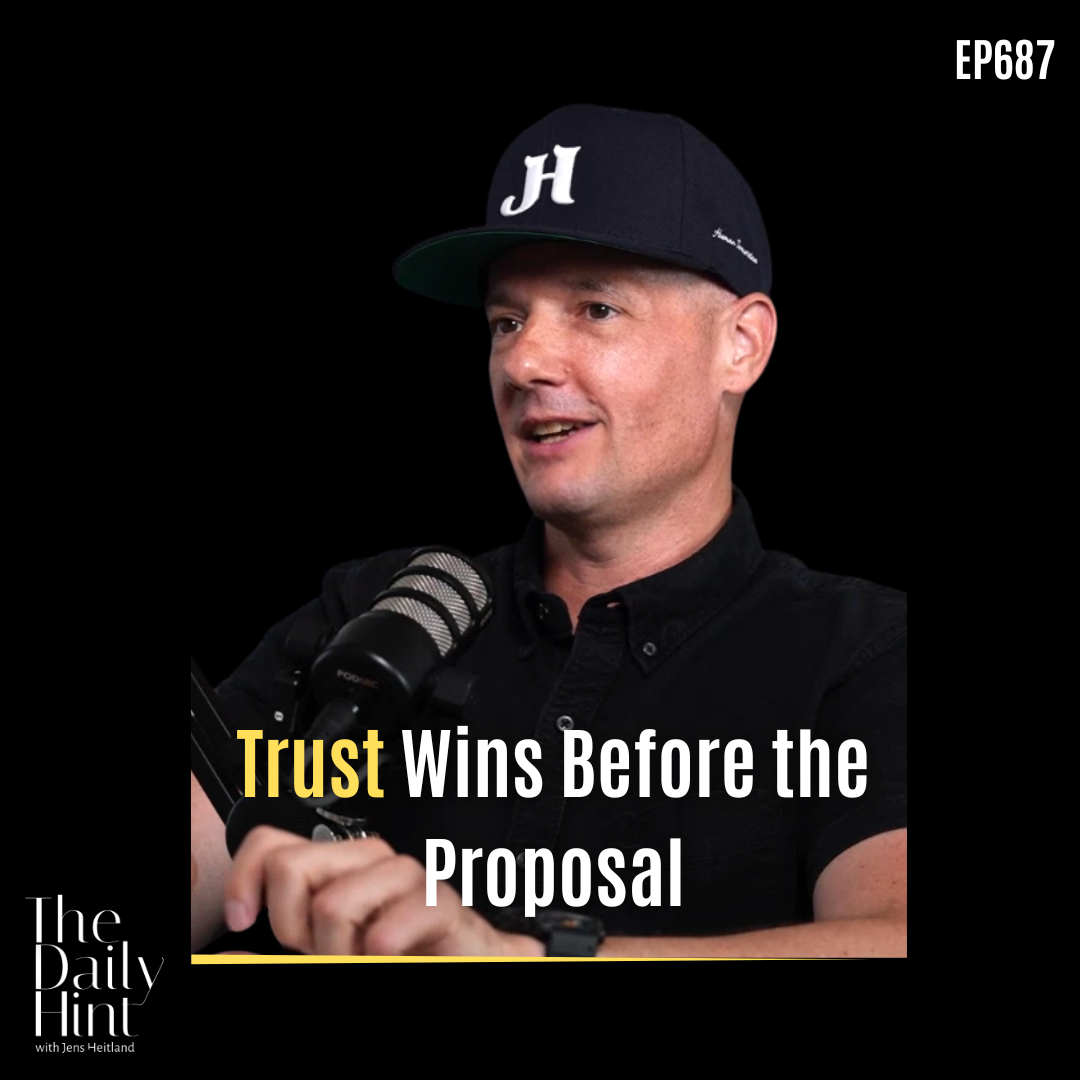
Jens Heitland describes the two kinds of commercial conversations inside large organizations: the formal request for proposal, where comparison drifts toward price, and the relationship-led conversation, where trust between senior leaders shapes the outcome. A pattern observed across consulting, retail, and manufacturing.
Want to build your Personal Brand?
Join the free Rising Stars Community
The Relationship Behind the Deal
In my experience, commercial conversations inside large organizations tend to fall into two kinds. The first runs through a formal request for proposal. A purchasing department lines up several providers, scores them against the same criteria, and moves the discussion toward a comparison. The second kind runs on something older and harder to measure. It depends on a relationship that goes deeper than the surface of the transaction.
The request for proposal exists for good reasons. It creates fairness, documentation, and a defensible internal decision. Over time, though, the process develops its own gravity. Every provider answers the same questions in roughly the same format. Differences in experience, judgment, and understanding are hard to capture on a scoring sheet. As the process enters its final phase, the comparison tends to narrow to the one variable everyone can read the same way: price. Few organizations enjoy being in that position, on either side of the table.
The second kind of conversation looks different from the inside. The formal steps may still happen. A proposal may still be requested, and other providers may still be invited. Yet one organization arrives with a level of trust the others cannot build within a tender timeline. The people deciding already know how that organization thinks, how it behaves under pressure, and how it responds when something goes wrong. The gap to the other bidders is wide before the first document is submitted.
When there is no formal request for proposal, the pattern becomes even clearer. Without a purchasing department ranking providers against each other, the decision moves closer to the people who carry the relationship. In those situations, the organization with the relationship tends to make the larger deal. I have seen this in consulting, in retail, and in manufacturing. Industries change, products change, and contract structures change. The underlying dynamic stays remarkably stable.
At the center of it sits the relationship between senior people. Trust at the top of two organizations shapes how every proposal is read. A number in a spreadsheet is interpreted differently when you know the people behind it. Perceived risk tends to feel smaller. Ambiguity gets the benefit of the doubt. A delay is simply read as a delay.
The consequence is rarely discussed openly. Organizations invest heavily in proposal quality, pricing models, and procurement readiness. Far less attention goes to the slower work of building understanding between senior leaders before any tender exists. The relationship is often treated as a byproduct of good delivery, something expected to form on its own if the work is strong enough. In practice, it forms through rhythm, consistency, and repeated contact over years. Without that rhythm, the organization enters every commercial conversation as one name among several, and the comparison drifts toward price.
Seen across many organizations, the relationship works like an engine. It quietly shapes conversation outcomes long before anyone sits down to negotiate. The proposal still carries weight, and so does the price. Both simply weigh less when the people involved already trust each other.
Highlights:
00:00 Two Sales Conversations
00:07 RFP Price Comparisons
00:35 Winning Through Trust
00:59 Relationships Close Bigger Deals
01:25 Why Senior Ties Matter
01:31 Building Relationship Engines
Links:
===========================
Equipment and Software I Use for My Videos and Podcasts
Jens Equipment and Software overview:https://www.jensheitland.com/equipment
===========================
Books that I read and recommend.
My Book Recommendations: https://www.jensheitland.com/books
===========================
Here are the ways to work with me:
Speaking:https://www.jensheitland.com/speaking
Leadership Skills Assessment:https://www.wearesucceed.com/
===========================
Connect with me!
LinkedIn:https://www.linkedin.com/in/jensheitland/
Facebook:https://www.facebook.com/JensHeitlandofficial/
Instagram:https://www.instagram.com/jensheitland/
TikTok:https://www.tiktok.com/@jensheitland
X/Twitter:https://twitter.com/jensheitland
Newsletter:https://www.jensheitland.com/newsletter
===========================
Subscribe and Listen to The Jens Heitland Show Podcast HERE:
YT:https://www.youtube.com/channel/UCjuSGi1feauCNSER3IKuGWg
Web:https://www.jensheitland.com/podcasthome
Apple:https://podcasts.apple.com/us/podcast/the-jens-heitland-show-human-innovation/id1545043872?uo=4
Spotify:https://open.spotify.com/show/7H0GWMGVALyXnnmstYA1NL
===========================
Subscribe and Listen to The Daily Hint with Jens Heitland Podcast HERE:
YT:https://www.youtube.com/channel/UC2tLdutVh6b6nCBgWQ817eQ
Web:https://www.jensheitland.com/the-daily-hint
Apple:https://podcasts.apple.com/us/podcast/the-daily-hint-with-jens-heitland/id1722930497
Spotify:https://open.spotify.com/show/4T02uYPvcOrajPC6FgH64r?si=8aab1e7683204160&nd=1&dlsi=0f69c72af017454a
Transcript :
There are two types of conversations that are happening when we look into a commercial conversation of a business. There are conversations that are happening most of the time in an RFP, request for proposal, where you're just compared with a lot of other organizations. And most people that are going through this or most companies that are going through a process like this, they don't like it because the comparison often goes back to the price, especially in the end phase of this discussion.
And then there are the others, which I have experienced quite a bit, where you have a relationship that is deeper than just the surface. And then even inside of the request for proposal, obviously you're compared with that, but you have a huge gap towards the others because you are way more trusted than the others.
And if there's no request for proposal, meaning there are not many other players that are kind of ranked against each other from the purchasing department, then the person that has the relationship, the organization that has the relationship always is going to make the bigger deal in the end. And I've seen this in consulting, I've seen this in retail, I've seen this in manufacturing, in a lot of organizations.
It's the relationship, especially between top or senior management that's going to make the difference. So driving that relationship in an engine is helping every organization, and that's why we do that.