
EP258: Saren Keang: A Life Built Against the Odds
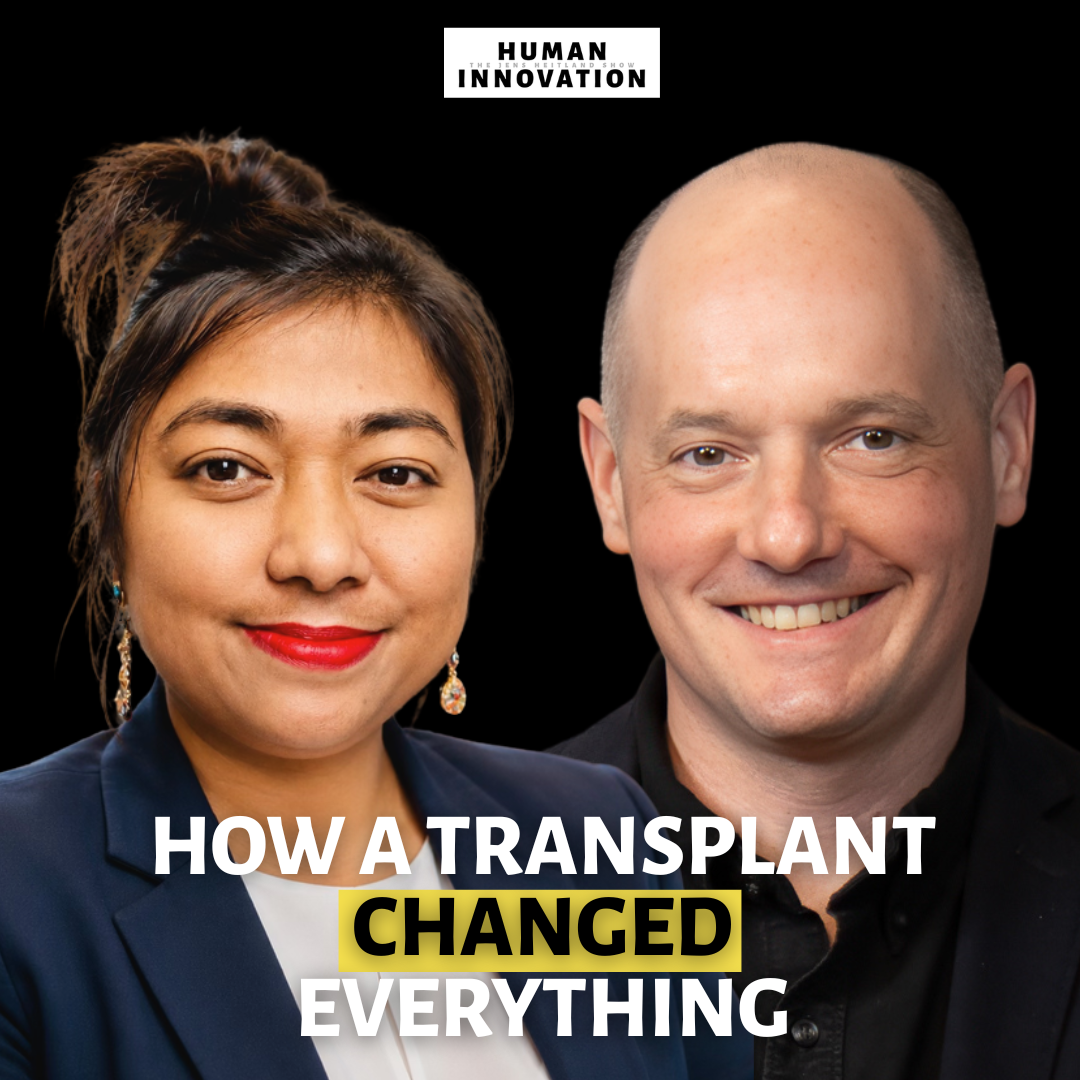
In this episode of the Human Innovation Podcast, Jens Heitland speaks with Saren Keang about growing up in rural Cambodia, fighting gender bias to stay in school, supporting a family of ten while surviving kidney failure and a transplant, living with bipolar disorder, and mentoring the next generation of immigrant students.
Youtube Podcasts
Saren Keang: A Life Built Against the Odds
I had the chance to speak with Saren Keang in this episode. Her story spans three countries, two health crises, and one pattern that quietly repeats across a generation.
Saren grew up in a small village in Cambodia, in the years after the genocide, when the country was still rebuilding an economy that had almost nothing left in it. Her mother sold food from a bicycle to make two or three dollars a day. Her father had arthritis and could not work. In that environment, a belief took hold. Girls could go to primary school, but nothing more was expected of them. Boys were the ones who continued.
That belief was not held by one or two people. It was a system, repeated quietly across a generation. Saren's older sister was pulled out of school at grade four. Her younger sister left at grade nine. Neither of her siblings went on to finish a college degree. Saren watched this happen and understood, early, that the same pattern was waiting for her.
Selling clams and grilled chicken wings after school helped pay for her father's medicine, and she kept studying anyway, because education was the only path out that she could see. That decision earned her a scholarship to a university in Bangladesh built specifically to support young women from across Asia, and later a dual master's degree in the United States. She is now the first person from her village to hold two master's degrees from a US university, and the first from her district to hold three master's degrees from two different countries.
The cost did not end when she left Cambodia. While completing her third master's degree, Saren was also financially supporting a family of ten back home, and doing so while living with kidney failure and bipolar disorder at the same time. In January 2023, a routine blood test led to an emergency room visit. Her kidney function had dropped sharply, and by March her kidneys were functioning at eight percent. Dialysis followed, three times a week, four hours at a time, and she kept writing her research on the days her energy allowed it. In February of this year, she received a transplant that matched her blood type and antibodies exactly, and she has been recovering well since.
A psychotic episode in 2017, not long after losing her father, led to her first bipolar disorder diagnosis. Her family combined traditional healing in a Buddhist pagoda with medication collected from a clinic in the capital. She speaks about the diagnosis directly, without performance, because she wants to reduce the silence that still surrounds mental health in her home country and elsewhere.
Two books have come out of this journey, and Saren now mentors high school and college students, particularly newcomers and immigrant youth, on navigating scholarships. That work started informally with young women from Cambodia and is something she wants to extend further.
None of this reads to her as exceptional. It reads as a series of decisions made inside a system that told her, repeatedly, to stop. She kept choosing to continue, and now she spends part of her time helping others find the same path. That pattern is worth watching, in Cambodia and anywhere else it shows up.
Human Innovation with Jens Heitland is produced by Heitland Media Group.*
Guest Links
Saren Keang: https://www.linkedin.com/in/saren-keang-796466260
Website:https://www.jensheitland.com/
Business: https://www.heitlandmediagroup.com/
LinkedIn:https://www.linkedin.com/in/jensheitland/
Facebook:https://www.facebook.com/JensHeitlandofficial/
Instagram:https://www.instagram.com/jensheitland/
TikTok:https://www.tiktok.com/@jensheitland
X/Twitter:https://twitter.com/jensheitland
Newsletter:https://www.jensheitland.com/newsletter
YouTube:https://www.youtube.com/@jens-heitland
Subscribe and listen to The Jens Heitland Show Podcast here:
YT:https://www.youtube.com/channel/UCjuSGi1feauCNSER3IKuGWg
Web:https://www.jensheitland.com/podcasthome
Apple:https://podcasts.apple.com/us/podcast/the-jens-heitland-show-human-innovation/id1545043872?uo=4
Spotify:https://open.spotify.com/show/7H0GWMGVALyXnnmstYA1NL
Transcript
[00:00:00] Jens Heitland: Saron, you grow up in a culture where specifically girls are told you don't go to school or you don't have to go to school, and you ended up living in Canada. Tell me about the first day when you arrived in Canada coming from Cambodia
[00:00:20] Saren Keang: Thank you, Jens. It was very memorable indeed. Now I used to study in the US before I came to Canada, right? So I did visit Canada before coming this second trip to, to do my PhD. So, but even then, like coming to the school, the first day that I arrived at the University of
[00:00:40] Jens Heitland: Well,
[00:00:41] Jens Heitland: I,
[00:00:43] Saren Keang: I was just
[00:00:43] Jens Heitland: I was just when I was like 10.
[00:00:46] Saren Keang: I was like,
[00:00:46] Jens Heitland: I was like,
[00:00:47] Saren Keang: " Oh, look at this building." the, the building that represent University of Guelph here in Ontario that looks really beautiful. And, I was, I wa- I took a picture and post on Facebook right away and say, "Look how far I come."
[00:01:00] Saren Keang: I'm like, "I'm here in University of Guelph in Canada." So like, it was full of excitement, and yeah, I was so looking forward to what's coming next
[00:01:09] Jens Heitland: how was it like with your friends and with, with your family when, when you said, "I'm, I'm doing my PhD in Canada"? How did they react?
[00:01:17] Saren Keang: My mom specifically, like she couldn't believe it. knew I was, not an ordinary, girl, like, because I already like received, already received full, scholarship to get a dual master degree in America before that, right? So she knew that I was gifted, but e- but, like, the fact that I'm, as someone who come from a small village of Cambodia, got to, got to go to Canada for a PhD studies, that was like a dream come true for her. She, she, she found it like so unbelievable, and she was so proud of me. Although Asian mothers or Asian parents, they don't know how to say the word I'm proud of you or I love you, you know? They don't say that in front of the, their kids. They, they have their own way of s- of doing that, which is cook for you. cook and offer food for you. They don't actually say that, but you knew, you knew how proud they are by, by their expression, by the way they treated you, you know? And my friends also, like, they were all so excited for me, and they said, "Oh, wow, you're gonna become a, a doctor, like Dr. Keang or Dr. Keang."
[00:02:26] Saren Keang: Exactly my last name is not Keang, it's, in, our language it's called Keang. So Dr. Keang, and they also were so proud of me, and they, they said, "Wow, can you do all this?" Like, the question that I receive a lot is like, "How can you do all this?"
[00:02:41] Jens Heitland: Yeah. Let's, let's go a little bit into how you grew up for people to understand how different that is to, I mean, living in Ontario
[00:02:49] Saren Keang: so I grew up from in a house where parents, my parent had only three year-- no, my mom had three year of education, my dad had six years of education. So with that low level of education, it was really hard for both of them to find a good job, especially in the context of Cambodia after the genocide. So Cambodia had a genocide between 1975 to 1979, and after that, like, i-in the '80 and the '90s, Cambodia was still building the, the economy, so jobs was scarce. There's, there's not enough job for the, um, for the Cambodian people. And then not only that they didn't get a good job, my dad had arthritis, and he wasn't able to walk, and he was just in a lot of pain and staying in bed all the time. And my mom had to become the breadwinner. With, with, like, with the
[00:03:37] Jens Heitland: Like the gender or education gap.
[00:03:38] Saren Keang: she got
[00:03:39] Jens Heitland: So that kind of free education, right?
[00:03:40] Saren Keang: right? So
[00:03:41] Jens Heitland: So
[00:03:41] Saren Keang: couldn't get a
[00:03:42] Jens Heitland: it wouldn't make a
[00:03:42] Saren Keang: properly, so she had to sell food. She rode, she rode bicycle, bringing food from my market to, like, remote, deep remote area, and makes, like, make profits around, like, 2.5 US dollar or 5 US dollar per day, you know? It's usually if she get $5 per day, that's a lot. That's a lot of money for her already. So, like, with that small amount of money, she... And when I was little, we-- of course, we didn't have my young, my younger daughter yet, right? Or my younger, um, sister yet. So there were three of us, three daughters, and, my parents, so five in the family. my mom had to, um, raise us three daughters and buying, paying
[00:04:19] Jens Heitland: ein Pain
[00:04:20] Saren Keang: bills for my
[00:04:21] Jens Heitland: Point
[00:04:21] Saren Keang: dad with, with that little $2.50 profit every day. So it's, it was just not enough. And, like- She was getting into a lot of debt. We never had s- luxurious thing. Like, I had only one pair of uniform to go to school, and, and I have to keep washing it every single day.
[00:04:37] Saren Keang: And I can't, I, I can't just buy toys that I want. They never had money for me, right? There's no saving in the f- in the home. And we were, we were really struggling a lot that by the time I turned eight, I had to help my mom s- st- um, start selling food as well because the m- the income from my mom alone was not enough, so I had to start selling...
[00:04:57] Saren Keang: You know,
[00:04:58] Jens Heitland: income
[00:04:58] Saren Keang: we have
[00:04:59] Jens Heitland: from investments
[00:05:00] Saren Keang: river or lake
[00:05:01] Jens Heitland: like that and that. So I have more money than I need for now. I make a little bit of money trading. And it kind of seems like there's not people. It's not enough for a clan
[00:05:04] Saren Keang: but it looks like clams, and we call it leah, and we dry it under the sun. We call leah hal. So I was selling that leah hal under the sun. So I would sit under, under a table s- table waiting for customer to come buy leah hal from us, and it was hard.
[00:05:20] Saren Keang: And that, I do that, I did that after my school in the morning, and then I sold that leah hal in the afternoon and, and get like maybe sometime I made, um, like the total amount that I made was like, um, $3 or $5, so the profit would be just little than, little than that. The total income was $5, so the profit would be like $1 or $2, and I gave everything to my mom to buy us food and pay for my, my father's medicine and all that.
[00:05:48] Saren Keang: So we were struggling quite a lot.
[00:05:51] Jens Heitland: And then there was one day where you decided you want to study. How was that? How did the environment around you, like, react to that?
[00:06:02] Saren Keang: So, well, there was a lot going on, right? There was the gender biases, like, people believe that-- they, believe that girl might-- can go to school for a little bit. They said they m- they might need to be about to read a little bit, right? They said they can go to primary school, but they don't have to go to secondary school.
[00:06:18] Saren Keang: They don't have to go to high school. Certainly don't need to get higher education. That's what they believe. They said boys can do that because they're boys. Girls will just end up being somebody's wife and taking care of the kids and cleaning and cooking. girl's job is not to pursue higher education. And then that's like the gender biases in the community. And
[00:06:39] Jens Heitland: in the family
[00:06:40] Saren Keang: there's the economy constraint. The-- My, my, my parents' financial constraint, right? That also like put us in a lot of pressure to not, to not being able to focus in school. Be- and my... In fact, my oldest, sister, she was asked to quit school at grade four. She was about to go to grade five, and my parent asked her to quit. And then I was like, I was scared. I'm like I was... I, I started grade one already, I believe, when my, my older sister, um, quit g- quit g- quit school. I was in grade one and, I was-- I started to get scared and was like, "Is this gonna, gonna be my future too?
[00:07:17] Saren Keang: Am I gonna be about to be pulled out? Am I gonna be pulled out from school too?" But like no o- no one told me anything about the power of education. But I just knew that this must be the only way out for me. If I don't wanna be, and if I don't wanna end up like my, my mother or my older sister, like quitting school early and then get, um, a business job that pretty much didn't allow them to earn much at all, and struggling every day getting into debt and just living on survival mode.
[00:07:48] Saren Keang: I didn't want that kind of life. And there was nothing else for us. There was no other option besides education. All I could see, just the e-education, that that was a way
[00:07:58] Jens Heitland: 未来老公
[00:07:58] Saren Keang: for me. So I thought I had to work really hard. I ha- I had to fight this. No matter how poor we are or we were at that time, I had to keep going to school, and I have to prove to them that I did well in school so that they won't pull me out of school.
[00:08:13] Saren Keang: So I did that. I worked so hard, and I was always top in class. A- and when they tell me
[00:08:19] Jens Heitland: einmal weiterentwickelt
[00:08:20] Saren Keang: are better than us, you girls are not as capable as boys,
[00:08:23] Jens Heitland: with me because it resonated
[00:08:24] Saren Keang: because
[00:08:25] Jens Heitland: with me because
[00:08:26] Saren Keang: right? I
[00:08:27] Jens Heitland: I was like, "Traktor?"
[00:08:27] Saren Keang: the class, so I'm like, "Why are they saying that girls are not as capable as boys when I am actually the top student," right? So it's like there's some sort of clash and something that I was unable to comprehend that time.
[00:08:39] Jens Heitland: Yeah
[00:08:39] Jens Heitland: it's interesting. So you, you made it through school, and what was the jump towards university from, from that stage then?
[00:08:47] Saren Keang: so I, after, grade 12, I got a full scholarship to go to Bangladesh. It's, it's called Asian University for Women. It's like, it provides full scholarship to student from As- female student from A- all over Asia. And
[00:09:02] Jens Heitland: women
[00:09:02] Saren Keang: this, their mission is to empower young women from Asia to become future leaders, and I like that.
[00:09:08] Saren Keang: You know, like back then, like people had a lot of, sort of stereotypes toward Bangladesh. Like they, they think it's a poor country, it's not developed. Why would you go there? But I didn't care about that perspective. All I knew is that I would be able to get full scholarship, and I wouldn't have to like, put pressure on my parent to look for money to support my education, and I'm gonna become a future leader.
[00:09:32] Saren Keang: That's the part that I, that excited me. So like, I took the chance of tr- take, getting on a flight for the first time, going to Malaysia and then to Bangladesh, and it was, it was a whole different world for me. I didn't have to sell food whi- while I finish school anymore. All my time was dedicated to studies. Like, they cover everything. They cover tuition fee and everything, and, and there was, food, free food for us as well, and we didn't even have to do the dishes. So all my time, I, I got that to like, to like focus on my studies, improving my English, and improving, improving all my other skills, computer skill and all, right?
[00:10:13] Saren Keang: So I enjoyed that life at the university too much that I didn't even miss my family that much. and later I learned that my fa- my, my parents were crying and missing me a lot, and it was like, "Really? I was just enjoying my studies." So it was a big shift from, a girl who had to sell food in between days. And you know, after I sold those clams, later when I got into grade eight to, between grade eight to grade 12, I also go out, go around to different, Buddhist monus- monasteries to sell chicken wings at night as well.
[00:10:46] Saren Keang: Like, we grill chicken wings, like just the edge. Like back then in Cambodia, chicken wings, the edge of the chicken wings were very affordable, so people like to buy that. So I grill it and I lost sleep. You know, at night I go sell it in different religious festival, and I lost sleep. I wasn't about to focus on my study properly, but, but I was, I still made it, right?
[00:11:06] Saren Keang: So now I have all my time to study in the university that, that provides all sort of resources, and so like I was just enjoying my privilege so much, and I owe a lot of gratitude for, um, Asian University for Women for helping me to get to where I am, being able to speak English and all that.
[00:11:23] Jens Heitland: so how did you then end up in the US from there? Did you go home in between or how was that?
[00:11:29] Saren Keang: I went home, after I graduated from Asian University for Women in 20, 2014. I went home and I worked a little bit. at the beginning I took a job right away as a college and career counselor, but after that I wanted to do something that is more challenging for me. So I went to the capital city and took a job as a researcher. I worked for BBC Media Action, Family Health International, the UNICEF, and I did different research, projects
[00:11:57] Jens Heitland: think
[00:11:58] Saren Keang: And then I
[00:11:59] Jens Heitland: for them
[00:11:59] Saren Keang: a, a great resume as a researcher, right? So I, and work for different international organizations. So then my background was strong and also, like, my passion is still there, right?
[00:12:09] Saren Keang: My passion for education is still there. So when I wrote my personal statement, everyone has to listen, you know? Like how far I've come, right? From the background that I share with you all, like strugg- struggling and humble background to get to Bangladesh and made it. Like, I finished, my degree one semester before all my peers and come back, become a researcher.
[00:12:30] Saren Keang: Like from, from somewhere in a small village of Cambodia where girls were not believed to be capable to somewhere as a researcher working for BBC Media Action and Family Health International. They're like, my re- my CV was just," or like, "My application for the scholarship to, was just so strong."
[00:12:49] Saren Keang: You know? Like I, I believe like when they read it, they just so inspired. So they gave me full, two, like full scholarship to do a dual master degree at Brandeis University, a li- 15 minute from Boston. So yeah, it's a
[00:13:02] Jens Heitland: Nice.
[00:13:03] Saren Keang: Yeah.
[00:13:04] Jens Heitland: So h- how did your sisters react at that time?
[00:13:07] Saren Keang: I think, for them it's kinda really like, it's like almost like abstract because like for them just to be, being, being about to complete
[00:13:16] Jens Heitland: Barbarakusik,
[00:13:17] Saren Keang: was
[00:13:17] Jens Heitland: Heidschu, aber
[00:13:19] Saren Keang: challenging. And for me to be about to
[00:13:21] Jens Heitland: Support haben wir. Und für mich ist die Barbarakusik
[00:13:21] Saren Keang: go from high school Bangladesh, then now going to Boston, like they, they were not about to understand how I did all that.
[00:13:30] Saren Keang: And they, they gave up on asking, you know? They're like, "I don't understand anymore. I don't know how you did it, so I'm, I'm, I'm just gonna stop asking, but I'm just gonna, just gonna say like I'm proud of you." They're like didn't understand the process of how I made it. And it, it would take, it would, it would take this, thick of book to explain them all my process and how I did it, you know?
[00:13:51] Saren Keang: And even then they wouldn't be able to read it all because if I were to write in English, right? But, um, maybe I can write in my language for them to understand, but they, they, they can't relate. can't relate, can't relate to my journey at all. So my first sister finished, quit school at grade four.
[00:14:08] Saren Keang: My second sister fin- managed to finish grade 12 fortunately, so she's, she's at least she's about to read and write properly, right? And my youngest sister, for some reason I was in Bangladesh, she quit school at grade nine. So none of them had been to college. I'm the first one had, who had, who has been to college and has been doing, has completed master degrees
[00:14:29] Jens Heitland: Yeah. Congratulations.
[00:14:31] Saren Keang: Thank you
[00:14:32] Jens Heitland: if we take this into your village, so the, the-- if you're the person that has managed to do these educational steps and you look back, what do you think is the differentiator between you and the others? Not in a negative way, more in what can other girls learn from you?
[00:14:52] Saren Keang: Jens, I must say there's a real impact from my experience. You know, like, there w- there ... I am gonna give a real example. There's, um, sort of an older lady, older than my parents back, living back, at the back of our house. So we are, we are a village. We don't even have fences, right?
[00:15:09] Saren Keang: Everyone knows about each other. So by the time that I went to Bangladesh, the whole village were like, were like, "Wow." They are like, "What's happening? This has never been seen before." And so, like, that old lady when I was, when I was young, when I was in primary school, she used to come tell my parents, um, "Run, Ra," so that's the name of my parents, right?
[00:15:31] Saren Keang: Um, Run and Ra. And they said, "Run, Ra, just take your girls out of school. There's no point. There's no point of keeping them in school while you don't know if they're gonna even pass grade 12 or not." So, like, grade 12 is the national exam that, that's very hard, so, like, some people don't pass it, right? So they said, "You don't even know if they're gonna pass it.
[00:15:49] Saren Keang: Better let them start selling food or fruits in front of the market." Like, the market is, like, m- nearby to our house. So they said, "Just let them start, start selling fr- fruits." And that same old lady, that Now after I got to Bangladesh, and I returned home for summer project, um, I, I returned home for summer project, and she brought her grandchi- granddaughter here, and she showed me, "Hey, look, my granddaughter now is in grade seven. I want her to be like you. I want her to be able to go for, go abroad and study higher education." And I was like, "Oh, really?" I, I was so touched. I was so touched. Like, the real example of how one role model or um, example can change the whole village or the whole community, you know? That's just, that just, like, made my heart smile
[00:16:37] Jens Heitland: Yeah, that's am- amazing. Do, do you know anyone inside of the village that is now kind of following your footsteps?
[00:16:45] Saren Keang: I had heard that, um, there are some mothers who name their kids after me.
[00:16:50] Jens Heitland: Oh, that's cool
[00:16:52] Saren Keang: Yeah, they name their daughters after me because they want their daughters to, to follow my footstep and be, um, about to be as success- even though I, I still think I'm not that successful enough. So like to be successful as me.
[00:17:05] Saren Keang: And yes, there are more, um, there are less, um, conversation about girls not being capable now. I don't hear that much anymore. Maybe like a more remote area than my village. Like, even though I was living in a village, there were more other even more remote part of the country that still hold on to those gender perspective, gender bias perspective, right? But at least in my village and the surrounding, now they don't even talk about girls not, not, deserving to go to school anymore. They just let their girls go into school. There's no question anymore
[00:17:37] Jens Heitland: Yeah
[00:17:38] Jens Heitland: that's nice to hear. So
[00:17:39] Saren Keang: Yeah
[00:17:40] Jens Heitland: then, you started in the US, the, the, the master.
[00:17:44] Saren Keang: Yeah
[00:17:45] Jens Heitland: how was that for you? How, how did you experiencing this like almost, let's call it freedom is maybe the wrong word, but it's, it's kind of you being in an environment where everything is completely different than whatever you have experienced before
[00:18:00] Saren Keang: America was, um, was a whole new world to me for sure. Um, I see-- Like what amazed me the most, Jens, because I came from a village where men were the leaders, where men were the professional, men were the CEO,
[00:18:16] Jens Heitland: of professional, member of CEO
[00:18:17] Saren Keang: were the doctor, director, doctors. So I saw men the one who are high up. But when I came to the US, I've seen like very confident,
[00:18:27] Jens Heitland: for female, for conferences and people who want to
[00:18:28] Saren Keang: female professors.
[00:18:29] Saren Keang: I went to c- conferences and I see speakers who were women who talk confidently and like they're leaders in their field. And that was the mo- the most beautiful thing that I enjoyed the most being in the US, is to see female leaders talking and sharing their expertise confidently, and I wanted to be like them.
[00:18:48] Saren Keang: I wanted to be able to like go on stage and like talk confidently and make an impact. That was the main thing that I was, really, inspired by living in the US. Another thing of course like, like you said, freedom, like, just to be able to like walk at night from where you live to school. Whenever you need to go to the library or use the computer resources and all, I can walk a-alone at, at night to go to school, right?
[00:19:13] Saren Keang: And not having to worry about my safety, which in Cambodia for us women, walking alone at night is still not that common yet. Like there's a lot
[00:19:21] Jens Heitland: with another few of things who
[00:19:22] Saren Keang: bullied or
[00:19:24] Jens Heitland: are really moving for
[00:19:24] Saren Keang: like, sexual harassment and all that. So that was another thing that I, truly, sort of appreciate about living in the US.
[00:19:33] Saren Keang: And of course like from a small village in Cambodia where you only farm and me selling, food on the street to like seriously in a beautiful bright classroom with a big library with all the resources, it was all like it was too much to take, but it was also positive,
[00:19:53] Jens Heitland: properly ranked
[00:19:54] Saren Keang: it-- I didn't -- I, at time I was like I pinch- I was pinching myself like, "Am I really in the US now?" And when I went to the, to visit the White House, I was like, "Really?" Like this has been a place that many, the US president have been doing amazing work, taking lead on all the political affair in all over the world, and I'm now s-standing right in front of this building
[00:20:21] Jens Heitland: mean
[00:20:21] Saren Keang: I only dr-dream of when I was little, you know? So it
[00:20:24] Jens Heitland: I want to grandma want to see my grandma? Yeah
[00:20:25] Saren Keang: it was, it was too unbelievable.
[00:20:27] Jens Heitland: So then there was this difficult day in 2023, I think it was in January. What happened?
[00:20:35] Saren Keang: So I, I came to the Canada to do a PhD in 2021. I was, I can-- I was doing, I was, doing some coursework in 2022, and then, things were going well. You know, I was a little, starting to... I was g- I was starting to get new symptom of, feeling sleepy all the time and feeling fatigue, like tired all the time.
[00:20:58] Saren Keang: But I wasn't aware that it was gonna be a serious issue, you know? I thought I was just, like, burned out or something, right? Or stressed or something. And then by, ... think it started in 2022 around, around September or Octo- or September, October, that I started to feeling all this fatigue and sleepiness, over-sleepiness. And then in January of 2023, I just, all of a sudden I got a call from my family doctor from the university that I need to go to the emergency room because my blood work sh-show a serious concern, and they didn't tell me what concern that was. I went to the emergency room and they said, "Hmm," the creatinine level, which is, the level that show the function of the kidney, is significantly, dropped down. And I was like, "Kidney?" Like, I barely thought about my kidney at all before before that day. Like I never thought about it at all. And then, then they said, "We have to keep monitoring you, because now it's like, it's quite low." And that was in January 2023. And then by March 2023, I went to do a biopsy, to, to, to further investigate the kidney function, and they said my kidney had, had dropped to 33%. I
[00:22:12] Saren Keang: didn't
[00:22:12] Jens Heitland: didn't, know
[00:22:13] Saren Keang: how the, what level it
[00:22:14] Jens Heitland: to work with
[00:22:15] Saren Keang: in
[00:22:15] Jens Heitland: it well
[00:22:15] Saren Keang: but it, by two month, in two month it has dropped to 33%. And in March, it dropped to 8% and I started dialysis right away. They put me on dialysis right away, and all my dreams were all, like, shattered. I started dialysis three times a week, four hours a day, and I don't drive, so I, I had to take the, here in Canada we call it the mobility bus, where they
[00:22:39] Jens Heitland: I would like to
[00:22:40] Saren Keang: transport patient or sort of people with disability and, and they charge us the same fees as if you were to take the government bus, the public bus. So it's like, just like $3.25 for, per trip. And they came to pick me. But these buses, they pick, they pick people along the way. And so total, including, like, getting on the bus and coming back with the bus, I spend, nearly six hours per day,
[00:23:07] Jens Heitland: 26 hours per day, three, three days a week, no matter the temperature. And so
[00:23:08] Saren Keang: days a week to do dialysis and, and getting there. so, like... And it took a, a, a deep toll on my health because I was just fatigue all the time and I had a lot of migraines, nausea, vomiting. And it was just, um, too hard for my body that I, I, I thought I, I wouldn't be able to be successful in this PhD journey. So I, made a hard decision. I, I was thinking about it for quite a long time, like, "What am I gonna do with this thing?" will I be able to complete it by four
[00:23:37] Jens Heitland: ein paar wenige sind auch in den anderen
[00:23:38] Saren Keang: You know, like, I just, it looks like it might be really difficult and
[00:23:43] Jens Heitland: Or if I want to focus on getting better, I hope to work
[00:23:43] Saren Keang: wanna focus on getting better, I might have to put a pause on this. So I decided to, transfer my credits that I have earned in 2022 and 2021 to, another master degree only so that I can just wrap up the coursework and just write a master thesis, which is less, much less challenging compared to a PhD dissertation, you know?
[00:24:05] Jens Heitland: Ja
[00:24:06] Saren Keang: I did that and I, so I got my third master degree. So now I have three master degrees. No PhD yet. I might go back to do a PhD though.
[00:24:14] Jens Heitland: Yeah. So, so what happened then aft- after, after you were diagnosed and, and need to go to, to dialysis all, all the time? So you, you, you, you, you did your master degrees still next to all of this. Like, you kept on studying, you s- you kept on
[00:24:33] Saren Keang: I had, I had to complete two or three, two, I think two more, two more classes and do the, the-- They, they don't call it a master thesis, they call it, in Guam they have two option. They have a thesis, which was supposed to be much challenging, and they have a major research paper. So I chose the route of doing the major research paper. So that major research paper and two classes, kept me in school for another year, kept me s- in school for another year while doing dialys- dialysis. So in 2023, while doing dialysis, I was still taking classes and writing major research, the major research paper on the side. So I, I would, wake up, take my medication, have breakfast, take lunch, and then, went for dialysis, and came, and came back and work on, the major research paper at night. If I had enough energy in the morning, I took breakfast and took medication and work on the major research paper a little bit in the morning, then went for dialysis and came back and rested. So either I work on the major research paper in the morning or at night, either before the dialysis or after dialysis.
[00:25:42] Saren Keang: I can't do both because I just simply didn't have the energy.
[00:25:45] Jens Heitland: and then 2026 came around
[00:25:51] Jens Heitland: what happened?
[00:25:52] Saren Keang: great news. I had my transplant almost, months ago in February. February 11, I got a call. Like, they said they had a kidney for me. They said, um, they had a kidney for me that totally matched my, my blood type and my, um, they call it antibody. and they called
[00:26:10] Jens Heitland: Wir kommen Ihnen
[00:26:11] Saren Keang: the
[00:26:11] Jens Heitland: ein Stück entgegen
[00:26:12] Saren Keang: I got to the hospital on the 10th in February, and around 1:00 AM, around a little bit over 1:00 AM on the 11th, my operation, took place. My surgery took place, and it was, it was, it was like a day I would never forget. I was like, I was waiting for the doctor to come get me for... The doctor or the nurse to come get me for, like, about 15
[00:26:37] Jens Heitland: for about 15 hours. I think that's not too
[00:26:39] Saren Keang: the hospital on the 10th since the morning, and then I was waiting, waiting,
[00:26:43] Jens Heitland: planning and decisions were made and people were on the way and everything stopped. And I was like, "How can this story be going on?" You know?
[00:26:47] Saren Keang: " Is it gonna happen? Is it gonna happen?" I was like I wasn't sure if it's truly gonna happen, you know? Like, I was on, I was, I was on the edge of like, um, what if, like, if something changes, the kidney is no longer good anymore, right?
[00:27:00] Saren Keang: And then by, 1:00 AM, the doctor came, the surgeon came personally to me, and I was sleeping. He woke me up, and he was like, "We'll do... We're gonna do the, the surgery, the
[00:27:09] Jens Heitland: in just in, in five minutes. Somebody
[00:27:12] Saren Keang: " Doc, is it really gonna happen now?" He said, "Yes." And I was like, I went through the surgery. Five, six hours later, I woke up, and the, the doctor was, the surgeon said everything went well, and I was ready to go to the recovery room. And the five days post-surgery was, was so challenging. There were a lot going on, you know. I had, I had a tube on my neck. I had the, the urine c- catheter. I had, um, a lot of IV putting fluid in my bodies. They check my
[00:27:42] Jens Heitland: Ich würde dazu sagen, ich denke mal wir
[00:27:42] Saren Keang: check, keep checking my
[00:27:44] Jens Heitland: nehmen
[00:27:44] Saren Keang: The
[00:27:44] Jens Heitland: das in der
[00:27:45] Saren Keang: take out the
[00:27:46] Jens Heitland: Reihenfolge
[00:27:47] Saren Keang: They follow my, um, or they check my… They did my blood work every single day. And the medicine, Jens,
[00:27:52] Jens Heitland: like 20, over 20 years for me. And I didn't have a limit to myself of then my date was like,
[00:27:58] Saren Keang: the, the five day post-surgery. That was a shock to me. All along, I was just thinking about the surgery itself, how painful it was gonna be,
[00:28:04] Jens Heitland: that wasn't counting. I don't know. I was just thinking about if I didn't have cancer, would I still be
[00:28:05] Saren Keang: it was gonna be successful.
[00:28:07] Saren Keang: I didn't think about the post-surgery in the hospital at all.
[00:28:10] Jens Heitland: Ja
[00:28:10] Saren Keang: was a shock to me. It was like, it was so challenging. I cry. I was sad most of the time. I like, I was so emotional. One of the medicine I was taking was also, like, affecting my mood a lot. It's called prednisone,
[00:28:23] Jens Heitland: Yeah
[00:28:24] Saren Keang: put, put me in like sad mood a lot.
[00:28:26] Saren Keang: Like, so I was just so sad in the hospital. But after that five days, and I came home, turned out beautifully. I started to recover so fast. I was, I was feeling better, and I was starting to have more energy again. And now, five months, I feel like I never had a kidney failure before, you know? Like, I feel great.
[00:28:46] Jens Heitland: Do you still, do you still need to go to checkups all the time or how is it now?
[00:28:51] Saren Keang: Right now, once a month,
[00:28:52] Jens Heitland: Ja
[00:28:53] Saren Keang: go for follow-up once a month. And the, the hospital's, the hospital is in, um, a different city. It's in London. It's, um, it's one and half hour from where I live.
[00:29:02] Jens Heitland: Yeah. Okay.
[00:29:04] Saren Keang: Yeah.
[00:29:05] Jens Heitland: manageable.
[00:29:06] Saren Keang: Still manageable, yeah.
[00:29:07] Jens Heitland: With new energy at least
[00:29:09] Saren Keang: still... You have a new energy. I still don't drive though, so my husband has to take me.
[00:29:14] Jens Heitland: Ja
[00:29:15] Saren Keang: pa- I keep, I keep failing the driving test in Canada twice. I said, I told people, um, I can study, I can achieve master degree, I can read, I can talk, you can make me do all that, but driving, it's just not my thing.
[00:29:32] Jens Heitland: that's okay. That's okay. You, you have, you have your husband that can drive
[00:29:38] Saren Keang: Yeah.
[00:29:40] Jens Heitland: So, d- tell me about the book. So, A Long Way From Home. How, how, how did this come about?
[00:29:48] Saren Keang: You know what? Um, my first book was different from the second book. The ti- the title A Long Way From Home, I had it in my head all along, like ever since I was in America, I think. I put the title on my Google Doc, A Long Way From Home, and I never really wrote anything on it. I put the title in since 2020-- 2016, and
[00:30:08] Jens Heitland: I speak to have a bit of a tool that makes
[00:30:11] Saren Keang: has to be called A Long Way From Home giv- given h- how my background came from a small village of Cambodia where I barely had any money to pay to buy candies or, or a to- a piece of toy, to somebody who got to see Boston, got to see the White House, got to speak alongside the former First Lady of the UK, Cherie Blair, which is, um, a, a, a conference at Texas that I went to. And I got to also participate at, um, at the sort of youth assembly at the United Nation Assem- United Nation Assembly in New York. You know, like all of that was just like, it, it show, it show already like how far I've come, you know? So that like, that title, like it was there a long time ago, that A Long Way From Home.
[00:30:55] Saren Keang: I always know, knew my first book was gonna be named that, A Long Way From Home. I always knew. Unlike my second book, which I, I believe you might ask later. So the second book, I didn't know what the title was gonna be. Right before I sent it to my editor, that's when I put the title.
[00:31:11] Jens Heitland: Yeah
[00:31:12] Saren Keang: Yeah.
[00:31:13] Jens Heitland: for, for, for the listeners, what is the book about?
[00:31:16] Saren Keang: A Long Way From Home?
[00:31:17] Jens Heitland: Yeah
[00:31:18] Saren Keang: Yeah, so I narrated the stories from where I came from. I talk about a little bit of my background from, um, from my Malay child. I studied by using a lantern, a lantern, they call it kerosene, kerosene lantern, right? Using a kerosene lantern to study. I was selling lehal or the clam. I was selling, um, chicken wings and was running under the rain carrying the stove, the stove burning my hand.
[00:31:48] Saren Keang: I was sleeping next to the nuns in, in a Buddhist pagoda. And, and, and then later, h- my journey, how I win the scholarship to go to the U- to how, what I accomplished in Bangladesh, getting, getting that deg- degree and also, like, build my personality and
[00:32:06] Jens Heitland: economic and demographic
[00:32:06] Saren Keang: as the whole
[00:32:07] Jens Heitland: trends
[00:32:08] Saren Keang: from that university.
[00:32:08] Saren Keang: I also had a story about my, father had to sell a, a, a cow for me to be able to buy my first laptop. You know, like, um, like we had to trade, we had to trade a, a, a big cow for a small laptop. I got a small laptop. think it's inch. Like, that was my first laptop, tiny one, and it was frozen a lot. Like, I had to deal with like b- it being so slow, or
[00:32:32] Jens Heitland: Pavlina Károly, Uniprisma, Barbi
[00:32:33] Saren Keang: the battery was, would just, burn so high.
[00:32:36] Saren Keang: Like, it was so hot and I had to, like, restart, putting it in front of the fan for a while to be able to use, you know? From that s- that kind of background to somebody who get to travel all over U- the US, spoke alongside the former First Lady of the UK and Japan, and got to speak at the Un- the United Assembly, United, United Nation Assembly in New York. And like the journey of also that time in, when I was in America, I was also, working on a project to mentor, young, women from Cambodia who from, who come from the rural area, who didn't have role models or guidance on how to apply for scholarship or go to, how to choose a major in college and all that.
[00:33:18] Saren Keang: So I was acting as a mentor and co-founder for that project called Dare to Dream Cambodia. So, like, writing about all that, you know? Like, from my hum- very humble background to where I was at that time. So that jou- that book was my journey from I was small until America. So nothing about Canada yet. Yeah.
[00:33:38] Jens Heitland: what is interesting, like, d- how, how do you share it? Because if, if I understand you right, the, most of the girls in, in your village are not able to read that book, right?
[00:33:51] Saren Keang: not now. Now they speak e- better English.
[00:33:53] Saren Keang: Like, like when I was, when I was, um, little at the age, like when I was in primary school and secondary school, only few people in my village that knows English, that know English, that, that knew English or can speak English. But now English is a new phenomenon in, um, in the country.
[00:34:11] Saren Keang: Everyone knows it brings you somewhere else.
[00:34:13] Saren Keang: Like, it takes you far because of English. So now everyone, at least people who are, who are from the village, at least they can converse, with a foreigner, like, for like 5 or 10 minutes.
[00:34:26] Jens Heitland: Yeah
[00:34:27] Saren Keang: how to speak now. But all-- And I, I know that, writing in English be, might limit some of my audience, and that is what I am working on now.
[00:34:36] Saren Keang: I am, I'm working to translate that into my language, which is called Khmer, so that, um, I can reach even a bigger audience.
[00:34:44] Jens Heitland: It'd be interesting doing a movie about it so that they can watch it.
[00:34:48] Saren Keang: Oh, I would love that.
[00:34:51] Jens Heitland: So if anyone is listening to this and you think that's a cool movie, reach out to Saren.
[00:34:56] Saren Keang: Yes, please.
[00:34:58] Jens Heitland: So tell, tell us about your second book
[00:35:00] Saren Keang: My second book, um, um, like I said, I didn't know what it was gonna be called.
[00:35:05] Jens Heitland: Yeah
[00:35:06] Saren Keang: I, but I knew I had to tell my stories of how I have dealt with, um, kidney failure and my second diagnosis, which is a mental health, um, thing, which is, bipolar disorder. I know some people are not open to share about, their mental health diagnosis, but I'm okay with that.
[00:35:22] Saren Keang: I would like to raise awareness about mental health issue. Like I, I am, I am an advocate. At least I'm not doing it, um, enough yet, but I am trying to be a real advocate for mental health because like, in most part of the world, we still find it like a taboo. When someone has, um, a manic episode, a psychotic episode, you think that they're crazy, you think they're faking, they're faking it, and you don't wanna talk openly about it, right? And it's definitely true in my country, Cambodia. Like when, when I had, um... So I had my first, um, manic or psychotic episode in the US while I master thesis, um, in 2017. Um, I was just-- I just lost the sense of reality. I was following a, an old man along the racetrack. He was doing exercise along the racetrack, and I was following him because I thought he looked like my father, and I lost my father in 2015, um, due to a road accident.
[00:36:18] Saren Keang: And so like, I was still grieving. I was still grieving significantly, missing him every day. And when I saw that old man, I thought he was wearing a, a watch like my father. He was walking the same way as my father. My father had arthritis, so he became disabled, you know, so he doesn't walk steadily.
[00:36:33] Jens Heitland: Yeah
[00:36:34] Saren Keang: man were walking like my dad, and I was following that man, and I kept insisting that that man took a break and take some water, and I follow him to his home just to insist that he take some water. Like I care about him as if he was my own dad. So, and I, I didn't leave his house. I kept knocking on his door to let me in, and then he called the cops. called the cops on me. He called, he called the cops on me, and the cops came with a, like, an ambulance and i- they interviewing me, and they knew that I was losing the sense of reality, and they brought me to, um, the mental health hospital and that's when they diagnosed me with bipolar disorder one. Um, and, and then when I went home after I finished my master, I had two more episode in Cambodia. And people were thinking that I was gonna become a crazy woman walking on the street, possibly, like, walking naked maybe because they've seen that kind of pe- people who have gone, who have lost sense of reality and just walk on the street yelling and all that.
[00:37:32] Saren Keang: So they thought I was never gonna get better. But like,
[00:37:34] Saren Keang: Like I told them that, I need at the same time get us to from Vancouver
[00:37:35] Saren Keang: I proved them wrong, or at least my family at that time proved them wrong. They took care of me. They put me in a Buddhist pagoda to receive water blessing. But they, at the same time, they also, um, went to, um, mental health clinic to get medicine for me from the capital city.
[00:37:51] Saren Keang: So they would take care of me in the bu- the Buddhist pagoda in the daytime, and at night when I fell asleep- My older sister would take, um, the bus to go to the capital city, which is six hours, to go to the capital city and pick up the medication for me from that mental health clinic, um, that was quite a pop- sort of the leading, the leading clinic in Cambodia. So I was doing both traditional heal- healing treatment and taking the med- medicine to get better. So after a little bit over a month, I got better with the first episode, and then next year I get-- had another episode, and it took me another month to get better. So, like, I was going through all that, and the experience was quite unique to the Western eyes, how I, I was drinking herbs, how I was getting water blessing from a monk, and all that.
[00:38:37] Saren Keang: So I felt the need to, like, share this kind of cultural experience as well, a- alongside with the kidney failure. And I wanna prove to, like,
[00:38:45] Jens Heitland: futureproof-business.com/lab
[00:38:49] Saren Keang: keep fighting, if you believing that, um, you can get out of it, and you keep pushing through and believing, in yourself and believing in that you'll get better, there, there's a way for you out there.
[00:39:03] Saren Keang: Like, for me, nobody thought I was gonna get better. They think -- they thought I was gonna stay crazy like that. and the kidney failure too, you know? Like, um, I to go
[00:39:14] Jens Heitland: That you'll get better. It'll be so bad where like even people like us don't get better. Things like that are just crazy, like that. Right. Some people say they're cool and like, um, they go through with it and I think some people say, "Yeah, totally." Like they look all right,
[00:39:16] Saren Keang: this young age, like, I lost my life, you know?
[00:39:19] Jens Heitland: know? Yeah. They didn't get the feet trimmed.
[00:39:19] Jens Heitland: They didn't get to go to training because
[00:39:20] Saren Keang: see friends. I didn't get to go to party, because when anybody invite me so- for something, I would
[00:39:25] Saren Keang: it w- it almost always fall on my dialysis time. And I cannot skip
[00:39:29] Jens Heitland: Ja. Ja, ja
[00:39:34] Saren Keang: Just three time, three days, I'll die. So, um, like, I was building my life around dialysis, and it was so challenging. And then I was also, like, going through a lot with the bipolar.
[00:39:45] Saren Keang: So I wanted to share this story of me dealing with these two diseases to inspire people out there who are dealing with mental health issue, who are dealing with, um, chronic i- issues such as kidney failure or maybe other, like, cancer or other thing, to, to not give up. I wanted to inspire them to not give up.
[00:40:02] Saren Keang: That was my
[00:40:03] Jens Heitland: I mean do a lot of the technical stuff. I mean basically we try to deploy a minimum viable product or a prototype
[00:40:04] Saren Keang: book. And like I said, before I sent to my editor, I didn't have a title for this, for this book yet. I was like, I was leaning toward A Survivor or Cambodian Survivor or,
[00:40:14] Saren Keang: like,
[00:40:15] Jens Heitland: um,
[00:40:15] Jens Heitland: I
[00:40:16] Jens Heitland: think another one that
[00:40:16] Saren Keang: was like, um, some, some other title. I don't remember now. But, like, at the end I was
[00:40:22] Saren Keang: I, I chose Beating the Odds,
[00:40:24] Jens Heitland: Yeah.
[00:40:25] Saren Keang: like, last-minute title.
[00:40:27] Jens Heitland: That's good one.
[00:40:28] Saren Keang: Yeah.
[00:40:29] Jens Heitland: ins- inspiration is really, like, you have so many facets where people can learn from. One part is, like, the, the little girls that are starting school in, doesn't matter where in the world, don't need to be even Cambodia. I think it's, it's even in the Western world, to see that whatever you want to achieve, you can achieve if you keep on working and never stop.
[00:40:55] Jens Heitland: And I think that is also shown with all the health issues that you had in between, and crossing borders, going to other countries, pursuing education as, as one of the things for yourself. So what's, what's next for you in the, in the coming years?
[00:41:12] Saren Keang: I wanna be, public speaker, I wanna write more books, I definitely wanna empower women. So, the past couple month after I got better from the transplant, I have, joined, a nonprofit called Immigrant Women in Business and GUEV, and GUEV, Women in Networking, GUEV and Wellington Women in Networking. So these two organization are, are helping me build, platforms and my brand, my landing brand as
[00:41:43] Jens Heitland: have to
[00:41:44] Saren Keang: a, speaker and as a mentor. So, Immigrant Women in Business are, is helping me, building my website and helping me, getting in touch to different people, including
[00:41:55] Jens Heitland: you, Jens. As
[00:41:56] Saren Keang: founder of, the
[00:41:58] Jens Heitland: founder
[00:41:58] Jens Heitland: of-- the founder of Ingenium and Uniprisma.
[00:42:00] Saren Keang: Immigrant Women in Business introduced, um, me to you.
[00:42:01] Jens Heitland: Yeah,
[00:42:02] Saren Keang: Okay. And that's how I got in touch with you. And so she's very... She's, she's amazing, Svetlana. She's, she has strong network, from all over the world, and she's introducing me to different people, and now she's putting me, as the program lead for, the upcoming, summit or conference about women with disability. me, as someone who had, bipolar disorder or someone who has gone through kidney failure, I'm also considered as someone who is disabled. It's just invisible disabled, right? It's
[00:42:30] Jens Heitland: Ja,
[00:42:31] Saren Keang: inv- invisible disability. So she, she would like me to take a lead on handling that, conference on, on December 3rd. But even before December 3rd, we have an event coming up on July 30th, where I'm gonna be on a panel talking about financial inclusion for women with disability. That is a starting point for me to build my brand, build my, um, my sort of my, um, my name as a public speaker. Um, after a while, I was a public speaker in the US.
[00:42:59] Saren Keang: I was talking... I mentioned I was talking alongside Cherie Blair and, Akie Abe, right? The former first lady of Japan and the UK. Um, yes.
[00:43:07] Jens Heitland: ja
[00:43:07] Saren Keang: But then, like, I was laying low for a while because I was sick. But that's not my, that's not my passion. I, I,
[00:43:14] Jens Heitland: I, I don't wanna lay low.
[00:43:15] Saren Keang: to
[00:43:16] Jens Heitland: like to be out front spotlight. I
[00:43:16] Saren Keang: the spotlight. I want people
[00:43:18] Jens Heitland: want people to know
[00:43:19] Saren Keang: women
[00:43:19] Jens Heitland: that we have come
[00:43:20] Saren Keang: so
[00:43:21] Jens Heitland: through so much and
[00:43:22] Saren Keang: have, gone through a lot of challenges and still stand
[00:43:24] Jens Heitland: a lot of time because
[00:43:25] Saren Keang: still stand strong.
[00:43:26] Saren Keang: I wanna inspire people from all over the world, you know? So pub, being a public speaker is my main goal. I wanna develop that, that, um, that sort of that pathway for myself as a public speaker who inspire young girls and young women from all over the world. That's my main goal. While continue to write more
[00:43:42] Jens Heitland: Ja.
[00:43:46] Saren Keang: when you're gone, right?
[00:43:47] Jens Heitland: Ja
[00:43:48] Saren Keang: when you're gone, your book would still be there, so I will still continue to write. And I will continue to seek for other networking and other inspiring people, learn from them, and see whether I can establish something more concrete to empower young girls from Asia, maybe starting with Asia, and then expand it to Africa, and then all over the world to sort of something along the line of girl leadership academy or, sort of like women, women empowerment
[00:44:18] Jens Heitland: how my mom told she something around me. So I was not trying to imagine school That's beautiful. And I'm pretty sure you will, you will crush that.
[00:44:27] Saren Keang: Thank
[00:44:27] Jens Heitland: Thank you. With the energy that you have, I'm, I'm pretty sure it's going to happen. So big call to action for everyone listening or watching this somewhere.
[00:44:36] Jens Heitland: If, if you want to reach out to Seren, there will be links in the show notes wherever you find this, and you can reach out to her. Um, connect to her, see if there are opportunities. Um, Seren, thank you very much for spending the, the, the time with me. It was fascinating to get to know you over the last couple of weeks, and I'm really looking forward to follow your story, read your books, and, and see where, where you are helping people in mental health, but as well the little girls.
[00:45:07] Jens Heitland: Like my daughter is eight right now. She needs inspiring leaders like yourself, so thank you very much for spending the time with me on the podcast.
[00:45:15] Saren Keang: Thank you again for giving me the opportunity to be able to share my story in your platform. Thank you for so much for your hard work for building this platform.